SpaceX Starship Reaches Orbit for the First Time, Deploys 26 Starlink Satellites
Despite a mid-flight engine failure that briefly threatened the mission, Starship's 14th test flight became its first revenue-generating commercial launch.
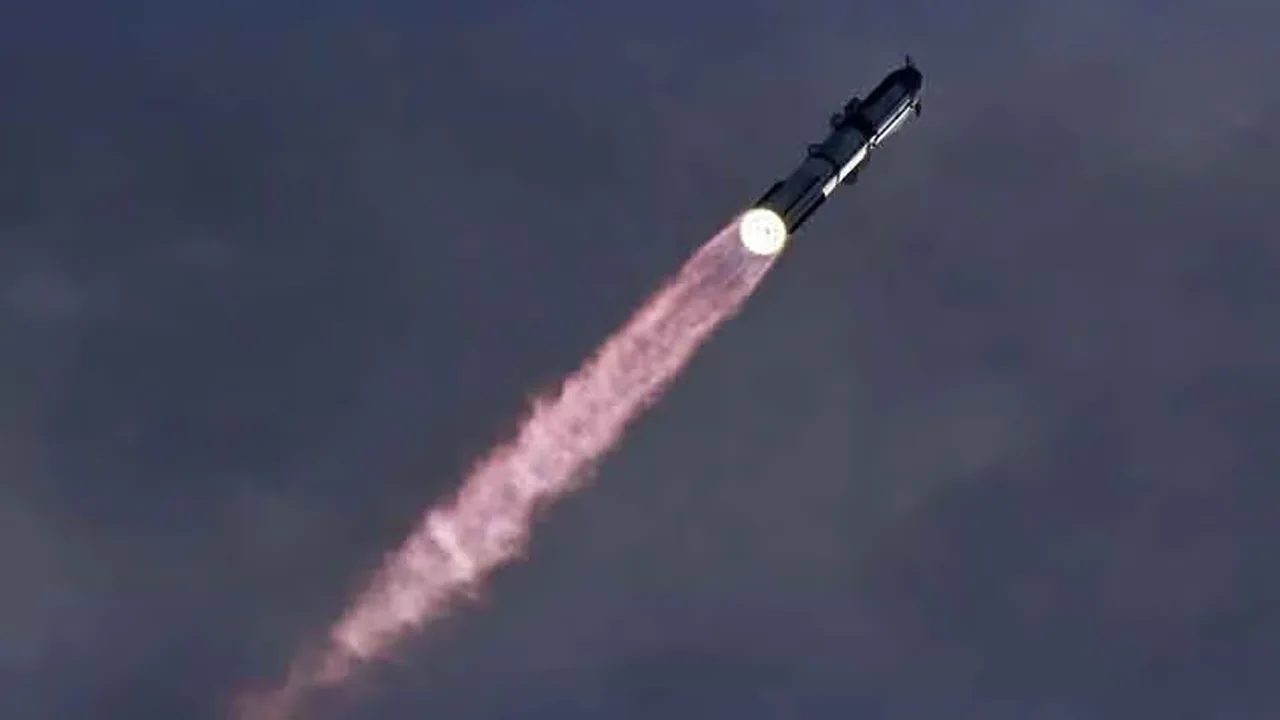
SpaceX's Starship reaches orbit for the first time, deploying 26 Starlink satellites despite an engine failure, marking its first commercial revenue-generating flight.
SpaceX's Starship rocket reached orbit for the first time on Monday and deployed new Starlink satellites, achieving a long-awaited milestone on its 14th test flight despite an engine failure that cut the mission short. The uncrewed mission was scheduled to last 10 hours but was reduced to three after one of Starship's three main engines shut down prematurely following separation from the Super Heavy booster.
A Tense Moment Mid-Flight
SpaceX spokesperson Dan Huot initially announced on the livestream that the craft would be unable to reach orbit, saying "the team has made the call not to commit to orbit." Minutes later, engineers confirmed Starship could still fire other engines to reach orbit, which it successfully did.
First Revenue-Generating Flight
Once in orbit, Starship deployed 26 next-generation Starlink V3 satellites one by one at an altitude of roughly 269 km, marking the ship's first orbital deployments. Elon Musk wrote on X that all satellites were "deployed and operating nominally." Aerospace engineer Dean Sladen called it "a huge win" for Starship's first commercial flight.
The Landing and the Booster
The Super Heavy booster returned to Gulf waters for an engine-controlled splashdown, though some engines stopped working during descent. Starship itself made a controlled descent into the Pacific, flipping vertically before impact, with fire and a large fireball as it touched down and tipped onto its side; SpaceX had not planned to recover the spacecraft.
Reaction and Stakes
NASA administrator Jared Isaacman congratulated SpaceX for "managing every step in a safe, responsible" way. SpaceX shares fell 2% on Monday despite the milestone, with much of the company's $2 trillion valuation tied to Starship's success. Musk wrote Sunday that Starship is "2 to 3 years away from hourly flights."
Context
All 13 of Starship's previous test flights since 2023 were limited to suborbital space, in a development campaign that has cost SpaceX more than $15 billion. Monday's launch came three months after SpaceX's record-shattering IPO in June, which made it the sixth-biggest US company by value.
Related stories
 Technology
Pakistan's IT Exports Growing 20% Annually: Shaza Fatima Visits Huawei Service Center
 Technology
US Appeals Court Upholds Pentagon's Ban on Anthropic
· 2 min read Technology
26%: The Number Anthropic Just Revealed About Claude Building Itself
 Technology
Amazon Just Joined the AI Safety Debate — But Notably Refused to Do One Thing
 Stocks
AI Slowdown Calls Trigger Sharp Selloff in Asian Tech Stocks
· 2 min read Technology