Russia to launch lunar mission Friday, first in nearly 50 years
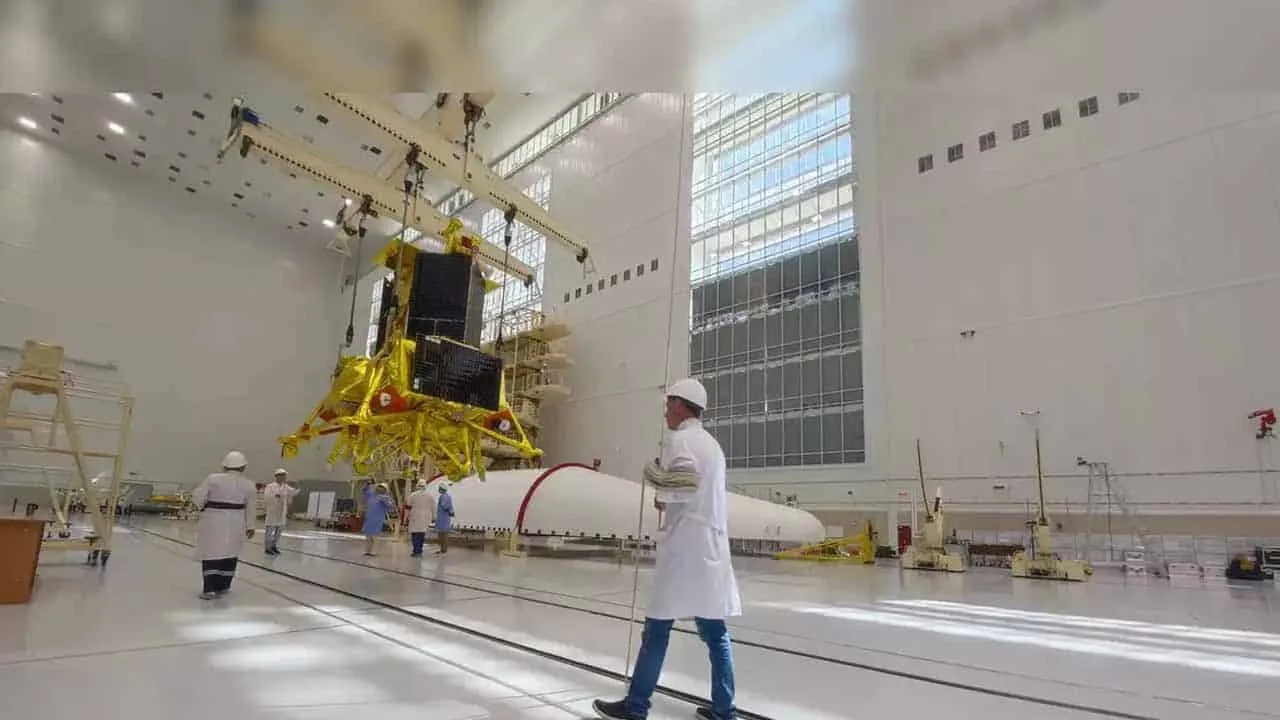
As the competition to dominate outer space and establish settlements on planets, moons, and distant exoplanets escalates day by day, Russia is gearing up for its first lunar mission in nearly five decades. This initiative comes shortly after India's launch of the Chandrayaan-3 lunar mission towards our natural satellite.
This mission is strategically targeting the moon's southern pole, an area that holds the promise of potentially containing water resources to sustain a future human presence.
The Russian lunar lander encountered several delays but is now prepared for launch in the early hours of this upcoming Friday.
Through the Luna-25 lander, Russia aims to revive and expand upon the pioneering lunar program initiated during the Soviet era, marking the nation's first endeavor since 1976.
The Russian space agency has announced that a "Soyuz rocket has been assembled at the Vostochny cosmodrome in the Russian Far East for the launch of the Luna-25."
According to Roscosmos, "The launch is scheduled for August 11."
"The Luna-25 mission involves executing a soft landing, collecting and analyzing soil samples, and conducting extended scientific investigations," stated the official release.
Weighing around 800 kilograms, the four-legged lander is anticipated to touch down in the vicinity of the moon's southern pole. This contrasts with most lunar landings, which typically occur closer to the lunar equator.
This launch inaugurates Moscow's novel lunar program, occurring amidst Russia's efforts to enhance space collaboration with China, especially considering the strained relations with Western nations.
Following Russia's deployment of troops to Ukraine, the European Space Agency (ESA) announced its decision to suspend cooperation with Russia for the upcoming Luna-25 launch and subsequent 26 and 27 missions.
Despite this setback, Russia has committed to proceed with its lunar initiatives, intending to replace ESA equipment with domestically produced scientific instruments.
Last year, at the Vostochny Cosmodrome, President Vladimir Putin emphasized that despite past sanctions, the Soviet Union achieved the remarkable feat of sending the first human into space in 1961. He affirmed Moscow's determination to advance its lunar program despite prevailing Western sanctions.
Related stories
 Technology
Elon Musk Says Absence of Alien Signs Troubles Him
 Technology
Pakistan Ranks Among YouTube’s Biggest Audiences
 Technology
Spotify Plans AI Music Remix Service for 2027 Launch
 Technology
Want to Walk a Robot Dog? San Francisco Company Offers $20 an Hour
 Technology
China Unveils Kung Fu Robot That Can Smash Car Doors: Meet the H2-X
· 2 min read Technology