Global Oil Prices Surge as Middle East Tensions Escalate
Oil Markets React to Regional Instability
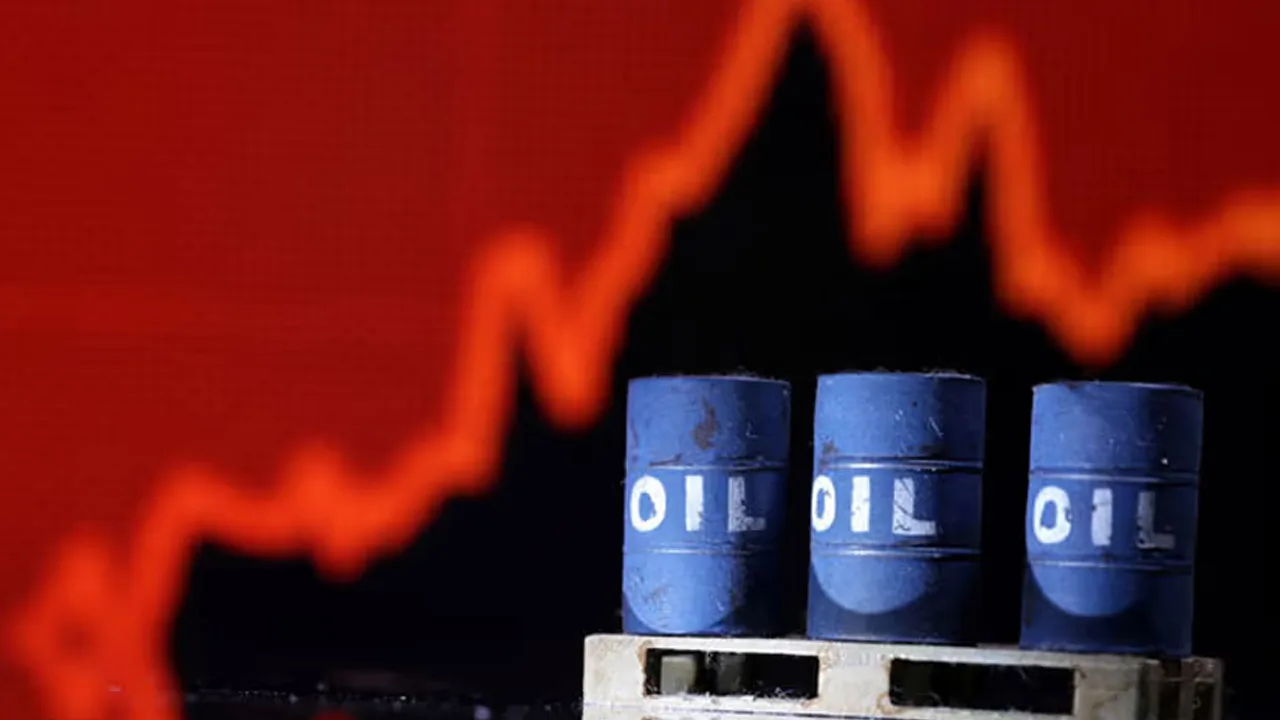
Oil prices surge to multi-week highs after Houthi attacks disrupt Saudi energy facilities, as Iran-US tensions raise fears over global crude and diesel supplies.
Global oil prices surged to multi-week highs on Tuesday. This rise was driven by attacks on Saudi Arabian energy facilities and increasing tensions between Iran and the United States. These events have raised concerns among market analysts about the stability of global energy supplies. Prices for both major oil benchmarks increased significantly in a short time.
Oil markets often react quickly to geopolitical instability, especially in regions crucial to global energy production and transportation. This latest price surge reflects growing anxiety over potential disruptions to the world's oil supply chain.
A Sharp Rise in Benchmark Prices
According to market data, Brent crude futures rose by $1.39, a 1.43% increase, reaching $98.39 a barrel. Meanwhile, US West Texas Intermediate crude (WTI) saw a larger increase, climbing by $2.25, or 2.46%, to $93.73 a barrel.
These movements are notable as Brent crude briefly touched $99.46, its highest since 24 July. Similarly, WTI reached $94.73, its highest since 8 June. Such significant price jumps highlight the sensitivity of oil markets to sudden geopolitical developments.
Attacks Disrupt Key Energy Facilities
Saudi authorities reported that operations at several energy facilities were halted following attacks by Yemen's Houthi movement, aligned with Iran. These attacks wounded 73 people, with Saudi officials describing the incident as a dangerous escalation in the regional conflict.
Saudi Arabia is one of the world's largest oil producers. Any disruption to its energy infrastructure impacts global oil markets significantly, as traders and analysts closely monitor the country's production and export capabilities.
Growing Concerns Over Physical Oil Supply
Beyond the immediate impact of these attacks, broader concerns have emerged about the physical supply of oil. Tanker traffic through the Strait of Hormuz remains below normal levels. This critical waterway is essential for global oil transportation. Prolonged disruption can have far-reaching consequences for international energy markets.
A market analyst quoted by Reuters noted that recent price movements reflect genuine physical supply tightness due to reduced tanker flows through Hormuz. A geopolitical risk premium is also being factored into oil prices by traders and investors. The analyst suggested that oil prices might remain elevated as long as the Strait faces disruptions and diplomatic efforts remain fragile.
Rising Tensions Around the Strait of Hormuz
Shipping traffic through the Strait of Hormuz slowed further at the beginning of the week. This followed threats from Iran regarding potential retaliation against any further US actions. This narrow but strategically vital waterway handles about one-fifth of the world's daily oil and liquefied natural gas supplies. Any disruption to its operations is a significant global concern.
This escalation follows earlier incidents, including reported US strikes on three Iranian oil tankers. One tanker was near a major Iranian oil export hub. These developments came after reports of Iranian forces targeting American naval vessels in the region, intensifying tensions between the two countries.
Iran's Continued Warnings
Amid this escalating situation, Iran has issued strong warnings to the United States, threatening "economic warfare" in response to continued pressure. Iranian officials claimed they launched an advanced missile toward American naval vessels, adding further uncertainty to an already tense regional situation and raising concerns about potential disruptions to global energy supplies.
Analysts Revise Long-Term Oil Price Forecasts
In response to these developments, Goldman Sachs revised its oil price forecasts upward. The bank raised its December 2026 projections for both Brent and WTI crude by $5 each, expecting prices to reach $85 and $80 per barrel, respectively. Looking further ahead, the bank adjusted its 2027 forecasts, projecting Brent crude to average $80 a barrel, with WTI expected to average $75.
These revised forecasts reflect analysts' assumptions that disruptions to shipping routes in the Middle East could continue into the following year, suggesting that current market tensions may not be resolved quickly.
Diesel Supply Concerns Add to Market Pressure
Beyond crude oil, global diesel markets are expected to remain under pressure throughout the winter. Senior industry executives attribute this tightness to limited spare refining capacity worldwide, export restrictions by Russia, and rising seasonal demand for diesel during colder months.
Impact on Consumer Fuel Prices
These market pressures have already begun affecting consumers worldwide. Notably, fuel prices in the United States reached record-high levels over the recent Labor Day weekend. Diesel prices in the country also climbed to record levels last week. This consumer-level impact highlights how geopolitical tensions and supply chain disruptions can quickly translate into higher costs for everyday fuel purchases.
Why These Developments Matter Globally
Fluctuations in global oil prices, especially sharp increases driven by geopolitical instability, have widespread economic implications. Rising oil prices can lead to higher transportation and production costs across various industries, potentially causing broader inflationary pressures in economies reliant on imported energy.
Looking Ahead
As regional tensions continue to evolve, market analysts and industry observers will likely monitor developments around the Strait of Hormuz, Saudi energy infrastructure, and the Iran-US relationship closely. With diplomatic efforts fragile and physical supply constraints persisting, oil prices may continue to experience volatility in the near term, with potential ripple effects on global fuel costs and economic conditions in the months ahead.
Related stories
 Breaking
R4, European Nations Call for Dialogue on Middle East
 Breaking
Saudi Arabia Intercepts Houthi Missile Aimed at Riyadh
 Breaking
Iran Warns US Warships Against Entering Persian Gulf
 Oil & Gas
Diesel Rs393.66, Petrol Unchanged at Rs377.71 for Oct 24-26
Middle EastR4, E3 Foreign Ministers Meet in Istanbul; Dar Attends
Oil & Gas