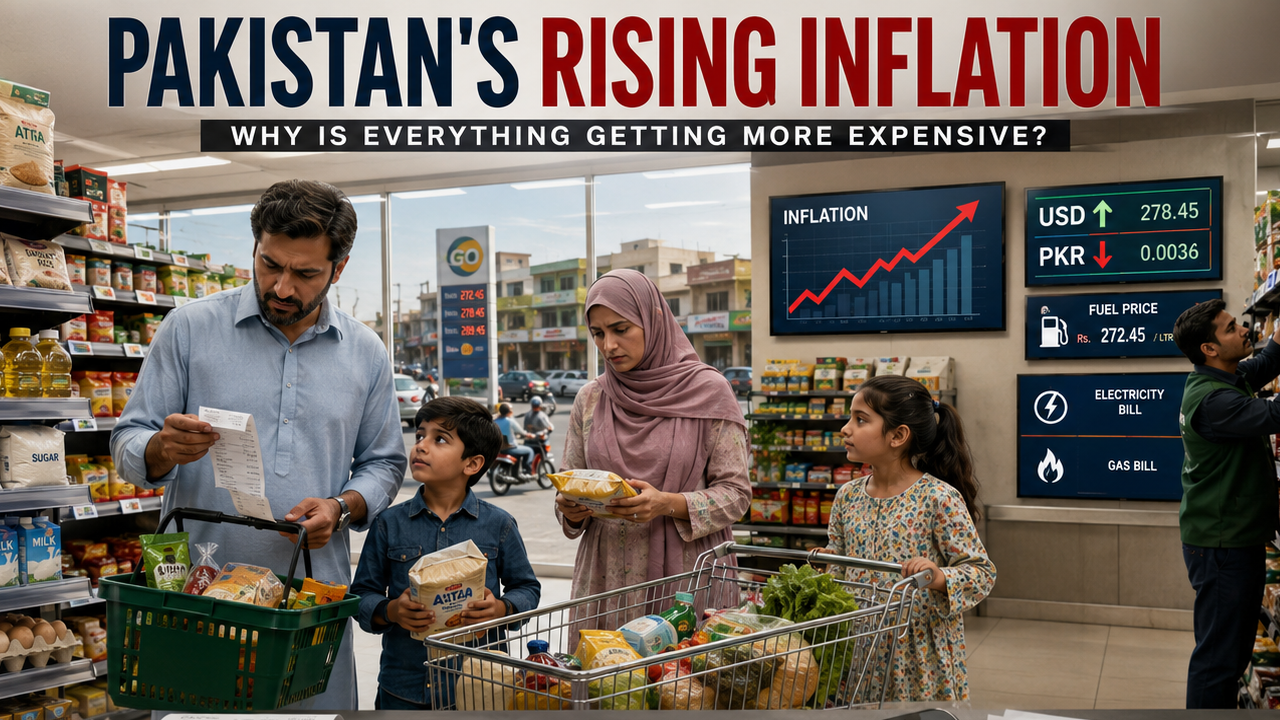
If you’ve visited a grocery store, filled your car with fuel, paid an electricity bill, or renewed your children’s school fees recently, you’ve probably noticed the same thing: almost everything in Pakistan is becoming more expensive every month.
A bag of flour that cost much less a few years ago is now significantly more expensive. Petrol prices rise and fall regularly, electricity bills continue to put pressure on household budgets, and even basic necessities like vegetables, cooking oil, milk, and medicines cost far more than they once did.
Many Pakistanis ask the same questions:
Why are prices increasing every month?
Why isn’t my salary increasing at the same pace?
Why does the US dollar affect everything?
Is inflation ever going to slow down?
The answer isn’t simple. Inflation is influenced by a combination of global events, government policies, currency movements, taxes, supply and demand, and Pakistan’s economic challenges.
This article explains in simple language why Pakistan is getting more expensive every month and what it means for ordinary citizens.
What Is Inflation?
Inflation simply means the general increase in the prices of goods and services over time.
For example:
Flour becomes more expensive.
Petrol prices increase.
Electricity bills rise.
School fees increase.
House rents go up.
When prices rise but your income stays the same, your purchasing power decreases. In other words, the same amount of money buys fewer things than before.
Why Is Inflation So High in Pakistan?
There isn’t just one reason. Several factors work together.
1. The Pakistani Rupee Loses Value
Pakistan imports many essential products, including:
Petroleum
Machinery
Mobile phones
Cooking oil
Medicines
Industrial raw materials
These imports are usually paid for in US dollars.
When the rupee weakens against the dollar, imported goods automatically become more expensive. Businesses then pass these higher costs on to consumers.
That’s why even products made in Pakistan often become more expensive—they rely on imported fuel, machinery, or raw materials.
2. Rising Petrol Prices
Petrol affects nearly every part of the economy.
Higher fuel prices increase the cost of:
Transportation
Delivery services
Farming
Manufacturing
Public transport
For example, vegetables transported from farms to cities become more expensive because transport costs increase.
This eventually raises prices across the entire market.
3. Higher Electricity Costs
Electricity is one of the biggest expenses for businesses.
Factories, shops, restaurants, hospitals, and schools all rely on electricity.
When electricity tariffs increase:
Production costs rise.
Businesses increase prices.
Consumers ultimately pay more.
4. Pakistan Imports More Than It Exports
A healthy economy exports enough goods to earn foreign currency.
Pakistan exports products such as:
Textiles
Rice
Sports goods
Surgical instruments
However, the country imports:
Oil
Machinery
Chemicals
Electronics
Vehicles
When imports exceed exports, Pakistan needs more foreign currency, putting pressure on the rupee.
5. Global Events Affect Pakistan
Pakistan’s economy is connected to the global market.
International events such as:
Oil price fluctuations
Wars
Shipping disruptions
Global inflation
Supply chain problems
can increase the cost of imported goods.
These higher costs eventually reach Pakistani consumers.
What Role Does the Dollar Play?
Many people wonder why they hear about the dollar every day.
The answer is simple.
Pakistan buys many essential goods from abroad using US dollars.
If the dollar becomes stronger:
Fuel becomes more expensive.
Electronics cost more.
Imported medicines become expensive.
Industrial equipment costs increase.
Businesses often raise prices to recover these additional costs.
Why Don’t Salaries Increase at the Same Speed?
This is one of the biggest concerns for the middle class.
Companies also face higher costs due to:
Electricity
Fuel
Rent
Taxes
Raw materials
Many businesses cannot afford to increase employee salaries at the same pace as inflation.
As a result, workers experience a decline in their real purchasing power.
How Do Taxes Affect Prices?
Taxes are an important source of government revenue.
However, higher taxes on imported goods, fuel, and business operations can increase production costs.
Businesses often include these additional costs in the prices charged to customers.
Why Food Prices Rise So Quickly
Food inflation is often driven by several factors:
Higher transportation costs
Fuel prices
Weather conditions
Crop shortages
Storage issues
Supply chain disruptions
If farmers face higher production costs, consumers eventually pay higher prices.
Why Does Rent Keep Increasing?
Property owners also experience higher costs.
These include:
Property maintenance
Utility bills
Construction materials
Inflation
To maintain their income, many landlords increase rent over time.
How Inflation Affects Different People
Middle-Class Families
The middle class often feels the greatest pressure because:
Salaries grow slowly.
Education costs rise.
Healthcare becomes expensive.
Household budgets become tighter.
Low-Income Families
Lower-income households spend a larger share of their income on food and basic necessities.
Even small price increases can significantly affect their daily lives.
Businesses
Businesses face rising operating costs and may have to increase prices, reduce profits, or delay expansion.
Can Inflation Ever Slow Down?
Yes, but it depends on several factors, including:
Stable exchange rates.
Lower global fuel prices.
Improved agricultural production.
Higher exports.
Better economic management.
Increased investor confidence.
Inflation rarely falls overnight. It usually takes time and consistent economic improvements.
What Can Ordinary Pakistanis Do?
While individuals cannot control inflation, they can take practical steps to manage its impact:
Create a monthly budget.
Avoid unnecessary debt.
Build emergency savings when possible.
Compare prices before purchasing.
Invest in education and skills to improve earning potential.
Reduce unnecessary expenses.
Plan major purchases carefully.
Small financial habits can make a meaningful difference over time.
Looking Ahead
Pakistan’s economy has faced numerous challenges in recent years, but it also has significant strengths, including a young population, a large agricultural sector, and strong export industries.
Long-term improvements in exports, energy, taxation, governance, and investment could help strengthen economic stability. However, these changes require time and sustained policy efforts.
For households, staying informed about economic developments and managing personal finances wisely remains one of the best ways to navigate periods of high inflation.
Conclusion
Inflation in Pakistan is the result of multiple interconnected factors rather than a single cause. Exchange rate movements, fuel prices, electricity costs, taxes, imports, exports, and global economic conditions all influence the prices people pay every day.
Although rising prices create real challenges for families and businesses, understanding why inflation happens helps people make better financial decisions and prepare for economic changes. While no single solution exists, stronger economic fundamentals, increased production, higher exports, and stable policies can contribute to reducing inflation over the long term.