PM Shehbaz Responds to Opposition Leader on ECP Appointments Process
A Formal Reply on a Key Constitutional Matter

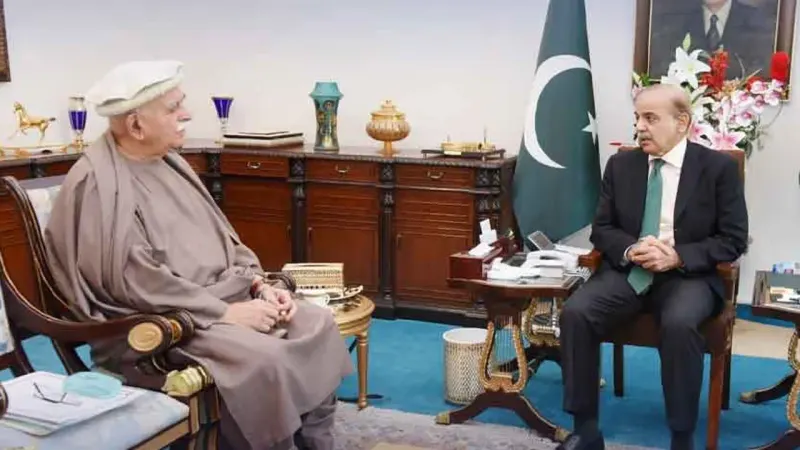
PM Shehbaz Sharif formally responds to opposition leader Mahmood Khan Achakzai, assuring that constitutional procedures will guide new ECP appointments.
Prime Minister Shehbaz Sharif has sent a formal response to opposition leader Mahmood Khan Achakzai, addressing his earlier letter regarding the appointment of the Chief Election Commissioner and new members of the Election Commission of Pakistan. This exchange reflects the ongoing dialogue between the government and opposition on matters related to key constitutional appointments.
According to sources, Achakzai has now received the Prime Minister's response, with the government providing assurance that the constitutional procedure will be properly followed in making these important appointments.
Background on the Correspondence
This response comes after Achakzai wrote to the Prime Minister last month specifically regarding the process for appointing new officials to the Election Commission of Pakistan. This kind of formal correspondence between opposition leaders and the government is a routine part of how constitutional processes are discussed and coordinated, particularly for appointments that require input or consultation from multiple political stakeholders.
It's worth noting that this is not the only communication received by the government on this topic. Former opposition leader Omar Ayub had also previously written a separate letter specifically seeking the appointment of the Chief Election Commissioner, indicating sustained interest across different opposition figures regarding this particular constitutional matter.
Government Engagement Ahead of the Formal Response
Prior to sending this formal reply, government representatives took steps to engage directly with Achakzai on this matter. Federal Minister for Parliamentary Affairs Dr. Tariq Fazal Chaudhry, along with the Prime Minister's adviser Rana Sanaullah, met with Achakzai as part of these efforts.
During this meeting, they reportedly assured Achakzai that a formal reply from the Prime Minister would be forthcoming, reflecting a structured and communicative approach to addressing his concerns regarding the ECP appointment process.
Confirming the Constitutional Approach
The Prime Minister's latest response serves to formally communicate the government's position on this matter, specifically confirming that the constitutional mechanism will be followed for appointing both the Chief Election Commissioner and new members of the Election Commission. This kind of formal confirmation can help provide clarity and reassurance regarding how these important appointments will proceed.
Understanding the Importance of ECP Appointments
The Election Commission of Pakistan plays a central role in overseeing the country's electoral processes, making appointments to this body a matter of significant importance within the broader democratic framework. The Chief Election Commissioner and other Commission members hold responsibilities that directly relate to ensuring fair and transparent electoral processes across the country.
Given the significance of these roles, it is not unusual for such appointments to involve careful consultation and communication between different political stakeholders, ensuring that the process maintains broad legitimacy and follows established constitutional procedures.
Achakzai's Current Status and Upcoming Return
According to available information, Mahmood Khan Achakzai is currently in Quetta and is expected to travel to Islamabad within the next two to three days. His return to the federal capital could pave the way for further discussions and consultations regarding the appointment process, building on the exchange that has already taken place through this recent correspondence.
A Continuing Dialogue Between Government and Opposition
This exchange reflects the broader pattern of ongoing engagement between the government and various opposition figures regarding important constitutional matters. Such communication, whether through formal letters or direct meetings, plays an important role in maintaining dialogue on issues that require broader political consensus or at least mutual understanding between different political stakeholders.
Why This Process Matters
The manner in which key constitutional appointments, such as those to the Election Commission, are handled can have implications for public confidence in electoral institutions more broadly. Ensuring that these processes follow established constitutional procedures, while also maintaining appropriate consultation with relevant political stakeholders, reflects an effort to uphold the institutional integrity of bodies responsible for overseeing democratic processes.
The Role of Parliamentary Affairs in Facilitating Dialogue
The involvement of the Federal Minister for Parliamentary Affairs in facilitating direct engagement with Achakzai highlights the government's approach of using formal parliamentary channels to address concerns raised by opposition figures. This kind of structured engagement can help ensure that important matters receive appropriate attention and consideration through established governmental processes.
Looking Ahead
As Achakzai prepares to return to Islamabad in the coming days, further consultations regarding the ECP appointment process are likely to follow. With the government having now formally communicated its commitment to following constitutional procedures, attention will likely turn to the specific steps involved in finalizing these important appointments.
The coming days and weeks may bring additional developments as this process moves forward, with continued communication between government representatives and opposition leaders likely to play an important role in how these key constitutional appointments are ultimately finalized.
Related stories
 Politics
PM Condoles Rashid Bashir Virk on Father’s Demise
 Elections
ECP Moves Ahead on Local Government Elections
 Politics
Naqvi: Every Effort Made to Avoid Emergency in KP
 Politics
Naqvi Briefs Bilawal on KP Security Situation
 Politics
PM Shehbaz Invites Opposition Leader Achakzai for Meeting
 Pakistan