Pakistan Responds to India at UNGA, Alleging State-Sponsored Terrorism and Rights Violations
In a right of reply at the UN General Assembly, Counsellor Saima Saleem accused India of exporting terrorism and violating minority rights, reiterating Pakistan's positions on Kashmir and the Indus Waters Treaty.
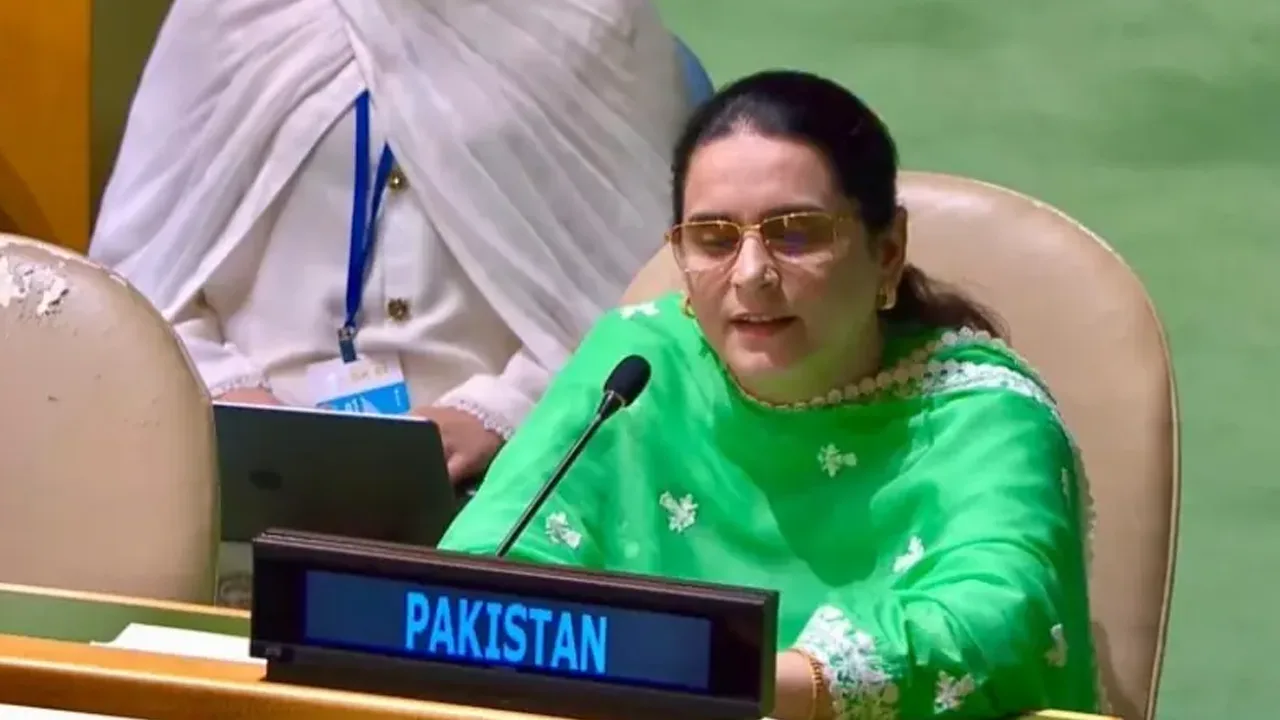
Pakistan's Saima Saleem accuses India of state-sponsored terrorism and rights violations in a UNGA right of reply, reiterating positions on Kashmir and water rights.
Pakistan used its right of reply at the 81st UN General Assembly general debate to respond to India's earlier statement, with Counsellor Saima Saleem alleging that India has "elevated propaganda into statecraft," "exports terrorism as an instrument of policy," and "institutionalised Hindutva ideology" — claims India has previously rejected as baseless.
Pakistan's Terrorism Allegations
Saleem said Pakistan has lost nearly 100,000 lives to terrorism since the turn of the century and cited what she described as evidence presented to the international community of India financing groups including the TTP, BLA and Majeed Brigade — allegations India denies. She referenced the case of former Indian naval officer Kulbhushan Jadhav, convicted in Pakistan on espionage and terrorism charges, and Nikhil Gupta, who pleaded guilty in the US to a murder-for-hire plot targeting a Sikh separatist leader, as well as unspecified individuals "implicated in assassinations carried out in Canada."
On Kashmir
Saleem reiterated Pakistan's longstanding position that Jammu and Kashmir is "an internationally recognised disputed territory," contrasting conditions in Azad Jammu and Kashmir with what she described as repression in Indian-administered Kashmir — a characterization India rejects, maintaining the territory is an integral part of the country.
On Minority Rights in India
Saleem alleged that India's ruling BJP-RSS government has pursued discriminatory policies against Muslims, Christians, Dalits and Sikhs, citing the Gujarat and Delhi riots and citizenship laws as evidence — claims the Indian government has consistently disputed.
On the Indus Waters Treaty
Saleem said India's decision to hold the treaty in abeyance amounted to "weaponising water" for Pakistan's 240 million people, and referenced the May 2025 military conflict between the two countries, saying India "lost more than a military conflict; it lost its credibility." This follows PM Shehbaz Sharif's remarks a day earlier, warning that any Indian attempt to divert Pakistan's water share would be treated as an "act of war," and asserting the treaty's suspension has no legal basis and has been rejected by UN experts and the Permanent Court of Arbitration.
Pakistan's Stated Position on Peace
Saleem closed by saying Pakistan "remains steadfast in its pursuit of peace, mutual respect, dialogue and the peaceful settlement of disputes," while adding Pakistan would defend itself against any aggression.
Related stories
 Breaking
PM Shehbaz Backs China's Global Development Initiative, Calls for Peace
 Health
Dar Welcomes Adoption of WHO Pandemic Treaty
Middle EastPM Shehbaz Calls for Hormuz, Bab al-Mandab to Remain Open
 International Politics
Russia, Iran Call for Diplomatic Solution to Crisis
 International
Prince Rahim Aga Khan Lauds PM Shehbaz's Efforts for Peace
 International