FGEHA Moves to Secure 5-Year Income Tax Exemption to Advance Affordable Housing
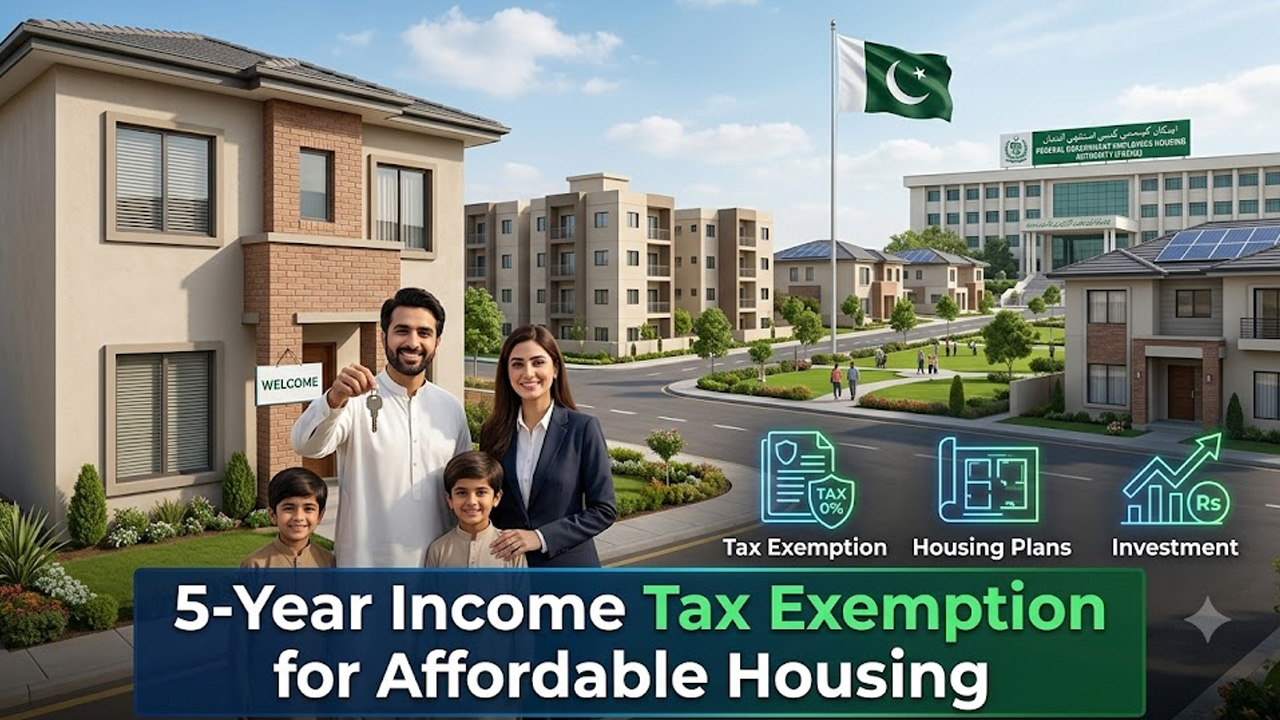
ISLAMABAD — In a major initiative to protect its non-profit welfare model and sustain low-cost housing development across Pakistan, the Federal Government Employees Housing Authority (FGEHA) has decided to request a five-year income tax exemption from the federal government. The strategic move aims to ensure that development funds are directed entirely toward infrastructure, land acquisition, and unit construction for serving and retired public sector employees.
The decision was formally endorsed during a recent meeting of the FGEHA Executive Board. The board approved a proposal urging the Ministry of Housing and Works to coordinate with federal tax authorities to incorporate necessary legislative relief into relevant tax frameworks, including the Income Tax Ordinance, 2001.
Rationale Behind the Tax Exemption Request
The FGEHA operates as a statutory public sector welfare organization dedicated to providing affordable residential options on a “no-profit, no-loss” basis. Unlike private real estate developers, the authority relies heavily on installment payments from allottees, service fees, and transfer charges to fund its ongoing operations.
Core Arguments for Tax-Exempt Status:
Reinvestment of Revenues: Every rupee generated through service fees and member installments is directly funneled back into land acquisition, site development, and infrastructure construction.
Historical Precedent: The federal government previously granted FGEHA a similar tax exemption from 2020 through June 30, 2024. Extending this relief from July 1, 2024, to June 30, 2029, will maintain fiscal continuity.
Cost Containment: Taxing the authority increases overall project overheads, which ultimately passes on additional financial burdens to public sector workers and pensioners seeking affordable shelter.
“FGEHA is not a commercial enterprise driven by profit margins; it is a welfare-oriented statutory body,” stated an official from the authority. “Securing income tax relief directly shields our allottees from artificial price surges caused by tax liabilities.”
Operational Flexibilities and Land Acquisition Reforms
Alongside the tax exemption decision, the FGEHA Executive Board has taken substantial steps to streamline land acquisition processes. The board recently approved the Land Acquisition (Land Sharing Basis) Regulations 2026, introducing a framework tailored to lower-cost development.
In contrast to standardized regulations used by other municipal bodies—such as the Capital Development Authority (CDA)—the new FGEHA regulations offer enhanced operational flexibility regarding land-sharing ratios. This flexible approach empowers the authority to negotiate directly with private landowners and local communities, facilitating faster land transfers for high-density apartment complexes and planned residential sectors.
Impact on Ongoing and Future Projects
If approved by the Ministry of Finance and Federal Board of Revenue (FBR), the five-year tax extension will provide crucial financial stability for FGEHA’s active housing pipeline.
The authority currently manages several major residential projects across Islamabad and major provincial capitals, including:
Vertical Housing Initiatives: High-rise apartment complexes designed for urban centers, such as the Kashmir Avenue Apartments in Sector G-13, Islamabad.
Sectoral Developments: Large-scale plot allocations in sectors F-14, F-15, and G-14 to clear backlogs for long-serving civil servants.
Public-Private Partnerships (PPP): Joint-venture housing schemes executed under the FGEHA JV & PPP Rules to leverage private sector efficiency.
Tax exemption status prevents capital lockups, ensuring that cash flows remain available for contractors, utility connections, and structural progress without delays caused by tax disputes or unexpected tax assessments.
Broader Economic and Welfare Context
The housing deficit in Pakistan remains one of the country’s most pressing socio-economic challenges, particularly for lower- and middle-income government workers. Rising construction material costs and land inflation over recent years have made formal homeownership increasingly difficult without targeted institutional support.
By maintaining tax-exempt status, the government supports an institutional mechanism that provides shelter to public servants at rates significantly below prevailing commercial market prices.

Pakistan raises petrol, diesel prices for third straight day
Central fiscal authorities and federal energy administrators have executed consecutive upward adjustments to localized hydrocarbon pricing structures, marking a severe,...