GB Locals Build Artificial Glaciers to Freeze, Store Water
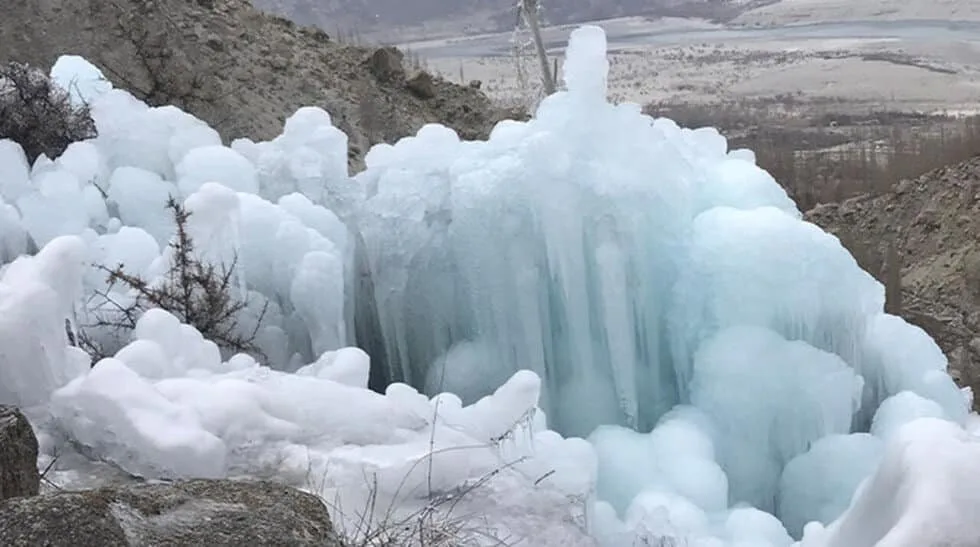
Locals and scientists from Pakistan’s northern Gilgit-Baltistan (GB) known for its picturesque landscapes glaciers and some of the tallest mountains in the world found a unique way to deal with an acute water shortage problem that hampers crop cultivation in the region each year and have build Artificial Glaciers to freeze and store water.
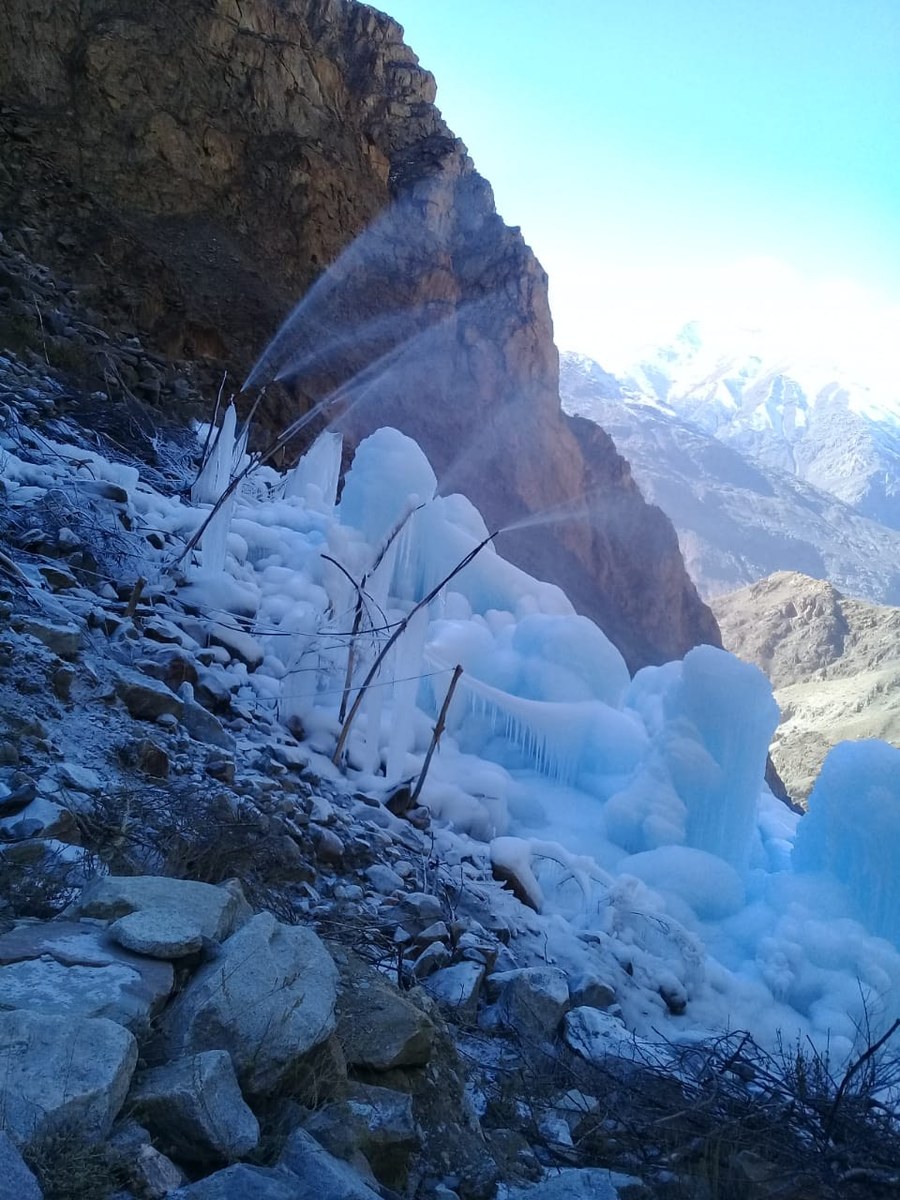
Experts at a local institute, the Baltistan University, have joined hands with locals to build artificial glaciers or ice stupas, which resemble towers at Buddhist temples and are used to collect and freeze abundant water in the winter months to be used in the dry season, particularly the months of March and April when water is in high demand for wheat, maize and potato cultivation. The technique was devised by Sonam Wangchuk, an engineer in Ladakh, India, in 2013.
Baltistan University’s Dr. Zakir Hussain Zakir, the focal person for the United Nations Development Program’s (UNDP) Glacial Lake Outburst Flood-2 (GLOF-2) monitoring project, told Arab News though GB was one of the largest glaciated regions in the world, the bodies of ice were rapidly melting and water shortages would be a major challenge for the region in due course of time.
“To avoid a water crisis in the Baltistan region, people are grafting glaciers and building ice stupas or ice towers, also known as Gang Pu in the local Balti language,” Zakir said. “Ice stupas are seasonally made for a short period of time and water is conserved during the months of December, January and February, which are the most favorable months for this process.”
He said the project was conceived entirely by the local community while Baltistan University was providing residents financial and technical support.
Three ice stupas have been built so far in Skardu district this year and one in Kharmang district, Zakir said.
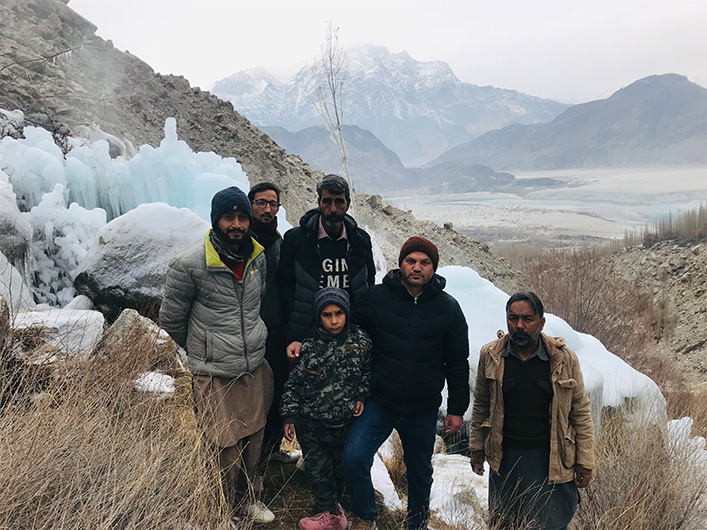
The idea is inspired by a similar initiative in India’s Ladakh Valley, a region nestled between the Greater Himalayan and Karakoram ranges. In 2013, an engineer called Sonam Wangchuk invented the first ice stupa as a solution for the extreme droughts plaguing the region.
Wangchuk and his students used a long pipe to channel water from a stream and pump it down toward the valley. They then sprayed the water out of a vertical pipe, creating a fountain. At night, they opened the nozzle, and the water froze as it trickled down to the ground. Ultimately, they built a 20-foot, cone-shaped pile of ice that stored 40,000 gallons of water.
People in Gilgit-Baltistan face similar problems as those in Ladakh: they need water to sustain their livelihoods, but changing weather patterns are shrinking the region’s glaciers, intensifying droughts and triggering flash floods.
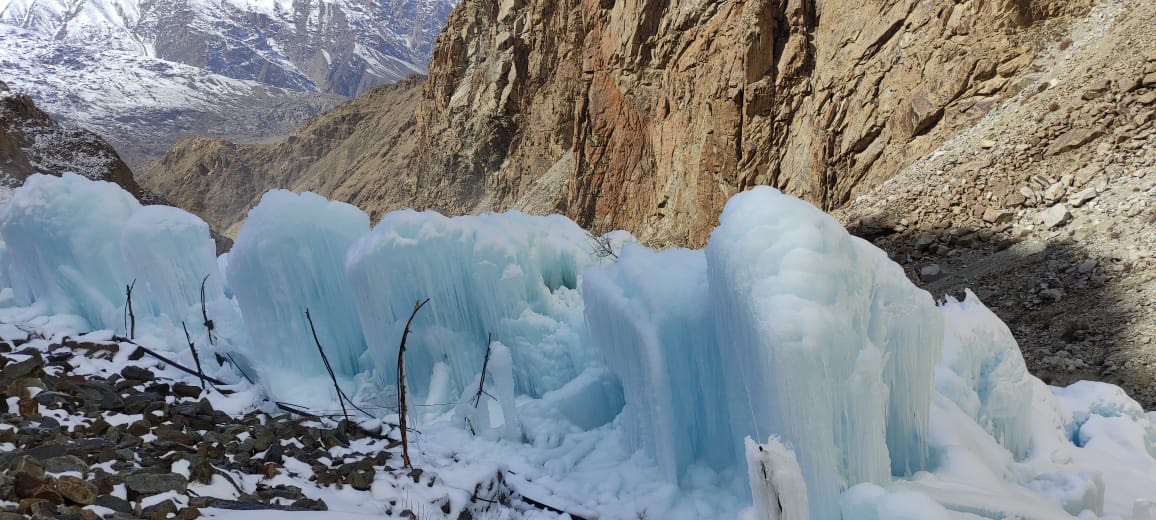
Israr Hussain, a resident of Hussainabad valley in GB’s Skardu district, said the community faced water shortages in March and April, which continued until mid-May: “We decided to make ice stupas to conserve water during winters as we need more water when we start cultivation in March-April. Glaciers and snow on the top of mountains start melting after mid-May, so these ice stupas will help provide water to cultivate crops during this period.”
Hussain said this was the first time the community had developed the stupas and would build more next year.
Ghulam Ali, another resident of Hussainabad, told Arab News locals visited the site of the ice stupas daily to monitor progress.
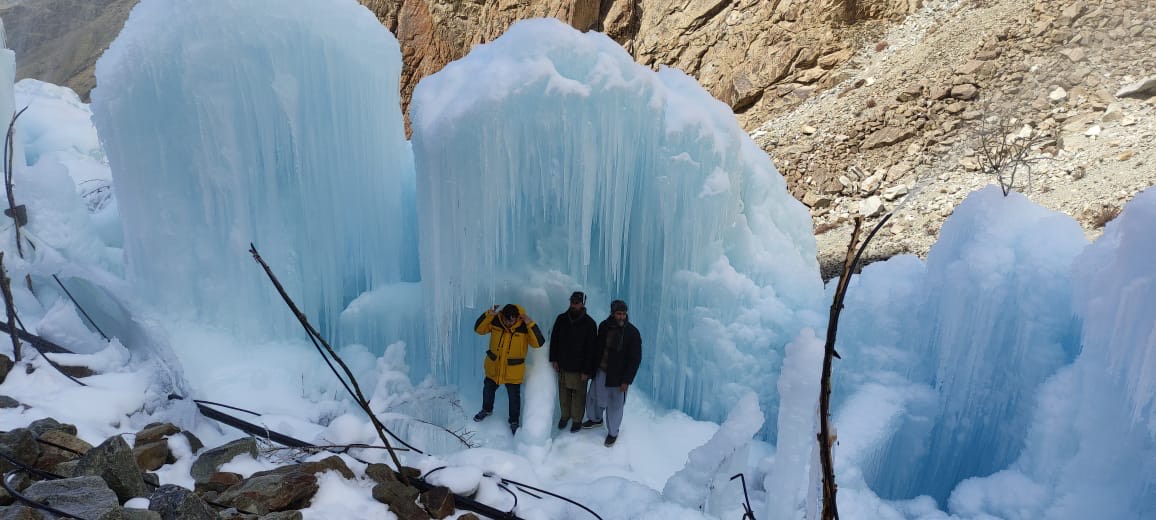
“We have a team of volunteers from our village and it comprises 25 people. Four to five volunteers daily visit the site in shifts to check if water isn’t frozen inside the pipes. It is very important to visit and monitor the site,” Ali said. “We are happy! And hope we won’t face water shortage in March and April this year.”
Rashid-ud-Din, a GLOF-2 field officer, said water supply shortages were due to climate change.
“Crop cultivation begins in March-April, but people have to wait for water till May-June owing to the late melting of glaciers. To revert this shift, people are building ice stupas so that they are able to timely cultivate crops,” he said, adding that the process could help freeze hundreds of thousands of liters of water in winter months without the need to construct large water tanks or reservoirs.
Residents of Pari village of Baltistan’s Kharmang district had adopted the technique for the first time in 2019, he added, and had been successfully practicing it since.
Locals and scientists from Pakistan’s northern Gilgit-Baltistan (GB) known for its picturesque landscapes glaciers and some of the tallest mountains in the world found a unique way to deal with an acute water shortage problem that hampers crop cultivation in the region each year and have build Artificial Glaciers to freeze and store water.
Source: Arab News
Related stories
 Technology
No More Office Visits: MOFA Attestation Now Online
 Technology
Tesla Unveils Rocket-Powered Roadster, Production in 2028
 Technology
Aurangzeb Briefs World Bank, Fitch, Canada in Bangkok
 Technology
MOFA Launches Fully Digital Document Attestation System
 Technology
Hassabis Warns AI Could Cause Major Incidents Within 2 Years
 Technology