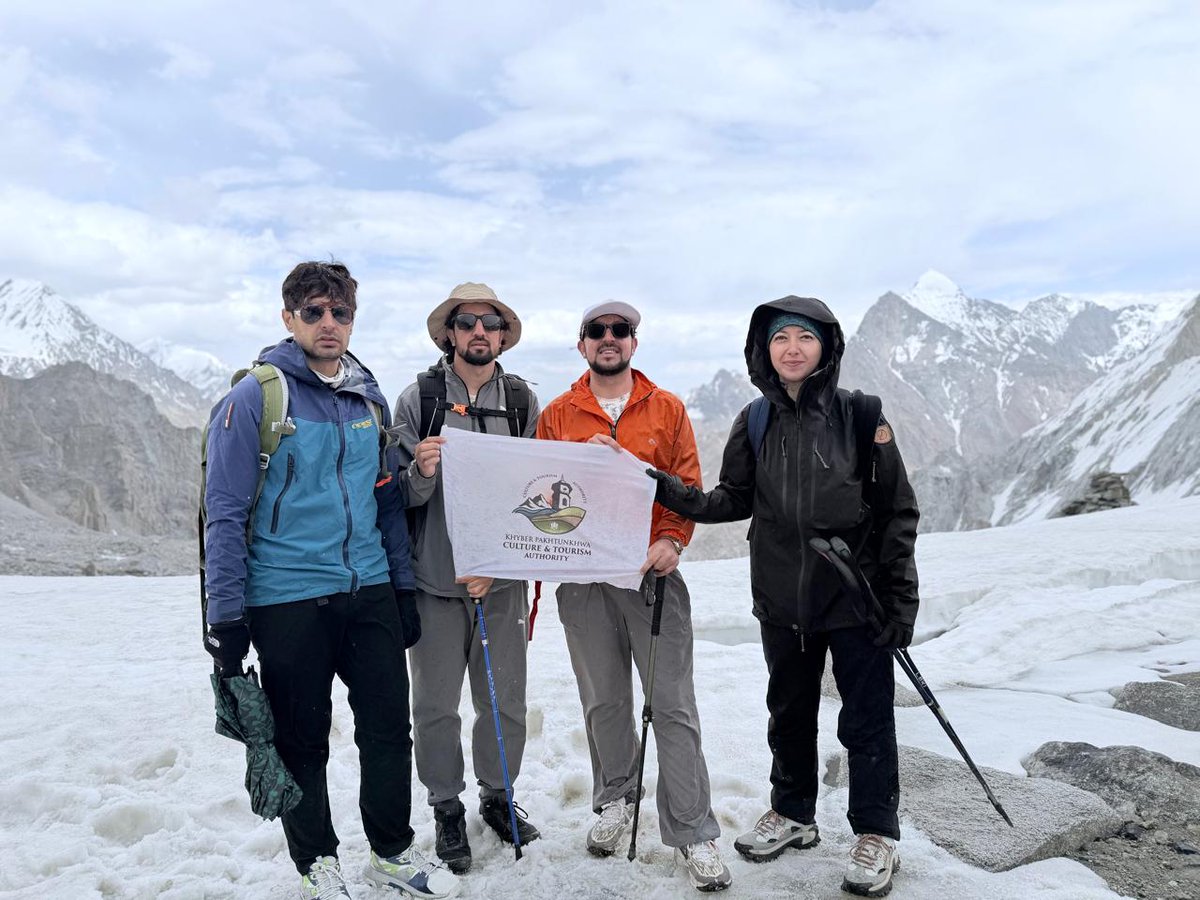
Pakistani Expedition Reopens Remote Hindu Kush Pass for First Time in 27 Years, Women Reach Summit for the First Time Ever
A Pakistani mountaineering expedition has successfully crossed and summited the remote Phargam An Pass in the Hindu Kush, marking the first time the 5,100-metre route has been traversed in 27 years. Alongside reopening this historic high-altitude crossing, the expedition also achieved something entirely new: women climbers reached the summit for the very first time in the pass’s recorded history.
A Route Reopened After Nearly Three Decades
The expedition, backed by the Khyber Pakhtunkhwa Culture and Tourism Authority (KPCTA), set out to reopen a historic high-altitude route connecting the Laspur Valley in Upper Chitral with the Golain Valley in Lower Chitral, a passage that had sat dormant and largely forgotten for almost three decades before this latest attempt.
Reopening a route after such a long gap isn’t simply a matter of retracing old footsteps. The team had to navigate glaciers, steep snow slopes, loose rock, and avalanche-prone terrain to reach the summit before making their descent into the Golain Valley on the other side, terrain that tested both the physical endurance and technical mountaineering skills of everyone involved.
A Team Effort, Led From the Front
Kamran Khan was the first climber to reach the summit, part of a team that included Mehrosh Akhtar, Samar Khan, Noman Khan, Noormal Rehman, Zohaib Khan, Omar Khitab Sheerani, Sohniya Babar, Amina Shabbir, and Madeeha Syed. The expedition was led by local guide Zamurd Khan, whose familiarity with the region’s mountain terrain would have been invaluable given how much the route had changed since it was last crossed.
A Historic First for Women Climbers
Perhaps the most significant milestone from this expedition was the successful ascent of the pass by women climbers, a first in the route’s known history. Mehrosh Akhtar was among those who made this history, alongside Chitrali sisters Smell Rose and Madhu Shala Akhtar, who also took part in the expedition.
For a mountaineering culture that has historically been dominated by men, particularly in more remote and technically demanding regions like the Hindu Kush, having local women from Chitral successfully complete this challenging crossing carries significance well beyond the immediate achievement itself. It offers a visible, concrete example of women’s participation in high-altitude mountaineering in a part of Pakistan where opportunities for women to take part in this kind of adventure sport have traditionally been limited.
Terrain That Has Changed Dramatically Over Time
According to the team, changing mountain conditions, including rockfalls and retreating glaciers, had significantly altered the route since it was last crossed nearly three decades ago. This detail speaks to a broader reality facing mountaineering expeditions across many high-altitude regions worldwide: the terrain itself isn’t static, and climate-driven changes like glacial retreat can transform previously mapped routes into something considerably different, and often more hazardous, than what earlier expeditions encountered.
That the team was able to successfully navigate this altered terrain and complete the crossing speaks to both careful planning and the technical skill of everyone involved, particularly given how quickly conditions in glaciated, avalanche-prone terrain can shift.
A Poignant Discovery Along the Way
During the expedition, climbers came across a memorial plaque dedicated to Austrian mountaineer Georg Kronberger, who died in the area back in 1975. Rediscovering this marker connects the current expedition to a much longer history of mountaineering exploration in the Hindu Kush, one stretching back decades and involving climbers from well beyond Pakistan’s own borders.
Finds like this serve as a quiet reminder of the risks that have always accompanied mountaineering in this region, and of the international community of climbers who have been drawn to these remote peaks and passes over the years, sometimes at great personal cost.
Part of a Broader Push to Document Chitral’s Trekking Heritage
Officials explained that this expedition was carried out as part of the KPCTA’s Tirich Mir Project, an initiative specifically focused on identifying and documenting historic trekking routes while promoting sustainable adventure tourism across Upper Chitral. This broader project reflects a deliberate effort by regional authorities to catalogue and preserve the area’s mountaineering heritage, routes, and history that might otherwise fade from memory as fewer expeditions attempt increasingly obscure or technically demanding passes.
Why This Matters for Chitral’s Tourism Potential
Officials involved in the project said that reopening the Phargam An Pass would help showcase the region’s mountaineering potential while simultaneously preserving its exploration heritage. Chitral, tucked away in the northernmost reaches of Khyber Pakhtunkhwa, is already known among adventure travellers for its dramatic mountain scenery, but routes like Phargam An Pass, largely forgotten for nearly 30 years, represent an underutilised piece of the region’s broader trekking and mountaineering appeal.
For a region working to build a more sustainable adventure tourism industry, successfully documenting and reopening historic routes like this one offers tangible new options for experienced trekkers and mountaineers looking for less commercialised, more remote alternatives to Pakistan’s more famous and heavily trafficked mountaineering destinations.
Looking Ahead
With the Phargam An Pass now successfully reopened and documented as part of the Tirich Mir Project, attention will likely turn to how this achievement fits into broader efforts to develop Upper Chitral’s adventure tourism offerings going forward. Whether this expedition encourages future attempts on the same route, or inspires further exploration of other long-dormant passes across the Hindu Kush, the successful crossing itself, and the historic first ascent by women climbers that came with it, marks a genuinely notable moment for Pakistani mountaineering, one that blends the rediscovery of forgotten terrain with a meaningful step forward in expanding who gets to take part in these kinds of high-altitude adventures.