Venezuela Praises Pakistan’s Diplomatic Role Amid US-Iran Tensions
Venezuela has publicly acknowledged Pakistan’s constructive role in promoting dialogue and de-escalation amid the ongoing regional crisis involving the United States and Iran, offering praise for Islamabad’s continued commitment to peace and diplomatic engagement.
The recognition came during a telephone conversation between Pakistan’s Deputy Prime Minister and Foreign Minister Ishaq Dar and Venezuela’s newly appointed Foreign Minister, Félix Plasencia. According to an official statement issued Sunday, the call was initiated by Venezuela’s new top diplomat, marking one of his early outreach efforts since taking on the role.
Venezuela Commends Pakistan’s Mediation Efforts
During the conversation, Minister Plasencia specifically acknowledged the constructive part Pakistan has played in encouraging dialogue and working toward de-escalation in the broader US-Iran standoff, commending Islamabad’s sustained commitment to peace and diplomatic solutions. This kind of international recognition adds to a growing chorus of countries that have taken note of Pakistan’s mediating role in one of the most consequential geopolitical crises currently unfolding, one that has already sent ripples through global oil markets and reshaped security calculations across the Gulf region.
Condolences Over Venezuela’s Recent Earthquakes
Beyond the discussion of regional diplomacy, the call also carried a more personal note. Dar conveyed Pakistan’s heartfelt condolences over the devastating earthquakes that recently struck Venezuela, offering Islamabad’s unwavering solidarity with the Venezuelan government and people during what has clearly been a difficult period for the country. He expressed confidence in Venezuela’s resilience and its capacity to recover from the disaster’s impact.
In response, Minister Plasencia thanked Dar for Pakistan’s message of sympathy and solidarity, expressing genuine appreciation for the humanitarian support extended to those affected by the earthquakes. He underscored how important mutual support between nations becomes during moments of crisis, framing the exchange as a reflection of the broader spirit underpinning the Pakistan-Venezuela relationship.
Reaffirming a Longstanding Friendship
The two foreign ministers also used the call to reflect more broadly on the longstanding friendly relationship between Pakistan and Venezuela, reaffirming their shared commitment to strengthening bilateral ties going forward. They discussed potential avenues for expanding cooperation across a fairly wide range of sectors, including trade, investment, business, agriculture, and information technology, among other areas identified as being of mutual interest to both countries.
Both ministers acknowledged the considerable, largely untapped potential for deepening economic collaboration between the two nations, while also highlighting the value of fostering stronger people-to-people connections as a way of reinforcing the relationship at a more grassroots level, beyond just government-to-government engagement.
A Push for Sustained High-Level Engagement
Dar placed particular emphasis on the importance of sustained high-level engagement between the two countries, arguing that this kind of continued diplomatic contact is essential for reinvigorating bilateral relations and deepening cooperation over time. That sentiment reflects a broader pattern in Pakistan’s current foreign policy approach, one that has increasingly prioritised active, visible diplomatic outreach across multiple regions and continents, from the Gulf to Latin America, as Islamabad works to expand its international partnerships beyond its traditional core relationships.
The two sides also expressed appreciation for the ongoing close coordination between Pakistan and Venezuela within multilateral forums, noting that this collaboration on issues of shared interest has remained a consistent feature of the relationship even as bilateral engagement at the head-of-government level has occasionally been less frequent.
Part of a Broader Diplomatic Moment for Pakistan
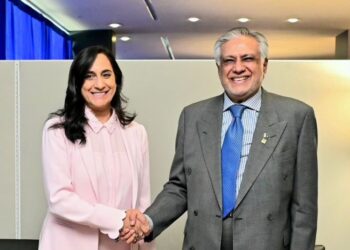
This exchange with Venezuela comes at a particularly active moment for Pakistani diplomacy more broadly. In recent days alone, Pakistan has hosted Canada’s foreign minister for her first visit to Islamabad in nearly two decades, continued to navigate its delicate mediating position between Washington and Tehran, and engaged in discussions with Kuwait over expanded defence cooperation. Against that backdrop, Venezuela’s acknowledgment of Pakistan’s diplomatic role adds another data point to a broader narrative: Islamabad appears to be actively working to position itself as an engaged, constructive player on the international stage, willing to invest diplomatic capital in de-escalation efforts even in conflicts that don’t directly involve Pakistan’s own borders.
Why Pakistan’s Mediating Role Matters
Pakistan’s involvement in trying to de-escalate the US-Iran conflict isn’t purely altruistic; it’s also tied closely to the country’s own economic and security interests. As a nation heavily dependent on energy imports and with its own defence commitments to Gulf partners like Saudi Arabia, Pakistan has a direct stake in preventing the conflict from spiraling further, given how quickly instability in the region can translate into higher oil prices, disrupted shipping lanes, and broader economic strain at home. That said, having a country like Venezuela publicly credit Pakistan’s diplomatic efforts still carries symbolic value, reinforcing the international perception of Islamabad as a serious, engaged actor in efforts to calm one of the world’s most volatile ongoing conflicts.
Looking Ahead
For now, this exchange between Dar and Plasencia signals both a reaffirmation of an established friendship and a broader recognition of Pakistan’s evolving diplomatic posture on the world stage. Whether this translates into concrete new cooperation between Islamabad and Caracas across trade, agriculture, or technology remains to be seen, but the tone of the conversation, and Venezuela’s explicit acknowledgment of Pakistan’s mediating role in the Middle East, suggests both countries see value in continuing to build on a relationship that has, by most accounts, remained cordial even as global attention has largely been focused elsewhere.