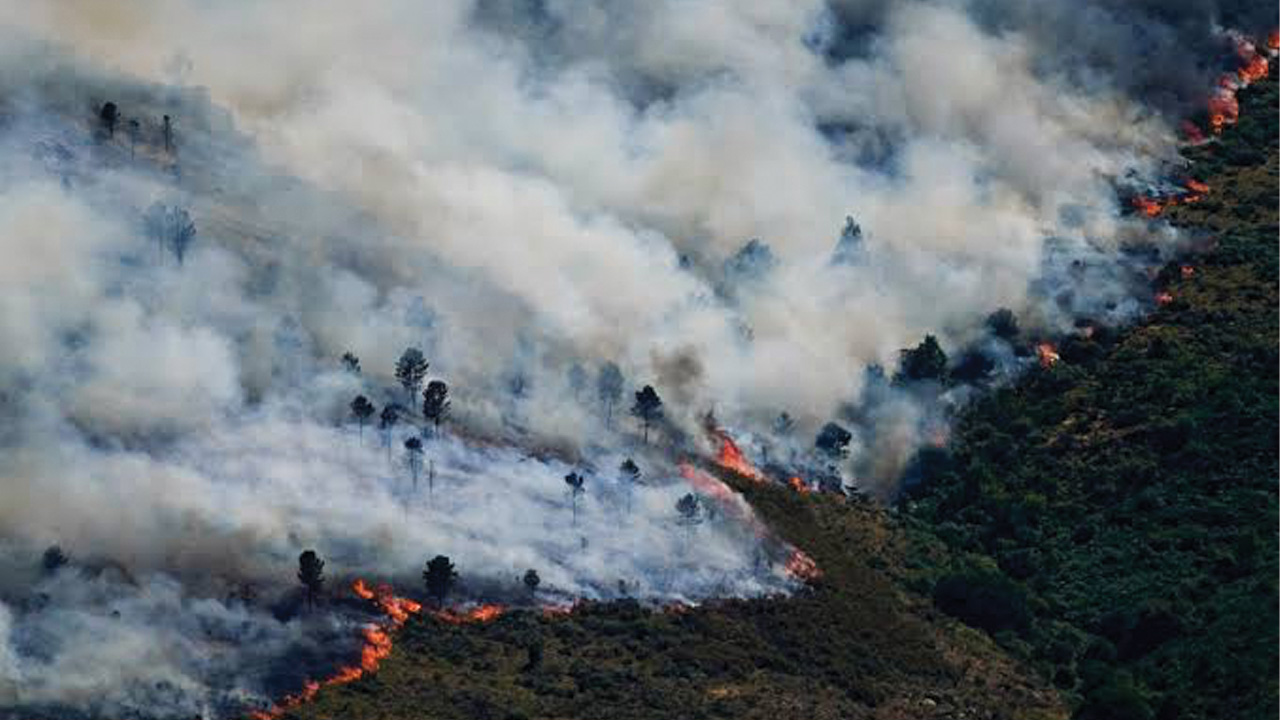
MADRID / PARIS — Spain declared a national emergency for the first time in its history due to wildfires, as extreme heatwaves, strong winds, and severe drought unleashed uncontrolled blazes across Southern Europe, forcing tens of thousands of residents and tourists to flee their homes in Spain and France.
The Spanish government’s declaration transfers control of firefighting operations directly to the Ministry of the Interior, allowing for federal coordination of police, security, and military emergency units as regional teams struggle to contain multiple raging fronts.
Situation in Spain: Capital Region Under Siege
Historic Emergency Declaration: Marking the first time Spain has activated its highest national emergency level for a wildfire, national authorities stepped in as fires threatened towns west of Madrid and in neighboring Ávila province.
Mass Evacuations: Over 10,000 residents were evacuated from villages near Madrid, with surrounding mountain towns blanketed in dense smoke.
Severe Heatwave: Temperatures across central and southeastern Spain breached 39°C to 44°C (102°F–111°F), fanning the flames and severely complicating containment efforts.
Devastating Season: So far this year, wildfires have scorched approximately 1,300 square kilometers (500 square miles) in Spain—more than four times the area burned during the same period in 2025.
Situation in France: Mass Evacuations on the Atlantic Coast
Cap Ferret Peninsula Evacuated: French authorities ordered a total evacuation of the popular Cap Ferret peninsula near Bordeaux, forcing an estimated 40,000 tourists and locals to leave campsites, holiday rentals, and residential homes—many escaping by boat as roads were cut off.
EU Civil Protection Activated: French President Emmanuel Macron formally requested emergency support through the European Union’s Civil Protection Mechanism.
International Reinforcements: Specialized firefighting aircraft and heavy-lift helicopters from Croatia, Portugal, the Czech Republic, and Slovakia have been dispatched to assist French teams battling a fire that has consumed over 8,700 hectares (34 square miles) of pine forest.
A Broader European Crisis
The surging blazes across Western Europe reflect an intensifying climate reality. According to the EU’s Copernicus Climate Change Service, Europe remains the fastest-warming continent on the planet, experiencing heat extremes that make the landscape highly susceptible to fast-moving wildfires.
“We are experiencing a dramatic situation, not just in several Spanish regions but also in neighboring countries.”
Pedro Sánchez, Prime Minister of Spain