Russia Unleashes Massive Missile and Drone Barrage on Ukrainian Cities, Killing at Least Eight
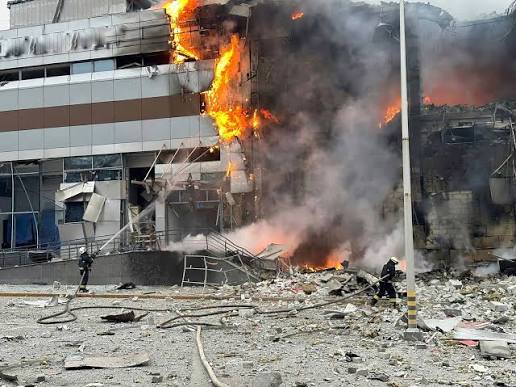
Russia carried out a sweeping wave of ballistic missile and drone strikes across Ukraine, killing at least eight people and wounding dozens more, according to officials cited by the BBC. The scale of the attack, hitting multiple cities simultaneously, marks one of the more intense rounds of strikes in what has become a grinding, years-long conflict.
The casualties were spread across several regions. Four people were killed in the north-eastern city of Kharkiv, while an elderly woman lost her life in the capital, Kyiv. Two more people died in Zaporizhzhia in the south, and one person was killed in Sumy in the north-east, painting a picture of an assault that spared no particular corner of the country.
“One of the Most Massive” Attacks Since the Invasion Began
Ukrainian President Volodymyr Zelensky described the strike on Kyiv as among the most massive ballistic assaults the capital has endured since Russia launched its full-scale invasion back in 2022. That’s a significant statement given how many large-scale attacks Kyiv has already weathered over the past several years, and it underscores just how intense this particular wave of strikes was.
Ukraine’s air force reported that the latest barrage on Kyiv involved a mix of advanced Russian weapons systems, including Iskander ballistic missiles and hypersonic Zircon missiles, alongside 125 drones. According to Ukraine’s military, air defences in the capital managed to intercept 18 of the 41 missiles fired, while also shooting down 108 of the drones involved in the assault, figures that highlight both the scale of the attack and the significant portion of it that still got through.
A Deadly Weekend at Sea Too
The violence wasn’t confined to Ukrainian airspace. Late on Sunday, Ukraine’s navy reported that five people were killed when a Turkish-owned civilian cargo ship carrying grain was struck by Russian missiles in the Black Sea. Russia had not issued any comment on the incident at the time of reporting.
Kharkiv’s regional head, Oleh Syniehubov, said a postal terminal in the city’s suburbs had come under attack, killing four men between the ages of 24 and 62. Several others injured in that strike were reported to be in serious condition.
Ukraine Strikes Back at Russian Oil Infrastructure
Ukraine, for its part, said it had struck three Russian oil tankers in the Black Sea along with three oil depots in Russia’s southern Stavropol region. Zelensky framed these strikes as targeting infrastructure that helps finance what he described as Russian aggression, part of Ukraine’s broader strategy of striking at the economic underpinnings of Russia’s war effort rather than just its military assets.
One notable casualty of these counterstrikes was the Caspian Pipeline Consortium, which transports Kazakhstan’s Caspian oil to Russia’s Black Sea port of Novorossiysk. The consortium confirmed its terminal had been hit, with two tankers damaged in the process, prompting a suspension of oil loading operations at the facility. No injuries or oil spills were reported as a result.
A Punishing Week of Bombardment
Zelensky offered a broader accounting of the scale of Russian aerial assaults over just the past week, saying in a Telegram message that Russia had used roughly 1,450 strike drones, more than 1,640 guided bombs, and 99 missiles of various types against Ukraine. Those figures give some sense of the sheer volume of munitions being deployed on a near-daily basis, even as the war grinds into its fifth year.
Why This Matters Beyond Ukraine’s Borders
This latest escalation adds to an already volatile global security picture. With the Middle East simultaneously gripped by an intensifying conflict between the US and Iran, and oil markets already reeling from disruptions in the Strait of Hormuz, the added targeting of energy infrastructure in the Russia-Ukraine war, from the Caspian Pipeline Consortium hit to Ukraine’s strikes on Russian oil depots, adds yet another layer of pressure on global energy supply chains that are already under considerable strain.
For countries like Pakistan that closely track global oil price movements due to their heavy reliance on imported fuel, disruptions playing out simultaneously in both the Middle East and the Black Sea region compound the risk of continued volatility in international energy markets, even though the immediate conflict itself remains geographically distant.
No Sign of De-escalation
With Russia describing this as one of its most intense bombardments of the war and Ukraine continuing to strike back at Russian energy infrastructure, there’s little indication that either side is moving toward de-escalation. As both militaries continue exchanging long-range strikes deep into each other’s territory, the human cost, both in this latest round of attacks and in the broader war, continues to climb, even as much of the world’s attention remains focused elsewhere on the unfolding crisis in the Middle East.