Pakistan’s Auto Industry Faces Uncertainty as Tariff Cuts Reshape the Rules of the Game
Pakistan’s automobile sector has entered what many in the industry are calling one of its most uncertain phases in more than a decade. At the center of the disruption is a sweeping change to the country’s tariff structure, undertaken as part of Pakistan’s broader tariff rationalisation commitments under its IMF programme, which has sharply narrowed the protective gap between imported, fully built vehicles and locally assembled ones down to roughly 15 percentage points.
On paper, the goal is straightforward: liberalise trade and gradually expose domestic manufacturers to more competition. In practice, though, industry players say the change has fundamentally altered the economic logic that’s underpinned local vehicle assembly in Pakistan for decades.
Decades of Protection, Suddenly Narrowed
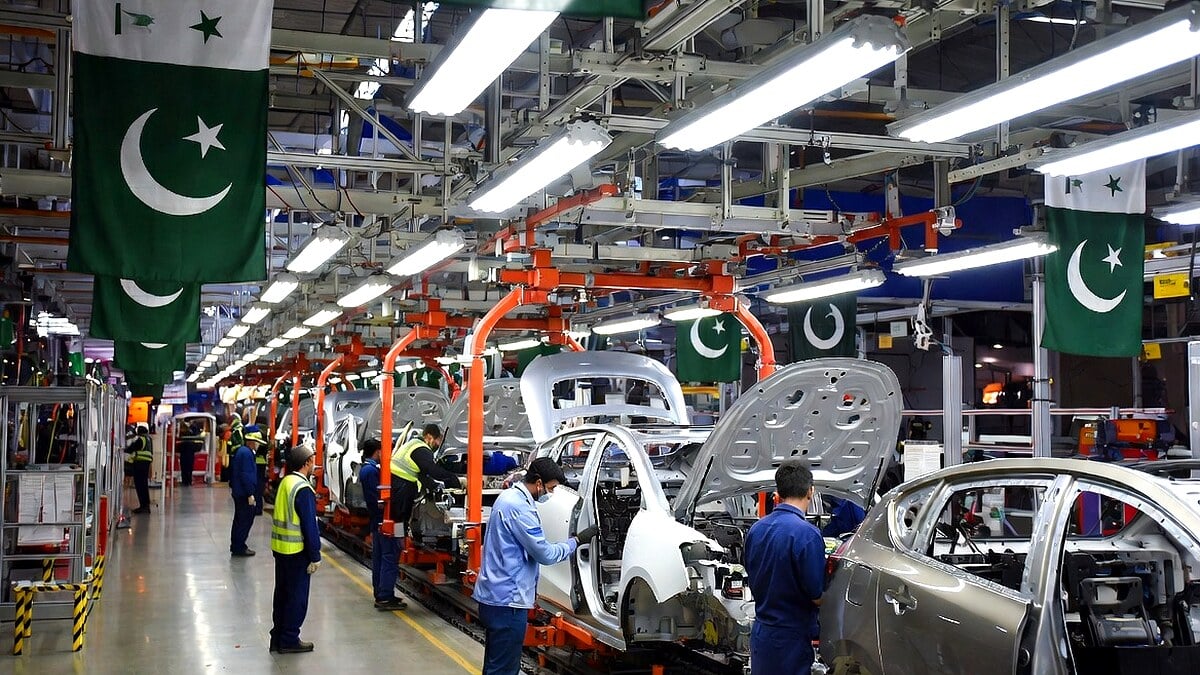
For years, Pakistan’s automotive policy leaned heavily on tariff protection as a tool to encourage companies to assemble cars domestically rather than simply import finished vehicles. That protective cushion is what justified the billions of rupees that manufacturers poured into local assembly plants, tooling, component localisation, and vendor development over the years.
The chief financial officer of one car company, speaking without attribution, explained that the narrower tariff gap now leaves investors who built local assembly plants under the two previous auto policies competing directly against imported vehicles carrying a much lower duty burden. According to the CFO, this shift makes local CKD (completely knocked-down) assembly considerably less competitive against imported CBU (completely built-up) vehicles, putting tens of thousands of jobs on the line in the process. The CFO warned that existing manufacturing capacity could sit idle, that the vendor industry may face closures, and that pressure on the country’s already limited foreign exchange reserves is likely to increase.
An Unusual Price Inversion
Ali Asghar Jamali, chief executive of Indus Motor Company, pointed to a particularly strange side-effect of the new tariff structure: it’s now actually cheaper to import a fully built car than to import the CKD kits needed to assemble one locally. Jamali described this as a temporary anomaly that disincentivises local assembly for now, but said he expects the government to step in and correct it before long.
That kind of price inversion isn’t something the industry has typically had to deal with, and it captures just how significantly the tariff changes have scrambled the usual cost calculus for manufacturers operating in Pakistan.
Looking Back at What’s Been Achieved
The current anxiety in the industry becomes easier to understand when you consider what the previous policy cycle managed to accomplish. The Auto Policy 2016-21 was something of a turning point, offering incentives that drew in several new greenfield investors and helped mobilise more than $1 billion in fresh investment into local assembly plants. That wave of new entrants also chipped away at the dominance long held by traditional assemblers, giving Pakistani consumers considerably more choice than they’d had before.
Building on that momentum, the Auto Policy 2021-26 aimed to position Pakistan for the global shift toward cleaner mobility, extending incentives to battery electric vehicles, hybrid electric vehicles, plug-in hybrids, range-extended EVs, and fuel-cell vehicles. That transition now appears to have stalled, at least for the time being.
A Policy Vacuum at the Worst Possible Moment
Adding to the industry’s unease is the timing. The tariff rationalisation took effect just as the Auto Industry Development and Export Policy (AIDEP) 2021-26 officially expired on June 30, with no successor policy yet finalised. That leaves investors without a clear roadmap for what comes next, at a moment when clarity arguably matters most.
The government has extended a one percent sales tax concession for smaller, locally assembled electric vehicles with battery capacities up to 50kWh, along with light commercial EVs up to 150kWh, through June of next year. Incentives for hybrids, however, have lapsed entirely. Sales tax on locally assembled hybrid and plug-in hybrid vehicles above 1,400cc has jumped to 25 percent, replacing what had been concessional rates of 8.5 percent and 12.5 percent depending on engine size. Hybrids under 1,400cc now face an 18 percent rate.
The CFO argued that this effectively wipes out the price advantage hybrids previously held over conventional combustion-engine vehicles, stalling their local rollout just as several manufacturers have already paused CKD imports while they wait for greater policy clarity, something the CFO stressed matters enormously in a business where investors commit capital over 15-to-20-year horizons.
Jamali, however, offered a different read on the hybrid tax changes, framing them simply as the natural and expected end of a five-year policy that beneficiaries always knew had a set expiry date.
A Way Forward, If the Government Chooses It
Former chairman of the Pakistan Association of Automotive Parts and Accessories Manufacturers, Syed Nabeel Hashmi, argued that tariff reform shouldn’t come at the expense of gutting the domestic industry altogether. He cautioned that if importing a finished vehicle becomes nearly as attractive as assembling one locally, investment will simply drift away from local production.
The stakes extend well beyond the assemblers themselves. Pakistan’s automotive sector supports an ecosystem of more than 2,000 parts manufacturers and tens of thousands of skilled and semi-skilled jobs. A sustained shift away from local assembly and toward imports would reduce demand for domestically made components, discourage further investment in localisation and technology transfer, and erode manufacturing capabilities that have taken decades to build.
Industry representatives have floated a middle-ground option: even if the previous concessional tax rates on hybrids can’t be fully restored, taxing them at the standard 18 percent rate rather than the current 25 percent could preserve at least some incentive for the technology while still staying within the government’s fiscal constraints under the IMF programme.
The Bigger Strategic Question
Hashmi pointed out that regional competitors are moving in the opposite direction, deepening their manufacturing base through deliberate industrial policy. India, for example, continues to attract major investment commitments, including a reported 35,000 crore rupee pledge from Maruti Suzuki for a new manufacturing facility in Gujarat.
Ultimately, the debate boils down to a bigger question about what kind of automotive industry Pakistan actually wants to build going forward. Industry voices are largely unified in calling for a credible, long-term automotive strategy, one that offers policy certainty, sustains meaningful incentives for localisation and technology upgrades, and keeps Pakistan on track for the broader global shift toward cleaner mobility, rather than one that inadvertently rewards importing over investing in domestic production.