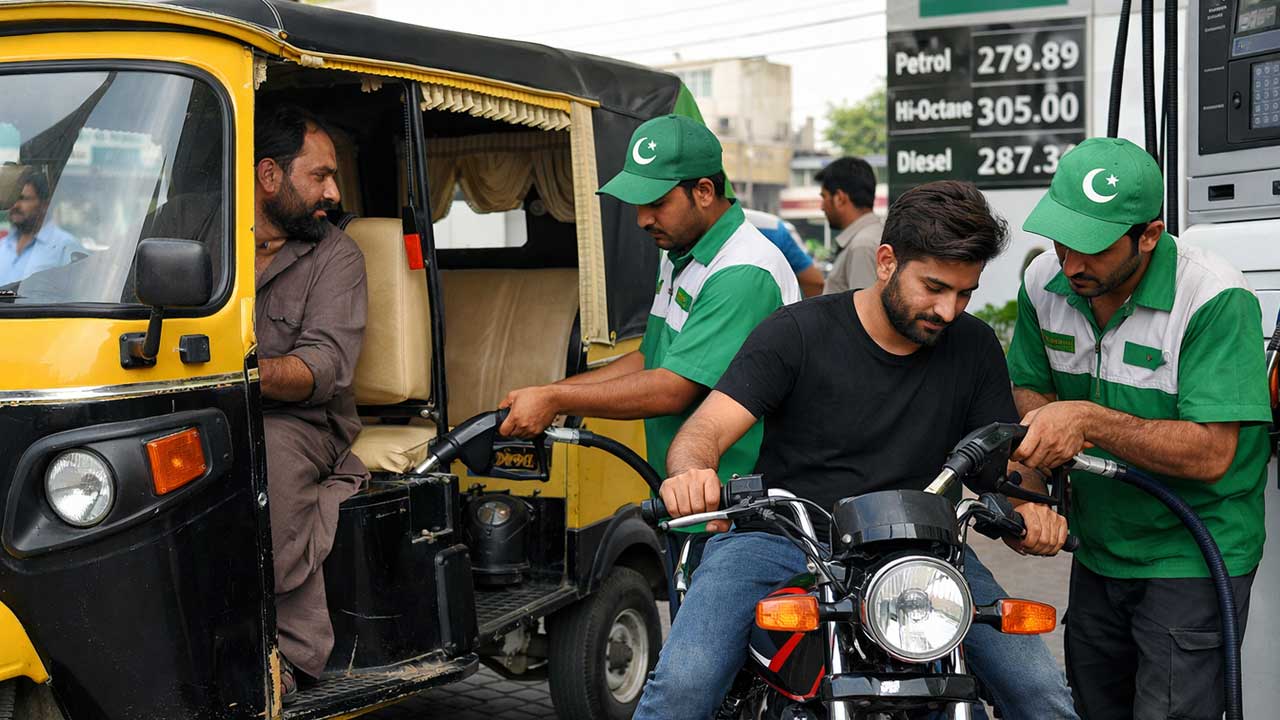
ISLAMABAD: The federal government is preparing a subsidised fuel relief package aimed at supporting motorcyclists and rickshaw drivers after a sharp rise in oil prices, officials told a Senate panel on Monday.
Petroleum Secretary Hamed Yaqoob Sheikh informed the Senate Standing Committee on Petroleum that the proposed scheme is designed to ease the burden on lower-income commuters. He said the government had already taken steps to provide relief, despite recent price pressures driven by global factors.
The government recently increased kerosene prices by Rs40 per litre and approved Rs23 billion for oil marketing companies, while keeping petrol and high-speed diesel prices unchanged for the week. Earlier, petrol prices saw a significant hike due to regional tensions affecting supply routes.
Officials assured the committee that Pakistan currently holds sufficient fuel reserves, including petrol for 27 days and diesel for 21 days. Stocks of jet fuel, crude oil, and LNG are also available for shorter durations. Authorities have additionally allowed the import of fuel below Euro 5 standards to maintain supply stability.
The secretary noted that a majority of Pakistan’s fuel imports come from the Middle East, and global price spikes—particularly due to disruptions in the Strait of Hormuz—have significantly increased costs.
Separately, a petroleum monitoring committee led by Finance Minister Muhammad Aurangzeb confirmed that fuel supplies for March are fully secured, with arrangements in place until mid-April. Efforts are ongoing to extend coverage further and diversify import sources to reduce dependency on specific regions.
The government also warned against panic buying, stating that current stock levels are stable. Authorities, along with Ogra and provincial bodies, have been directed to monitor the market closely to prevent hoarding.
During the meeting, concerns were raised by lawmakers regarding the recent price hikes, with allegations that oil companies benefited from increased rates. However, the petroleum secretary rejected the claim, stating that the price adjustments were necessary to prevent hoarding and did not advantage oil firms.
On the LNG front, officials revealed that supplies from Qatar have been halted since March 2. While eight cargoes were expected in March, only two arrived, and uncertainty surrounds future deliveries. Authorities warned that LNG shortages could emerge after April 14, potentially impacting power generation.
To manage the shortfall, gas supply to certain sectors has already been reduced, while domestic consumers will continue to be prioritised. Alternative LNG sourcing options, including imports from Azerbaijan, are being explored, though at significantly higher costs—potentially increasing electricity prices in the coming months.