Aurangzeb in Washington for IMF and World Bank Talks
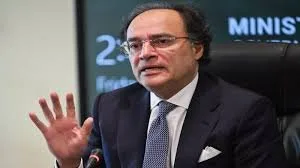
Finance Minister Muhammad Aurangzeb has embarked on a six-day official visit to Washington, D.C., to participate in the annual meetings of the International Monetary Fund (IMF) and the World Bank (WB), according to state-run Radio Pakistan. The visit comes shortly after the IMF mission concluded talks with Pakistan on two major lending programmes worth $8.4 billion, though a staff-level agreement (SLA) is yet to be finalized.
Aurangzeb expressed optimism that the SLA would be concluded next week during his stay in the U.S. He will represent Pakistan at the plenary sessions of the IMF and WB and attend over 65 engagements, including high-level forums, meetings, and ceremonies.
During his visit, the minister will meet IMF Managing Director Kristalina Georgieva, World Bank President Ajay Banga, and officials from the International Finance Corporation (IFC) and Multilateral Investment Guarantee Agency (MIGA). He is also expected to participate in a G24 platform discussion and address the Middle East, North Africa, and Pakistan (MENAP) forum as a keynote speaker.
The finance minister’s itinerary includes attending a regional roundtable on the Federal Board of Revenue’s (FBR) digital transformation, where tax reform initiatives from various countries will be discussed. Aurangzeb will also join two events hosted by the World Economic Forum (WEF) and hold bilateral meetings with finance ministers from China, the UK, Saudi Arabia, Turkiye, and Azerbaijan.
Additionally, Aurangzeb is scheduled to meet top White House officials, senior members of the U.S. Departments of State and Treasury, and representatives from the International Development Finance Corporation (DFC). He may also hold talks with the Chairman of the Financial Services Committee of the U.S. Congress.
The minister will engage with global credit rating agencies, commercial and investment banks, particularly those from the Middle East, to discuss Pakistan’s economic outlook. He will also visit leading U.S. think tanks including the Atlantic Council and the Peterson Institute of International Economics (PIIE) to highlight Pakistan’s economic priorities and reform agenda.
Related stories
 Economy
$21.4 Billion: Pakistan's Foreign Reserves Just Hit an All-Time High
 Energy
Rs3,600 Billion Mystery: How Pakistan Plans to Wipe Out Its Biggest Gas Debt in Just 3 Years
· 2 min read Economy
KP Governor Highlights Province's Untapped Mineral Wealth for National Growth
· 4 min read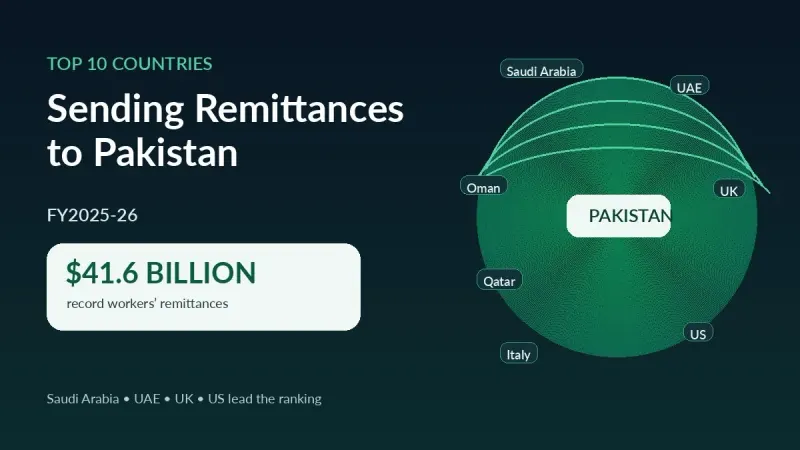 Economy
Top 10 Countries Sending Remittances to Pakistan in 2026
· 7 min read Economy
The Private Sector's Growing Role in Driving Economic Progress
· 3 min read Economy