Government Announces Rs. 300 Billion Major Upgrade for N-25 Highway
ISLAMABAD / QUETTA — In a landmark move to transform regional connectivity, enhance public safety, and spur economic development across Balochistan, the federal government has announced a massive Rs. 300 billion megaproject for the dualization and modernization of the National Highway 25 (N-25).
Stretching approximately 813 kilometers from the port city of Karachi to the border town of Chaman via Quetta, the N-25 serves as the vital lifeline connecting Sindh and Balochistan to Afghanistan and Central Asia. Historically plagued by severe traffic congestion, frequent fatal accidents, and single-lane bottlenecks, the highway’s transformation into a multi-lane divided expressway marks one of the most significant infrastructure investments in the province’s history.
1. Transforming the “Killer Highway” into a Modern Expressway
For years, the N-25—commonly known as the Regional Cooperation for Development (RCD) Highway—has earned a grim reputation as the “Killer Highway” due to its high rate of head-on collisions and narrow single-carriageway design. Thousands of lives have been lost in traffic incidents over the past decade.
The government’s expansion initiative directly addresses these long-standing safety hazards. By converting the route into a four-lane dual carriageway featuring modern safety barriers, improved street lighting, and widened shoulders, the upgrade aims to drastically reduce road fatalities while drastically cutting down travel time between Karachi and Quetta.
2. Boosting Transit Trade, Logistics, and Regional Commerce
The N-25 Highway is far more than a local road; it is a vital international trade corridor linking Pakistan’s deep-sea ports with landlocked neighbors in Central Asia.
Unlocking the Potential of Gwadar and CPEC
At Khuzdar, the N-25 intersects with the M-8 motorway, creating a direct link between the northern trade routes and Gwadar Port. Upgrading the N-25 complements the broader western route under the China-Pakistan Economic Corridor (CPEC) framework, establishing an integrated, multi-modal transport network across Balochistan.
Facilitating Pak-Afghan Trade
As the primary ground transit link to the Chaman border crossing, a dualized N-25 will significantly reduce transit times for agricultural exports, commercial imports, and cross-border freight. Freight operators and logistics companies will benefit from lowered vehicle operating costs, fuel savings, and reduced wear and tear on fleets.
“The dualization of the N-25 highway will serve as a game-changer for Balochistan’s economic landscape, reducing supply chain delays, boosting regional trade with Afghanistan, and saving countless precious lives.”
3. Socio-Economic Uplift for Local Communities
In addition to trade logistics, the Rs. 300 billion project is set to bring direct socio-economic benefits to underdeveloped districts across Balochistan:
Job Creation: Thousands of direct and indirect employment opportunities for local engineers, skilled technicians, and construction laborers during the execution phase.
Local Business Opportunities: The establishment of modern highway service areas—featuring rest stations, workshops, fuel outlets, and restaurants—will stimulate local entrepreneurship along the corridor.
Improved Access to Healthcare and Education: Faster transit times will allow residents of remote towns like Bela, Khuzdar, and Kalat to reach major medical facilities and educational institutions in Quetta and Karachi in emergencies.
The Road Ahead
With funding allocations approved under public sector development programs and execution teams mobilized on critical sections, the government has directed relevant authorities to adhere strictly to project timelines and safety standards.
Upon completion, the dualized N-25 Highway will stand as a cornerstone of Pakistan’s national road network—converting a historically dangerous route into an engine of economic growth, security, and regional integration.

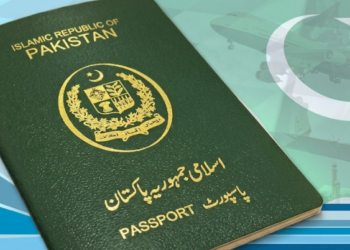
Pakistan’s passport improves in global ranking
Central international advisory structures have released updated logistical metrics regarding global cross-border mobility, indicating a slight but measurable upward adjustment...