Victoria Railway Bridge: An Enduring Symbol of Engineering Excellence
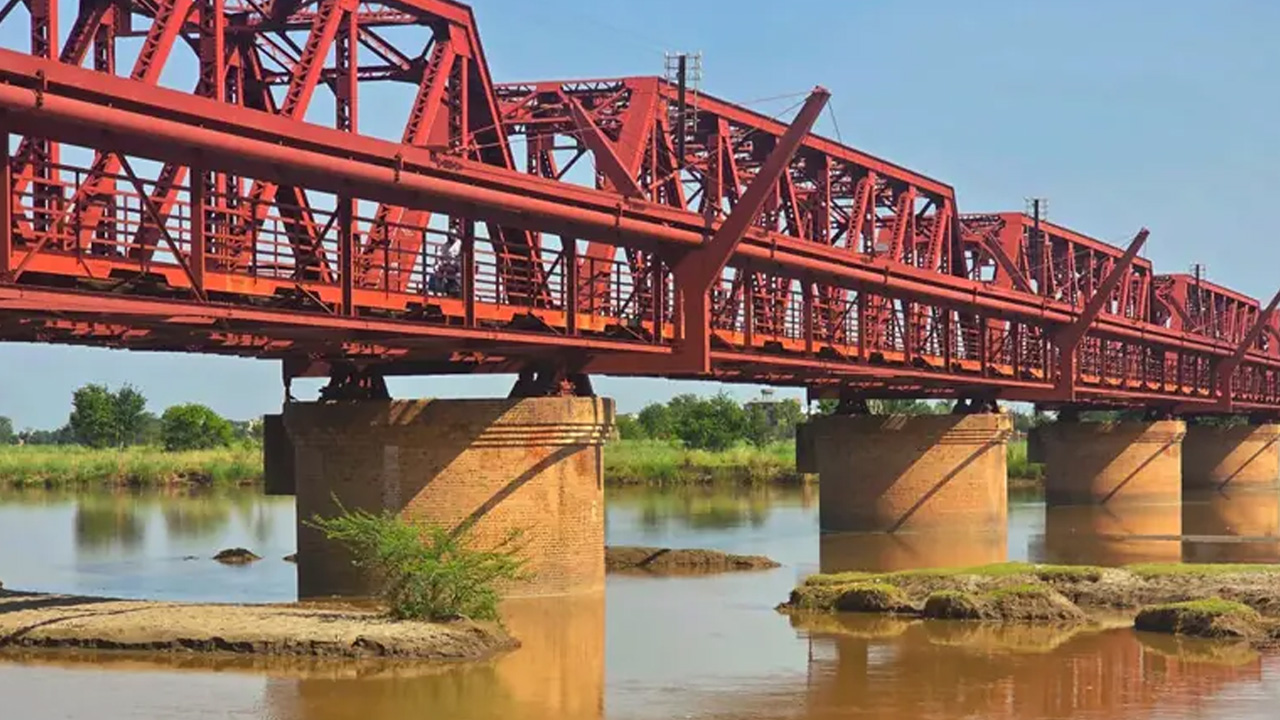
MANDI BAHAUDDIN / JHELUM — Spanning the mighty Jhelum River in Punjab, Pakistan, the Victoria Railway Bridge (historically known as the Chak-Nizam Bridge) stands as a monumental testament to 19th-century structural engineering. Stretching approximately 2,720 feet (829 meters) across the riverbed, this historic steel-truss landmark has connected regions, enabled trade, and weathered nearly a century and a half of industrial and political transformation.
Connecting Haranpur in Pind Dadan Khan (Jehlum district) on one side with Chak Nizam in Malakwal (Mandi Bahauddin district) on the other, the Victoria Railway Bridge remains both a critical link in Pakistan’s railway network and a living monument to human ingenuity.
1. Historical Context: Born Out of the “Great Game”
Completed in early 1887 during British rule, the bridge was constructed under the auspices of the Sind-Sagar State Railway, which later merged into the legendary North Western Railway (NWR). Its inception was driven by geopolitical necessity as much as commercial interest.
During the late 19th century, imperial concerns over the “Great Game”—the strategic rivalry between the British and Russian empires in Central Asia—demanded rapid movement of troops and supplies toward the northwestern frontiers. The British Raj urgently required an all-weather railway corridor connecting Punjab’s garrisons to strategic outposts near Kabul and Kandahar.
Building a resilient bridge across the fickle, flood-prone Jhelum River was an essential piece of this defensive puzzle. The opening ceremony in May 1887 was attended by Sir Alfred Lyall, the then Lieutenant-Governor of the Punjab, and recorded by the famous author Rudyard Kipling, who vividly described the site’s intense heat, dust, and sheer scale of construction.
2. An Architectural and Engineering Triumph
Constructed under the leadership of Chief Engineer James Ramsay and Engineer-in-Charge Frederick Robert Upcott, the Victoria Railway Bridge challenged the era’s technical capabilities.
Robust Steel Trusses: The superstructure consists of massive iron and steel truss spans imported directly from British foundries and meticulously assembled on-site.
Massive Masonry Piers: The steel spans rest upon deep brick-and-concrete piers sunk into the unstable, sandy bed of the Jhelum River, designed to withstand torrential seasonal floods.
Innovative Assembly: During construction, severe water rushes forced engineers to assemble the final girder spans directly on floating barges—a high-stakes technique requiring precise timing and skilled labor.
“The Victoria Railway Bridge is not just a bridge, but a living monument to the history of the Indo-Pak subcontinent, a heritage of the North Western Railway, and one of the finest examples of British-era engineering.”
3. The Economic Lifeline of the Salt Range
While military logistics initiated its construction, the bridge quickly became the financial lifeblood of the surrounding region. The area north of the Jhelum lies within the Salt Range, home to the famous Khewra Salt Mine—the world’s second-largest salt reserve—along with extensive deposits of limestone and coal.
Before the bridge was built, transporting minerals across the wide Jhelum River relied on slow ferry boats and makeshift barges, creating massive bottlenecks. The bridge enabled heavy freight trains to haul millions of tons of pink Himalayan salt, industrial coal, and agricultural products across the country, boosting trade throughout the Indus Basin.
4. Dual-Purpose Design and Daily Community Impact
A unique feature of the Victoria Railway Bridge is its dual functionality. While the central structure carries Pakistan Railways’ single-track rail line, narrow wooden and concrete walkways were integrated onto the sides.
For generations, these side tracks have provided safe passage for local pedestrians, cyclists, and motorcyclists travelling between surrounding agricultural villages. For millions of residents in Mandi Bahauddin, Jhelum, and Sargodha districts, the bridge remains an everyday necessity, cutting down travel time that would otherwise require long detours across modern highway bypasses.
5. Heritage Preservation and Future Outlook
Nearly 140 years after its first steam engine rolled across the steel girders, the Victoria Railway Bridge remains structurally sound and operational—a testament to its original builders and subsequent maintenance by Pakistan Railways.
However, heritage conservationists and local historians advocate for greater formal preservation efforts. As a cornerstone of South Asia’s railway heritage, the bridge holds significant potential for industrial heritage tourism. Restoring nearby historic railway stations, preserving colonial-era water wells and traveler rest stops around Chak Nizam, and highlighting the bridge’s story could turn the location into a major cultural destination.


Atif Aslam Says His First Album In 19 Years Is A Representation Of Him Meeting His ‘Real Self’
Meeting His 'Real Self': Atif Aslam Prepares to Release His First Studio Album in 19 Years For nearly two decades,...