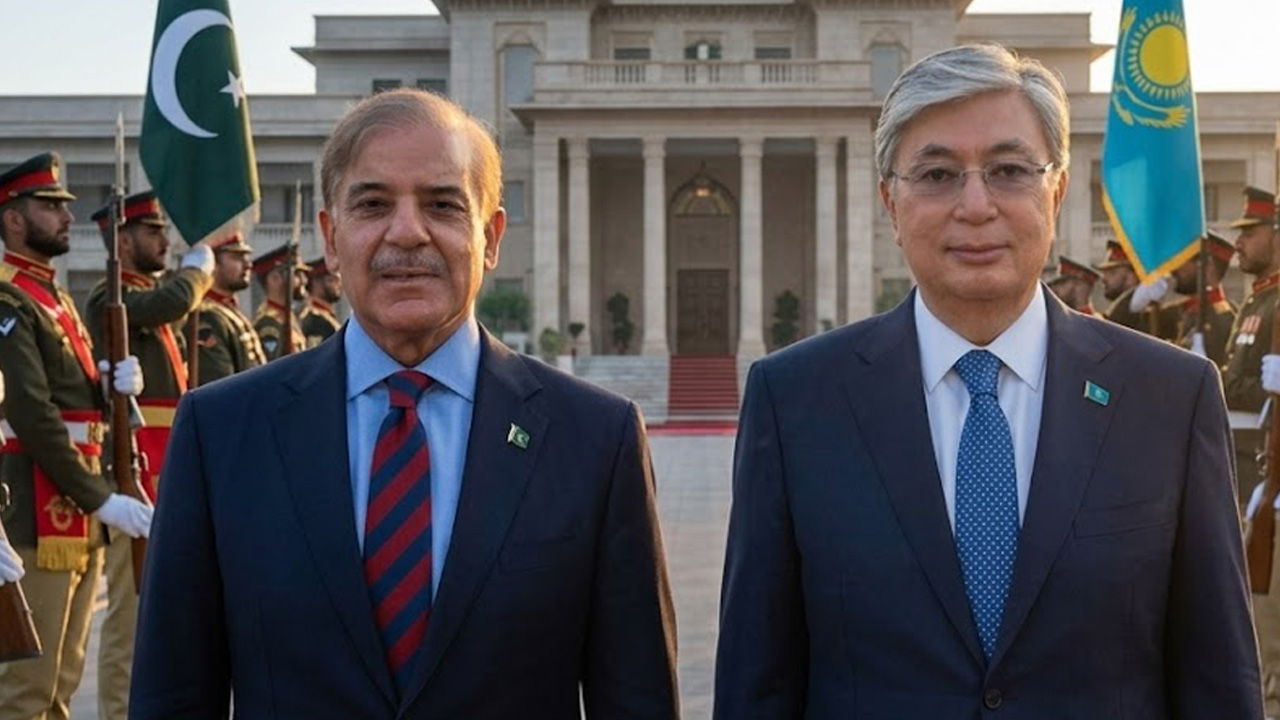
Pakistan and Kazakhstan Agree to Boost Economic Ties and Trade Connectivity
In a significant move to strengthen economic relations across Central and South Asia, Pakistan and Kazakhstan have agreed to expand bilateral trade, investment opportunities, and regional cooperation. The agreement followed high-level talks between Pakistani leadership and Kazakh President Kassym-Jomart Tokayev, focusing on unlocking commercial potential and enhancing connectivity routes.
This developmental strategy aims to link regional markets with international trade channels, providing landlocked partner economies direct access to major maritime hubs in the south.
Expanding Commercial Relations and Setting Growth Targets
A primary focus of the bilateral discussions was addressing the need for higher commercial volume between the two nations. Despite strong diplomatic relations and long-standing historical connections, official bilateral trade has remained relatively modest in recent years.
To bridge this gap, leadership from both sides established a target to raise total trade volume to $1 billion in the near future.
Both governments agreed to promote joint business forums and encourage private sector engagement. Kazakh officials invited Pakistani enterprises to explore investment opportunities in growth sectors such as agricultural processing, pharmaceuticals, construction materials, and commercial manufacturing.
Bilateral Accords Signed Across Key Sectors
To support long-term cooperation, representatives from both delegations exchanged multiple Memorandums of Understanding (MoUs) and bilateral accords covering various economic and structural development areas:
Energy and Mineral Exploration: Frameworks for joint study and technical exchange in natural resource management.
Transit Trade Facilitation: Agreements designed to streamline border customs processes and reduce administrative delays for commercial cargo.
Transport Infrastructure: Collaborative efforts between transport authorities to integrate rail and road freight channels.
Technology and Financial Services: Joint initiatives in digital systems, banking coordination, and cross-border commercial mechanisms.
Regional Connectivity and Transport Corridors
Transport links were a major point of discussion during the meetings. Pakistan reaffirmed its commitment to offering port access in Karachi and Gwadar to support Central Asian transit trade.
Furthermore, both sides highlighted the importance of multi-country overland trade corridors that connect producer markets with major consumer destinations. The implementation of efficient land routes is expected to reduce transit times and freight costs significantly. To facilitate direct business travel and diplomatic engagement, both nations also agreed to explore restoring direct commercial flights between key urban centers.
Multilateral Engagement and Institutional Cooperation
The summit emphasized shared objectives within regional and global forums, including the Shanghai Cooperation Organization (SCO) and the United Nations. Both countries reaffirmed that long-term regional stability and economic growth are interconnected, stressing the value of continued diplomatic coordination.

US firm eyes Balochistan minerals, oil-gas projects in talks with Pakistan
Federal energy administrators have formally engaged top-tier international corporate executives to aggressively accelerate localized resource extraction and structural logistics. Central...