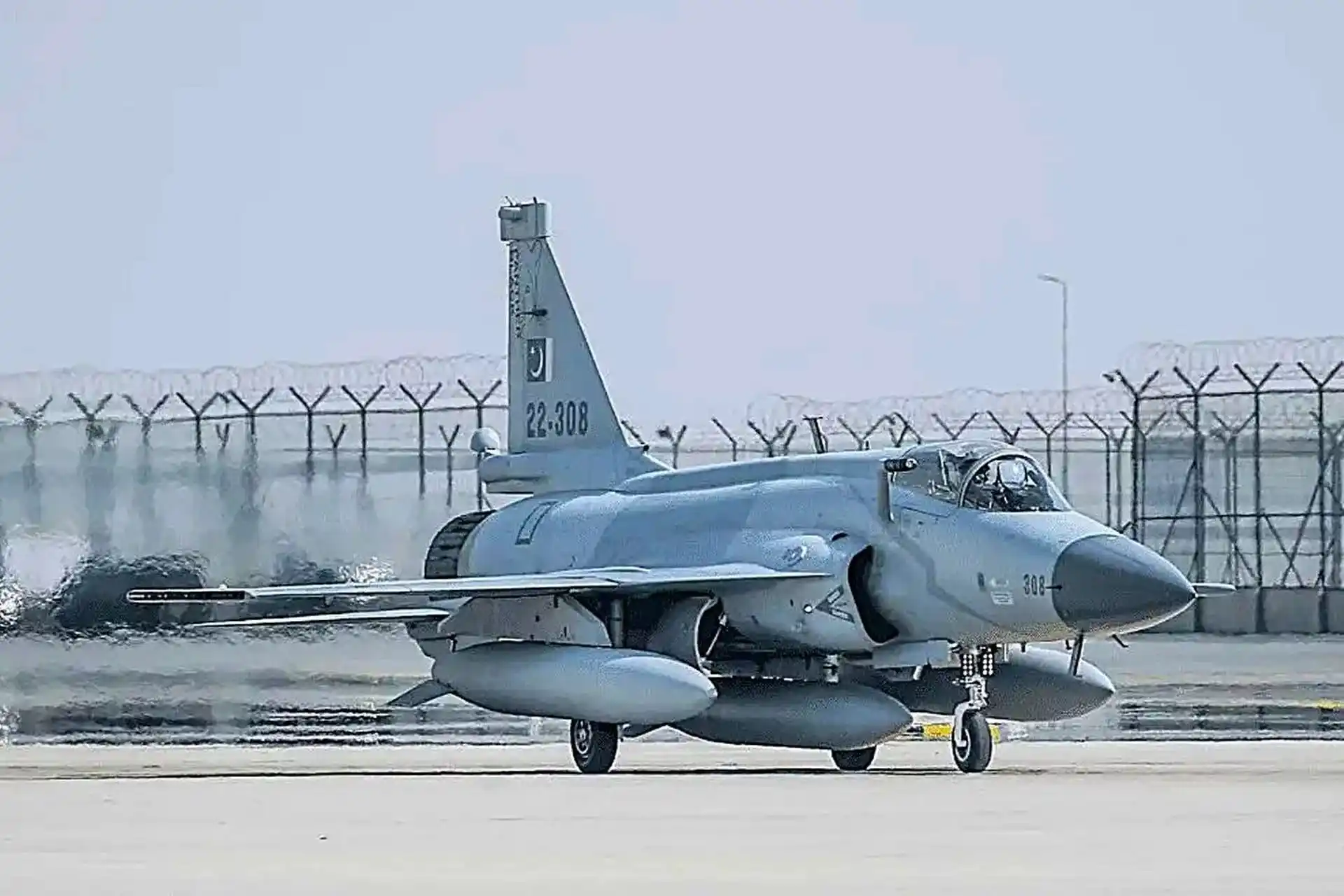
Pakistan is actively engaged in negotiations with several countries to sell its JF-17 Thunder multirole fighter jets, according to Defence Production Minister Raza Hayat Haraj. The discussions highlight the growing interest in the aircraft, which has been jointly developed by Pakistan and China.
Export Talks and China’s Role
Minister Haraj confirmed that any export deal involving the JF-17 would require approval from China, reflecting its significant role in the aircraft’s development and manufacturing. “These negotiations are taking place and they take some time. Many countries are interested in these aircraft,” he stated, while refraining from naming specific nations due to confidentiality.
Reports have suggested potential talks with countries including Libya, Sudan, Bangladesh, Indonesia, and Saudi Arabia, but the minister emphasized that such details remain classified. He added, “When these aircraft are delivered, the world will know which countries have bought them.”
Performance and Pricing
The JF-17’s performance during the recent Pakistan-India conflict has drawn international attention and praise, according to Minister Haraj. He also highlighted the aircraft’s competitive pricing, noting that while similar fighter jets globally cost between $250 million and $350 million, the JF-17 is priced significantly lower, at approximately $40 to $50 million.
Manufacturing and Strategic Partnerships
The fighter jet’s components are produced both in China and Pakistan, necessitating China’s involvement in any sales agreements. When asked about China’s financial participation, the minister confirmed that China is fully engaged in discussions, as is appropriate given its partnership status.
Analysts note that China remains the senior partner in the JF-17 project and will closely oversee export negotiations. The aircraft’s sale is expected to be a joint China-Pakistan arrangement, with technology control maintained by China.
Sales Policy and Strategic Allies
Minister Haraj clarified that the JF-17 is not available for sale to every country, emphasizing that sales will be restricted to friendly nations. Regarding the defense agreement signed last year between Pakistan and Saudi Arabia, he declined to disclose details, citing confidentiality.
He identified Turkiye, China, Saudi Arabia, and Azerbaijan as close strategic partners of Pakistan, with ongoing collaborations in defense and related sectors. The minister also acknowledged ongoing work on unmanned aerial vehicles (UAVs) in Pakistan, including private sector involvement, without confirming specific projects.