USC Layoffs Spark Nationwide Protests
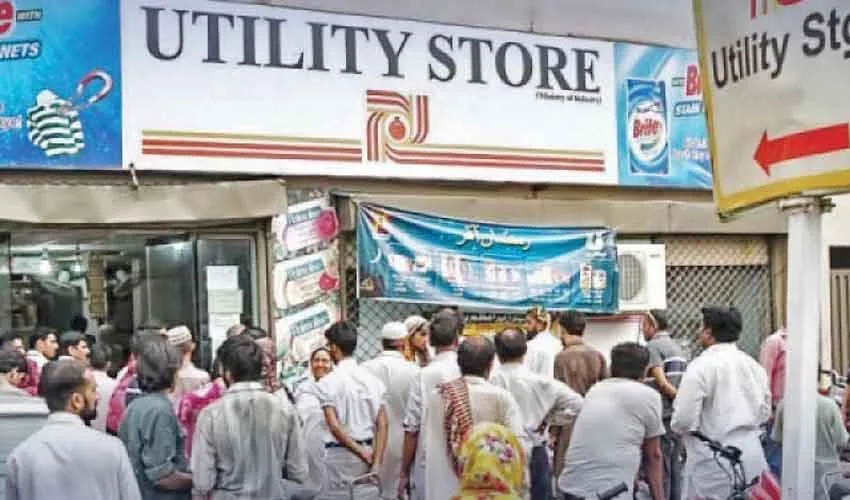
Islamabad – 05 May 2025:
The federal government has initiated the privatisation of the Utility Stores Corporation (USC), triggering widespread employee protests and the closure of hundreds of outlets across Pakistan. This decision is part of the second phase of the government’s broader privatisation programme, aimed at reducing public-sector expenditures and aligning with IMF-backed fiscal reforms.
Sources confirmed on Monday that the USC administration has already laid off more than 2,800 contractual employees, and preparations are underway to forcefully retire over 5,000 permanent staff members. In addition, 509 more contractual workers are expected to be dismissed in the coming weeks.
The workforce reduction has sparked nationwide protests by USC employees, resulting in the closure of nearly 1,800 out of 3,542 utility stores operating across the country. These closures threaten the accessibility of subsidised essential goods for millions of low-income households who rely on these outlets.
Officials from the Ministry of Industries and Production have justified the move as part of a long-overdue restructuring effort, citing the poor response to previously offered voluntary separation and golden handshake schemes. Before the latest layoffs, USC had already terminated approximately 3,000 daily-wage employees, reducing the overall workforce from 9,294 to 6,484. However, 654 daily-wage staff have reportedly returned to their jobs after securing legal relief through the courts.
Among the operating stores, internal records indicate that 2,539 outlets are part of the core store network.
Adding to the crisis is USC’s worsening financial condition. Despite a federal allocation of Rs60 billion for the current fiscal year—including Rs10 billion for a Ramadan relief package and Rs50 billion as a regular grant—none of the funds have been disbursed so far, according to insiders.
Furthermore, the financial accounts for FY 2022–23 and FY 2023–24 remain unaudited, delaying the appointment of a financial adviser for the privatisation process. Government officials have confirmed that the formal privatisation of USC will proceed only after audits are completed.
Despite the severity of the move, neither the government nor USC’s top management has made an official statement. Employees have expressed outrage, citing a lack of transparency, abrupt layoffs without compensation, and concerns over the future of subsidised retail services in Pakistan.
“The abrupt dismissals without proper compensation or engagement with the workforce have created panic and uncertainty across the board,” said a senior USC employee, speaking anonymously. “This isn’t just about jobs; it’s about the future of affordable access to essential items for the country’s most vulnerable citizens.”
The privatisation push aligns with ongoing IMF conditions to reduce public-sector losses and improve fiscal discipline. However, critics warn that such measures could have disproportionate social consequences, potentially leaving millions of Pakistanis without access to affordable commodities during a time of economic hardship.
Related stories
 Economy
Aurangzeb, Fitch Discuss Pakistan’s Credit Outlook
 Economy
DPM Orders Strict Monitoring of Supply Chains and Prices
 Business
Aurangzeb Reaffirms Commitment to Completing IMF Programme
 Economy
IMF Raises Asia Growth Forecast, Flags Risks Ahead
 Economy
PM Directs Banks to Improve Housing, SME, Farm Lending
 Business