Tomato Prices Soar Past Rs.500 Amid Rising Inflation
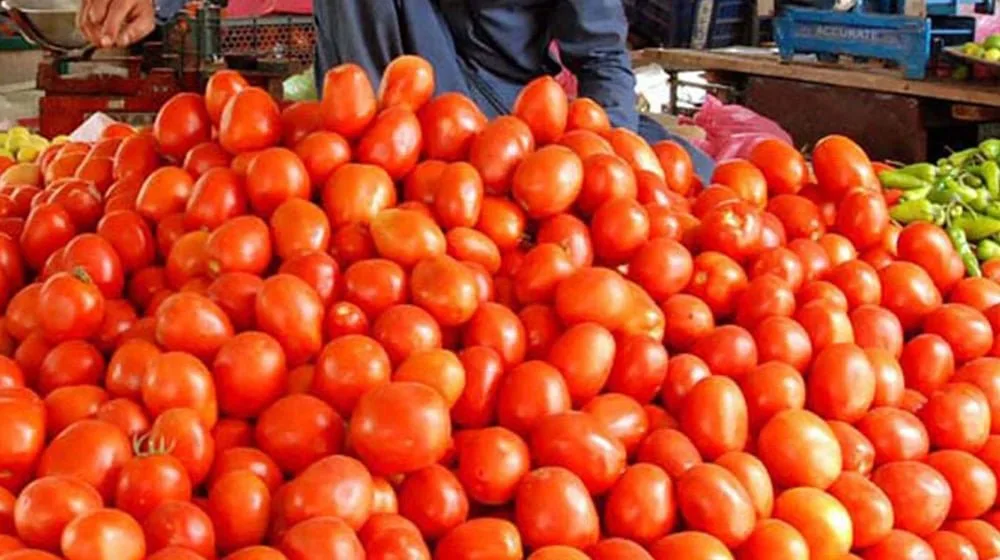
ISLAMABAD (Web Desk) — Pakistan’s food markets are reeling under severe inflationary pressure as tomato prices have surged beyond Rs.500 per kilogram, making them costlier than chicken meat. The steep rise in prices has caused frustration among consumers already struggling with the burden of soaring living costs.
According to market reports, tomato prices have touched between Rs.450 and Rs.550 per kilogram in major cities, including Karachi, Badin, Jamshoro, Mirpur Khas, and Turbat. Traders attribute the sharp hike to disrupted supply chains, limited shipments from Punjab, and a delay in Sindh’s new tomato crop reaching local markets.
A senior trader at Karachi’s Sabzi Mandi said that nearly 90% of the city’s demand is currently being met through Iranian imports, while the suspension of tomato imports from Afghanistan has intensified the shortage. “The dependence on Iranian supplies and lack of domestic produce have caused prices to skyrocket. The situation may persist until Sindh’s harvest enters the market,” he explained.
Meanwhile, prices of other essential vegetables — including onions, potatoes, green chilies, lady fingers, taro roots, ginger, and garlic — have also surged, further straining household budgets.
Inflation Data Highlights
The Pakistan Bureau of Statistics (PBS) has confirmed that core inflation, measured by the Consumer Price Index (CPI), jumped to 5.6% in September 2025, compared to 3% in August.
- Urban inflation: 5.5% (up from 3.4% last month)
- Rural inflation: 5.8% (up from 2.4%)
- Food prices: Increased by 4.4%
- Non-food items: Rose by 6%
The PBS report notes that overall prices rose 2.6% in September compared to a 0.6% decrease in August, showing a clear acceleration in inflationary trends.
The Ministry of Finance had earlier estimated a 3.5% to 4.5% rise in prices for September; however, the actual inflation surpassed projections. From July to September 2025, the average price increase stood at 4.22%, indicating persistent inflationary pressure during the first quarter of the fiscal year.
Economic Impact
Economists warn that rising food prices could severely impact low- and middle-income households, as essential commodities consume a significant portion of monthly budgets. The spike in vegetable and poultry prices also risks pushing secondary inflation in other sectors, including food processing and transportation.
Analysts have urged the government to facilitate emergency imports, stabilize market supplies, and monitor profiteering and hoarding practices to prevent further shocks to the economy.
Related stories
 Breaking
New Lahore-Pindi Motorway to Cut Travel by 100km
 Business
Google Hosts Think Apps 2026 at Lahore Fort
 Business
WB Vows Support for Digital Skills Among Pakistani Youth
 Business
Four NHA Projects Planned Under Public-Private Partnership
 Business
Aurangzeb Reaffirms Stability, Meets Banks and UNDP Chief
 Business