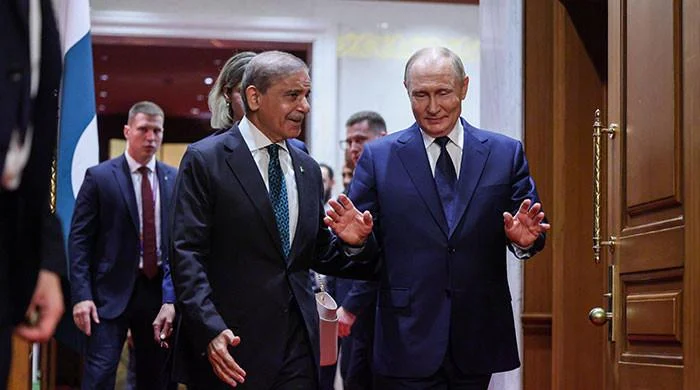
Russian President Vladimir Putin has affirmed the strong and mutually advantageous relationship between Russia and Pakistan, highlighting ongoing close cooperation between the two nations.
Close Cooperation Within Regional Framework
President Putin noted that Russia maintains close ties with Pakistan, a full member of the Shanghai Cooperation Organisation (SCO), which is recognized as the largest regional organization by economic, technological, and human potential. He described the Russia-Pakistan relationship as genuinely mutually beneficial, according to a statement from the Russian Embassy in Pakistan.
Diplomatic Engagements and Credential Presentation
The remarks coincided with a formal ceremony at Moscow’s Grand Kremlin Palace, where Pakistan’s Ambassador to Russia, Faisal Niaz Tirmizi, presented his credentials to President Putin. This event underlines the continuing diplomatic engagement between Moscow and Islamabad.
Growing Economic and Energy Ties
In recent years, economic relations between Russia and Pakistan have strengthened significantly, driven by mutual needs. Following Western sanctions related to the Ukraine conflict, Russia sought new energy markets, while Pakistan looked for more affordable fuel sources to reduce import costs.
This evolving partnership led Pakistan to incorporate Russian crude oil into its energy portfolio in 2023. Additionally, talks continue between the two countries regarding a potential new oil-sector agreement, as noted by Pakistan’s Finance Minister Muhammad Aurangzeb last month.
Trade and Bilateral Cooperation
Pakistan relies on imports for approximately 70 percent of its crude oil, with Russian crude playing a key role. Despite this reliance, Pakistan has maintained favorable tariff conditions with the United States and strong relations with the current U.S. administration, contrasting with recent tariff increases imposed on India.
In November of the previous year, during a visit by Russian Energy Minister Sergei Tsivilev to Islamabad for the 10th Russia-Pakistan Intergovernmental Commission, both countries reaffirmed their commitment to expanding cooperation across trade, energy, business, health, and education sectors.