Pakistan, IMF Pledge to Sustain Economic Reforms
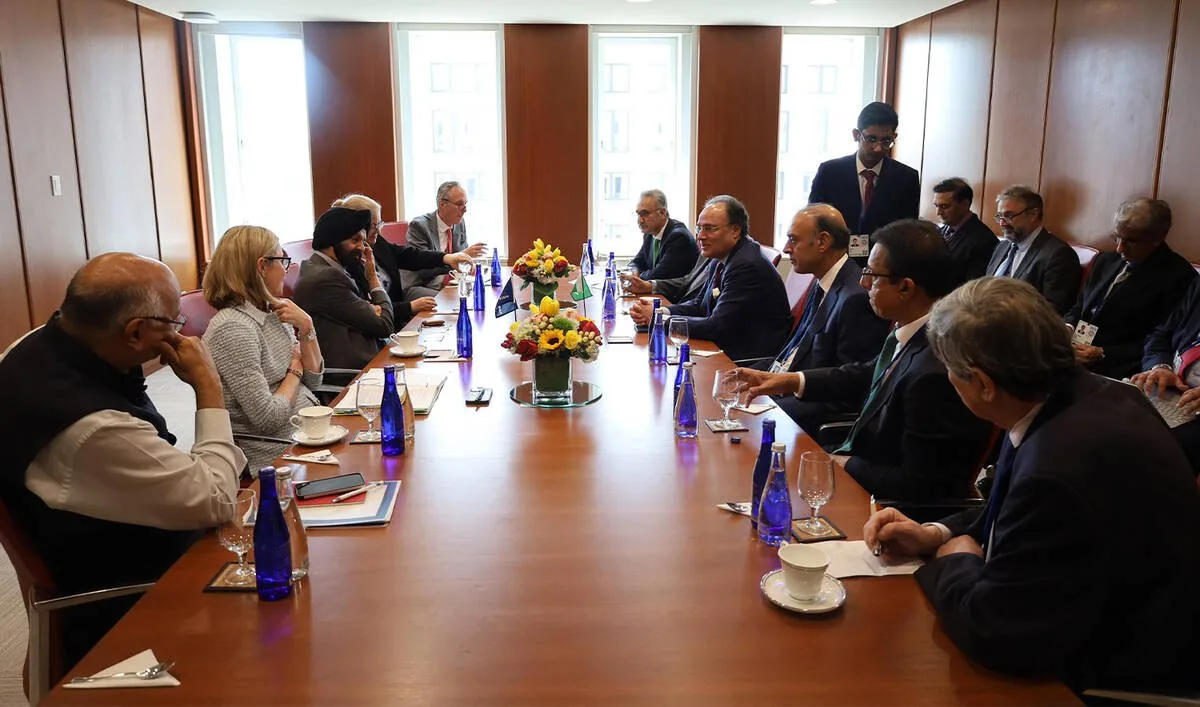
Pakistan and the International Monetary Fund (IMF) have agreed to sustain the momentum of ongoing economic reforms during Finance Minister Senator Muhammad Aurangzeb’s meeting with IMF Director Jihad Azour in Washington D.C. The meeting took place on the sidelines of the IMF and World Bank Annual Meetings, where both sides reviewed progress under the Second Review of the Extended Fund Facility (EFF) and reaffirmed their commitment to macroeconomic stability and structural reforms.
Aurangzeb highlighted Pakistan’s continued focus on fiscal discipline and sustainable growth. The IMF delegation appreciated Pakistan’s progress and encouraged the government to persist with reforms aimed at economic resilience.
On the sidelines, the Finance Minister also held a meeting with Mr. Axel van Trotsenburg, Senior Managing Director of the World Bank Group. Aurangzeb expressed appreciation for the World Bank’s long-standing support and stressed the urgent need for investment in climate adaptation and mitigation efforts. He noted that climate change remains an existential threat to Pakistan, particularly after the devastating floods that had disrupted agriculture and GDP growth.
In another engagement, Aurangzeb participated in the Commonwealth Finance Ministers’ Meeting, where he called for stronger global mechanisms for climate finance and the creation of a disaster risk reduction fund to assist vulnerable economies. He emphasized Pakistan’s commitment to international cooperation in tackling economic and environmental challenges.
Additionally, the Finance Minister met with members of the U.S.-Pakistan Business Council, reaffirming Pakistan’s commitment to fostering private sector growth and foreign investment. He invited American companies to invest in sectors such as energy, technology, and manufacturing, underscoring that ongoing reforms are designed to create a more business-friendly environment.
Overall, the series of meetings underscored Pakistan’s proactive engagement with international partners to sustain reform momentum, enhance climate resilience, and boost investor confidence.
Related stories
 Economy
$21.4 Billion: Pakistan's Foreign Reserves Just Hit an All-Time High
 Economy
KP Governor Highlights Province's Untapped Mineral Wealth for National Growth
· 4 min read Energy
Pakistan's mineral wealth offers major opportunities for investment: Jam
 Pakistan
Pakistan Rejects India’s ‘Baseless’ Claims on Status of Occupied Kashmir
 Economy
Top 10 Countries Sending Remittances to Pakistan in 2026
· 7 min read Pakistan