PAAPAM Calls for Stable Policy Support to Unlock Growth in Pakistan’s Auto Parts Industry
The Pakistan Association of Automotive Parts and Accessories Manufacturers (PAAPAM) has stressed that the domestic auto parts sector remains a significant contributor to industrial growth, employment, and import substitution, while making clear that a more consistent and supportive policy environment is essential if the industry is going to expand further.
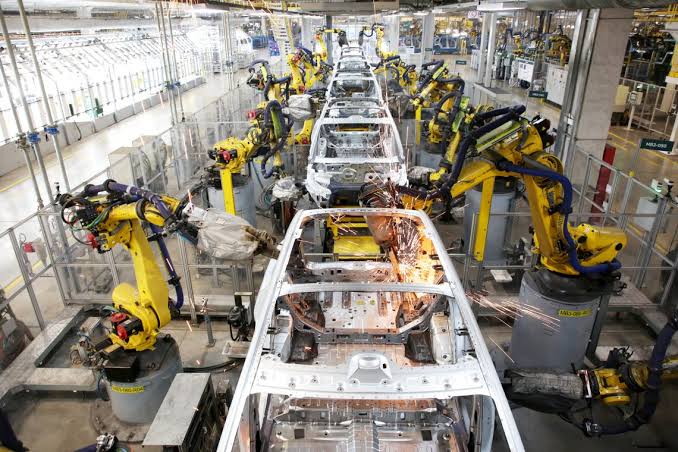
In a statement issued Monday, PAAPAM reaffirmed its commitment to strengthening the sector. Chairman Usman Malik noted that local parts manufacturers have invested billions of rupees over several decades into building plants, tooling, engineering capacity, and quality systems, an investment base that now supports thousands of direct and indirect jobs across the country.
A Sector Capable of Competing Globally
Malik emphasised that Pakistani auto parts makers already have the technical ability to produce components that can compete on international markets. He argued that the industry’s considerable untapped potential could be fully realised through a combination of consistent industrial policies, more competitive energy tariffs, access to lower-cost financing, dedicated export support, and a generally stable investment climate.
That framing is worth sitting with for a moment. It’s not a claim that the industry lacks capability, quite the opposite. Malik’s point is that Pakistani manufacturers already possess the engineering know-how and quality standards needed to compete abroad, but that structural cost and policy factors outside their direct control continue to hold the sector back from reaching that potential.
Why the JF-17 Comparison Doesn’t Quite Hold Up
One particularly interesting thread in the statement came from former PAAPAM chairman Aamir Allawala, who pushed back against recent comparisons drawn between Pakistan’s auto industry and the JF-17 Thunder fighter jet programme, a comparison that has apparently been circulating in public discussion. Allawala argued that such comparisons fail to account for the fundamentally different nature of the two sectors.
He explained that the JF-17 project was a strategic national initiative, backed by sustained state support, long-term public investment, and guaranteed institutional demand from the outset. The auto parts industry, by contrast, operates in a completely different environment, one shaped by private capital, market-driven demand, and fiscal policies that can shift from one budget cycle to the next.
According to Allawala, this distinction underscores exactly why policy continuity and long-term planning matter so much for the auto parts sector specifically. Unlike a state-backed defence programme with assured demand, private manufacturers need a stable, predictable business environment to justify the kind of long-horizon capital investment that durable manufacturing growth requires. Without that predictability, even companies with strong technical capabilities may hesitate to commit further capital toward expansion.
The Structural Hurdles Holding the Industry Back
Allawala went on to identify several specific structural constraints that, if addressed, could significantly improve the competitiveness of Pakistan’s auto parts sector. These included high energy costs, expensive financing, taxation burdens, logistics bottlenecks, and restricted market access, a fairly comprehensive list that touches on nearly every major cost driver a manufacturer has to contend with.
Each of these factors compounds the others in practice. High energy costs directly raise production expenses for parts manufacturers, who often rely on energy-intensive processes like metal forming, casting, and machining. Costly financing makes it harder to fund the kind of long-term capital investment needed to modernise equipment or expand capacity. Heavy taxation further squeezes already tight margins, while logistics bottlenecks add delays and costs to getting components to assemblers or export markets. Restricted market access, meanwhile, limits how much international demand manufacturers can actually tap into, even when their products are competitive on quality and price.
A Sector With Real Export Potential, If Given the Right Conditions
Taken together, PAAPAM’s statement paints a picture of an industry that has already done much of the hard work, building manufacturing capacity, developing engineering expertise, and establishing quality systems capable of meeting international standards, but one that now needs the surrounding policy and cost environment to catch up if it’s going to translate that capability into meaningful export growth.
This messaging arrives at a notable moment for Pakistan’s broader automotive sector, which has recently been navigating significant disruption tied to tariff rationalisation under the country’s IMF programme, alongside growing competition from Chinese electric vehicle manufacturers entering the local market. Against that backdrop, PAAPAM’s call for policy stability reflects a broader anxiety running through the industry: that structural cost disadvantages, rather than any lack of manufacturing capability, remain the primary obstacle preventing Pakistani auto parts makers from competing more aggressively in export markets.
What Policy Continuity Would Actually Mean
For an industry that invests in long-lived physical assets like tooling, machinery, and plant infrastructure, policy continuity isn’t just a nice-to-have, it’s often the deciding factor in whether a company chooses to expand domestically or look elsewhere. Sudden shifts in tax rates, tariff structures, or energy pricing can undermine investment decisions made years earlier, discouraging exactly the kind of long-term capital commitment that PAAPAM argues the sector needs to reach its full potential.
Looking Ahead
For now, PAAPAM’s statement functions as both an acknowledgment of what the auto parts industry has already achieved and a clear appeal for the kind of stable, supportive policy environment needed to build on that foundation. Whether policymakers respond with the consistency and cost relief the association is asking for will likely shape how much of the sector’s export potential actually gets realised in the coming years, particularly as Pakistan’s broader automotive landscape continues to navigate the twin pressures of tariff reform and rising competition from international entrants.