Hamid Mir and a Lifetime of Courageous Journalism
From the newspaper desks of Lahore to Capital Talk and international recognition, Hamid Mir has built a career around difficult questions, public debate and the defence of press freedom.
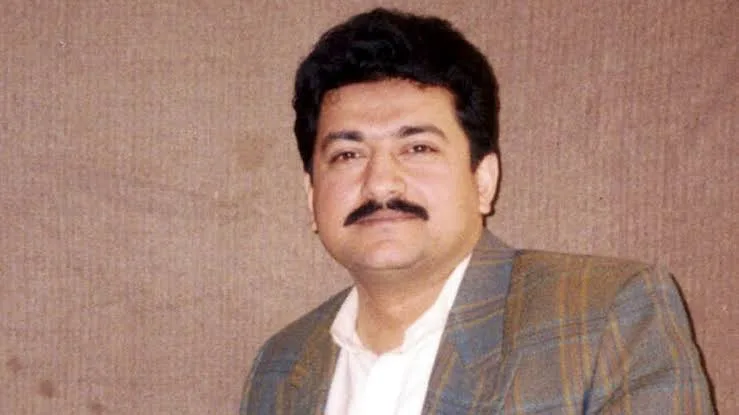
From the newspaper desks of Lahore to Capital Talk and international recognition, Hamid Mir has built a career around difficult questions, public debate and the defence of press freedom.
Hamid Mir (born 23 July 1966) is a Pakistani journalist, columnist, political writer, and a national security expert. Mir initially worked as a journalist with Pakistani newspaper
Hamid Mir's grandfather was Mir Abdul Aziz from Sialkot who was a poet in Punjabi, Urdu and Persian. Mir's father, Waris Mir was also a columnist for Daily Jang and Mir's mother was Mumtaz Mir, who migrated to Pakistan from Jammu in the region of Jammu and Kashimir in 1947. His father died on 9 July 1987 in Lahore and his mother died in 1993. Hamid Mir studied at Government College University and University of Punjab.
In November 2007, with his television programme barred from the airwaves during emergency rule, Hamid Mir took the discussion outside. He brought the format of Capital Talk to public spaces, placing guests before a live audience and continuing to ask questions about Pakistan’s political future. The studio had disappeared, but the conversation carried on.
That episode offers a useful way to understand his career. Across decades in newspapers and television, Mir has repeatedly found reasons to keep reporting when the conditions around him made that work difficult. His contribution to Pakistani journalism can be seen in the programmes he has hosted, the stories he has pursued and the attention he has drawn to the safety of fellow journalists.
His newspaper background, experience of reporting abroad and long broadcasting career give substance to his reputation as a persistent public questioner. His story is also one of returning to the work: to the subjects he considers important, to his readers and viewers, and, after serious injury, to his professional responsibilities.
The newspaper years in Lahore
Mir began his journalism career at Daily Jang in Lahore in 1987, working first as a subeditor and then as a reporter. These early roles placed him inside the daily process of making a newspaper, well before television made his name familiar to a wider audience.
His family background adds context to that beginning. His father, Professor Waris Mir, combined journalism with academic work and taught at the University of the Punjab, where he headed the Mass Communication Department. Waris Mir’s writing addressed public affairs, freedom of expression and democratic rights. The relationship places Hamid Mir within a family tradition in which writing carried an obligation to engage with the country’s difficult questions.
Hamid Mir went on to become editor of Daily Pakistan in Islamabad in 1996. Reporters Without Borders also records his role in helping launch Daily Ausaf in 1997. By the time he entered television, he had already worked across reporting and editorial leadership. That experience is a substantial part of his professional record and deserves attention alongside his better-known broadcasting career. [2,4]
Capital Talk and the place of public debate
Mir joined Geo in 2002 and began hosting Capital Talk that November. The programme brought politicians from government and opposition into discussion, establishing the format with which he remains closely associated. Its longevity has made it a significant part of his contribution to Pakistan’s broadcast journalism.
Geo describes Capital Talk as a programme examining the country’s daily challenges through a panel discussion. That format has a clear public purpose: it places different explanations of an issue before the audience and gives a host the opportunity to press guests on the points where their accounts diverge. Viewers can hear the answer as well as the question.
The street editions in 2007 showed Mir’s attachment to that exchange. Contemporary reporting described gatherings at press clubs, a university and a busy market, with information about the events circulating through text messages. The audience could participate directly, even though the discussions could not replace the reach of a regular broadcast.
The episode remains a striking example of professional resourcefulness. Mir adapted the setting and kept the exchange alive, giving people a place to listen, question and respond during a period when the usual space for television debate had narrowed.
Reporting beyond the television studio
Mir’s professional experience also includes reporting from places affected by war and conflict. His Islamabad Literature Festival biography lists assignments in Afghanistan, Iraq, Syria, Lebanon, Palestine, Chechnya and Kashmir. That range is a reminder that his career extends well beyond commentary delivered from a studio desk.
His interviews with Osama bin Laden, including one after the September 11 attacks, form part of the historical record of his reporting. Reporters Without Borders includes those interviews in its account of his career. Their significance lies in the attempt to obtain information directly from a central figure in a major international story. They belong in an assessment of his reporting experience, alongside his work on Pakistani politics and public affairs.
He has also interviewed prominent political figures beyond Pakistan. Geo’s career account names Condoleezza Rice, Tony Blair and L. K. Advani among his interviewees. These assignments involved different political settings and audiences, adding breadth to a career often associated primarily with domestic television debate.
This breadth is one of the strengths of his career. Editing a newspaper, reporting from a conflict and interviewing a political leader require different kinds of preparation. Mir’s record brings those experiences together, giving his work a professional background that reaches far beyond the immediate argument of a television panel.
Giving attention to people whose stories matter
One of the most worthwhile aspects of Mir’s work is his attention to people whose experiences can be pushed aside by arguments among political leaders. In a 2012 essay, he described repeatedly raising the issue of missing persons through his columns and television programmes. His own account makes clear that he regarded this reporting as a serious professional responsibility.
The public value of that choice is easy to understand. Behind the phrase “missing persons” are families seeking information about someone they love. Bringing their concerns into public discussion gives an audience a chance to understand the human consequences of an issue that might otherwise remain distant. It also creates an opportunity to ask what answers those families have received.
His early coverage of Malala Yousafzai provides another example of that attention. The Islamabad Literature Festival credits him with helping bring her to television audiences in 2009. Including the concerns of a young advocate for girls’ education within a political broadcaster’s work widened the range of people who could be heard.
These examples suggest a useful measure of a journalist’s contribution: the people whose concerns receive serious attention. An interview with a powerful official has value, and so does the decision to listen to someone seeking an education or information about a missing relative. Mir’s record includes both kinds of work.
Returning to work after the 2014 attack
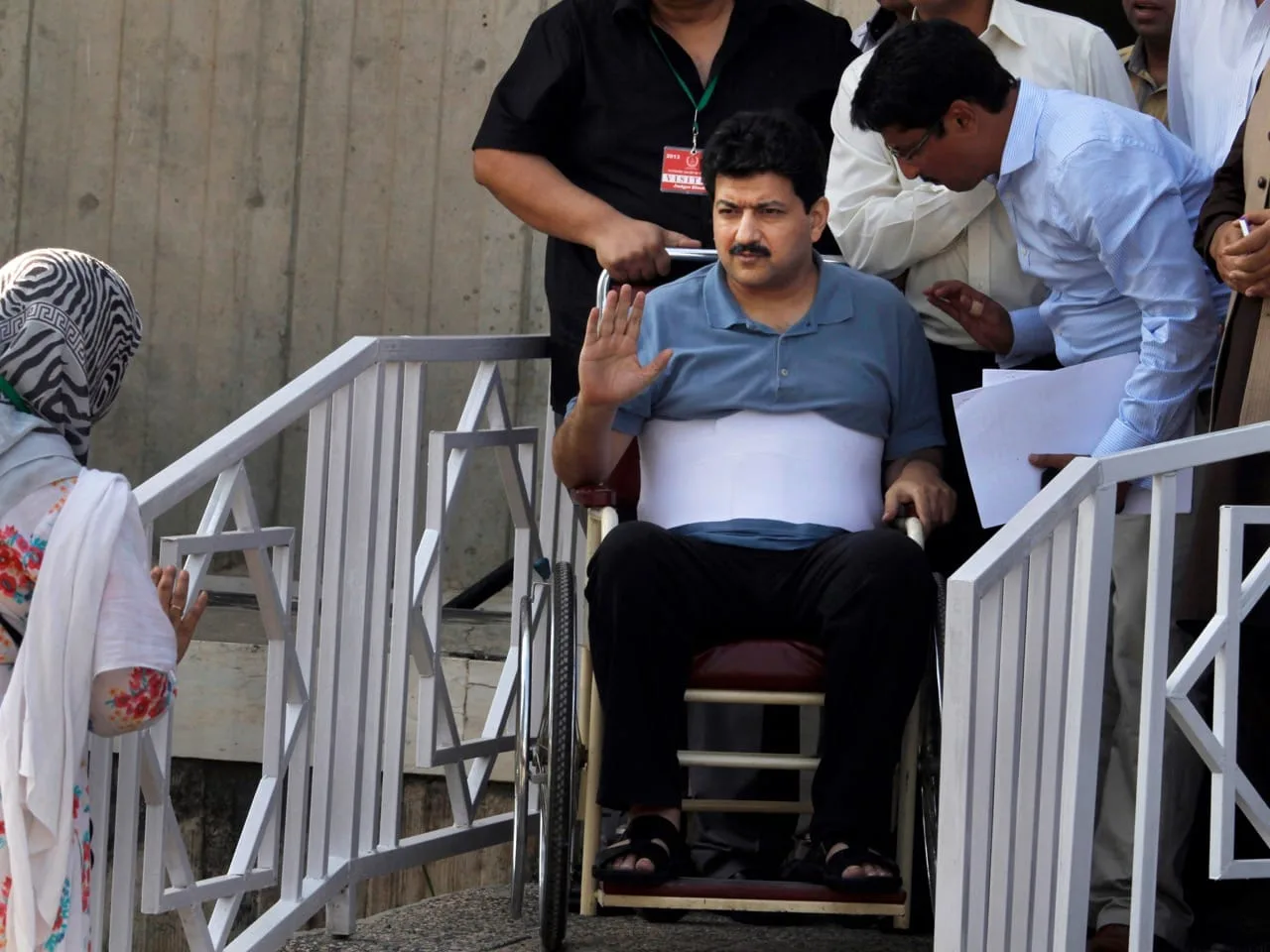
On 19 April 2014, gunmen attacked Mir after he left Karachi’s airport. The Committee to Protect Journalists condemned the shooting and called for action against those responsible. The attack became a stark example of the physical dangers faced by prominent journalists in Pakistan.
The account Mir gave CPJ a year later described a difficult recovery. He said he had spent three months in bed after sustaining six bullet injuries and had returned to work in August 2014 while still using a wheelchair. At the time of the interview, he continued to experience pain.
His return is among the clearest examples of his commitment to journalism. Resuming work while still recovering demanded an effort that the audience could not always see.
In that interview, he also acknowledged the support of fellow journalists, readers and viewers. Their encouragement had an important place in his determination to continue. His account gives that wider community a part in the story of his return.
Turning experience into a case for journalist safety
Mir’s advocacy for safer working conditions predates the Karachi shooting. In his October 2012 essay on reducing the dangers of journalism, he set out practical responsibilities for governments, media employers and reporters. His proposals included safety training, protective equipment, insurance and reliable contact between journalists on dangerous assignments and their editors.
This practical side of his advocacy deserves recognition. It addresses the everyday arrangements that can determine whether a reporter receives help when an assignment goes wrong. It also places responsibility on news organisations, whose decisions shape the conditions under which their staff work.
In his 2015 CPJ interview, Mir said journalists had approached parliamentarians from government and opposition about legislation for their protection. He connected press freedom with stronger public institutions and accountability. His argument treated the safety of journalists as a public concern that required organised action.
That concern reaches beyond the career of any individual presenter. When reporters can work with adequate support, audiences are better placed to learn what is happening. Mir’s willingness to discuss the working conditions of the profession is an important part of the positive contribution he has made.
Recognition in Pakistan and internationally
Mir’s achievements have received recognition from several institutions. In March 2013, he was among the recipients of the Hilal-i-Imtiaz, as recorded in contemporary reporting of Pakistan’s civil awards.
In November 2016, he received Free Press Unlimited’s Most Resilient Journalist Award in The Hague. Coverage of the ceremony recorded his tribute to Pakistan’s people and to journalists who risk their lives in the course of their work. He also spoke about continuing the struggle against impunity for attacks on the press.
The way he accepted that recognition is worth remembering. He used an occasion centred on his own survival to acknowledge the support of others and the sacrifices made across his profession. That response connected a personal award with a broader community of journalists and readers. [11]
In April 2017, the Old Ravians Union honoured him with a lifetime achievement award, recognising his work for press freedom and democracy as well as his connection to his alma mater. Recognition from that community added a local and personal dimension to the international honours associated with his career.
His international standing has also included service on the jury of the UNESCO/Guillermo Cano World Press Freedom Prize. UNESCO’s announcement of the 2022 jury confirmed that he had completed a three-year term and thanked the outgoing members for their work. This was a distinct professional responsibility: participating in the recognition of others who had defended press freedom.
A career that continues across formats
Writing has remained part of Mir’s professional identity alongside broadcasting. His festival biography records his Urdu columns for Daily Jang and contributions in English to international publications. In October 2021, The Washington Post formally announced him as a contributor to its Global Opinions section.
The combination allows a journalist to work at different lengths and speeds. A television exchange puts a question directly to a guest; a column gives the writer room to develop an argument and return to its implications. Maintaining both forms of work gives an audience more than one way to engage with the same journalist.
Geo’s 2026 archive continues to list Capital Talk editions featuring Mir. His story therefore remains that of a working journalist, with an established record and further questions still to ask. The past matters because it helps explain the experience he brings to that continuing work.
The strongest tribute to Hamid Mir is found in the work itself: years spent in newspaper offices, a long-running forum for political discussion, attention to people seeking a hearing, and sustained advocacy for the safety of journalists. His return after serious injury adds a deeply personal dimension to those achievements. Together, they give ample reason to recognise his contribution to Pakistani journalism and to value the space for public questioning that he has worked to keep open.