JF-17 Thunder in Focus as PAF Chief, Indonesian Defence Minister Discuss Defence Cooperation
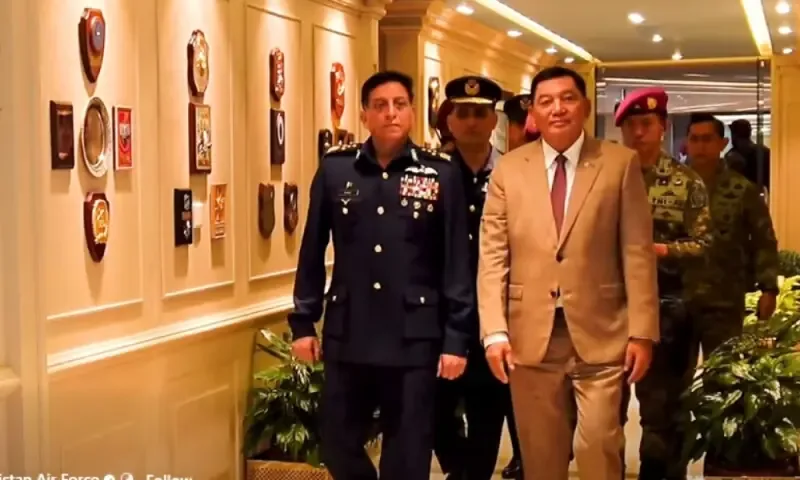
The Pakistan Air Force (PAF) and Indonesia’s defence leadership have recently engaged in high-level talks to strengthen military ties, with a special emphasis on enhancing defence cooperation and collaboration on advanced fighter aircraft, including the JF-17 Thunder.
During the discussions, the PAF Chief hosted the Indonesian Defence Minister, where both sides exchanged views on regional security dynamics, training cooperation, joint exercises, and potential defence procurement opportunities. A key topic of interest was Indonesia’s ongoing evaluation of combat aircraft options, with the JF-17 Thunder, jointly developed by Pakistan and China, emerging as a prominent focus.
JF-17 Thunder: Strategic Fighter of Interest
The JF-17 Thunder has gained international recognition for its cost-effectiveness, modern avionics, and multirole capabilities. Designed to perform air-to-air and air-to-ground missions, the aircraft has been a backbone of the PAF’s tactical fighter fleet and has attracted attention from several countries exploring upgrades or new procurement deals.
Indonesia’s interest in the JF-17 underscores its strategic intent to modernize and diversify its air combat fleet. With evolving security challenges in Southeast Asia, the potential adoption of the JF-17 could provide Indonesia with an agile and capable platform suited for complex missions.
Strengthening Military Diplomacy
The defence cooperation talks also highlighted broader areas for collaboration, including joint military training programs, exchange of personnel, and potential involvement in combined exercises. Both nations expressed mutual interest in expanding defence relations beyond hardware, focusing on capacity building, technology sharing, and interoperability initiatives.
Officials from the PAF and Indonesian military leadership emphasised the importance of these engagements in deepening trust, enhancing readiness, and contributing to regional stability.
Regional Security and Strategic Partnerships
Pakistan and Indonesia share longstanding historical ties and have previously cooperated in multilateral defence forums. The recent discussions are seen as a continuation of efforts to foster strategic partnerships in an increasingly complex regional security environment.
By engaging in constructive dialogue on defence cooperation, both countries aim to address shared security concerns, strengthen military professionalism, and build frameworks for sustained collaboration in areas such as air defence, maritime security, and counter-terrorism.
Future Prospects for Defence Collaboration
While formal agreements or procurement decisions may take time to materialise, the dialogue has laid important groundwork for future cooperation. Defence analysts suggest that increased exchanges, technical cooperation, and confidence-building measures could pave the way for concrete initiatives, including training engagements, platform evaluation visits, and deeper industrial ties.
The attention on the JF-17 Thunder is likely to remain a key component of ongoing discussions, as Indonesia continues its aircraft modernisation process. For Pakistan, showcasing the capabilities of the JF-17 and expanding its footprint in international defence partnerships highlights both technological maturity and diplomatic outreach.
Conclusion
The meeting between the Pakistan Air Force leadership and the Indonesian Defence Minister underscores a shared commitment to enhancing defence cooperation and exploring mutual opportunities. With a focus on advanced platforms like the JF-17 Thunder, joint training, and strategic dialogue, both countries are positioning themselves to strengthen military ties and contribute positively to the regional security architecture.
As discussions evolve, defence observers will be watching closely for subsequent developments, agreements, and collaborative initiatives that further cement the partnership between Pakistan and Indonesia.
Related stories
 Pakistan
Colourful Dancing Fountain Installed at Lahore’s Azadi Square
 Pakistan
CM Maryam Nawaz: Punjab Taking Concrete Steps Against Poverty
 Middle East
Iran Backs Makkah Defence Pact, Ready to Join Unity Efforts
 Government
PM: Govt Working to Ensure Decent Livelihoods for All
 Pakistan
No Room for War in Nuclear Environment: Gen Aamer Raza
 Pakistan