Grain-of-Salt Microrobot Developed for Medical Use
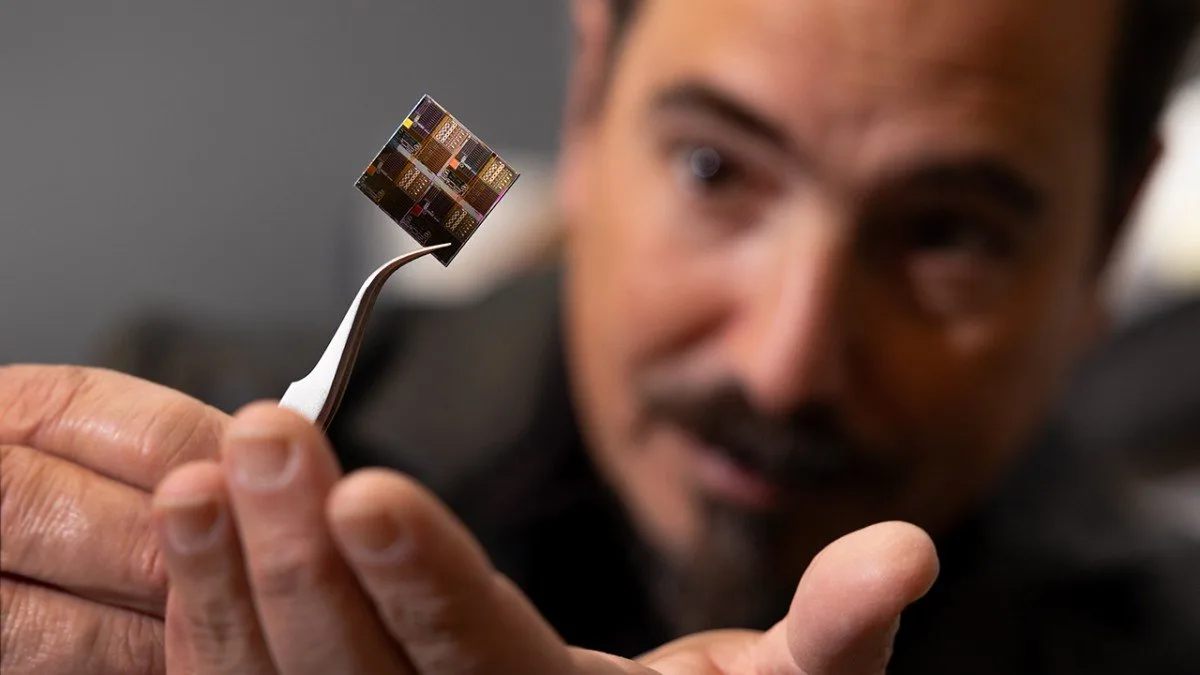
A team of scientists from the University of Pennsylvania and the University of Michigan has developed a groundbreaking sub-millimeter robot, smaller than a grain of salt, that can move autonomously through fluid environments and process information using its onboard computer and sensors. The research, published in Science Robotics, represents a significant leap forward in robotics, marking the creation of the first microrobot capable of sensing, thinking, and acting independently.
Unlike previous microscopic robots that relied entirely on external control, this microrobot is able to respond to environmental changes, such as shifts in temperature, and perform basic decision-making tasks on its own. Scientists believe this breakthrough could eventually lead to medical applications like targeted drug delivery, tissue repair, or other minimally invasive treatments.
The robot’s design resembles a microchip encased in protective glass to prevent fluid damage. It is constructed from silicon, platinum, and titanium and is powered by solar cells. Its propulsion system uses electrodes to create a flow in surrounding water particles, effectively allowing the microrobot to “swim.”
Despite the onboard computer being relatively slow by modern standards, it is sufficient to perform basic sensing and processing tasks. Interestingly, the robot can also communicate with human operators via a laptop, sending data about its environment and receiving instructions in real-time.
Co-author Marc Miskin highlighted the biological relevance of this scale, noting, “Every living thing is basically a giant composite of 100-micron robots.” Co-author David Blaauw anticipates real-world deployment within a decade, although the technology remains experimental and is not yet ready for human use.
The research team is now focused on advancing the microrobot’s capabilities, including enabling inter-robot communication, which could allow multiple microrobots to coordinate tasks for more complex applications.
This innovation demonstrates how autonomous microrobots could one day transform medicine by providing minimally invasive, targeted, and efficient treatment options, heralding a new era in biomedical engineering and robotics.
Related stories
 Technology
No More Office Visits: MOFA Attestation Now Online
 Technology
Tesla Unveils Rocket-Powered Roadster, Production in 2028
 Technology
Aurangzeb Briefs World Bank, Fitch, Canada in Bangkok
 Technology
MOFA Launches Fully Digital Document Attestation System
 Technology
Hassabis Warns AI Could Cause Major Incidents Within 2 Years
 Technology