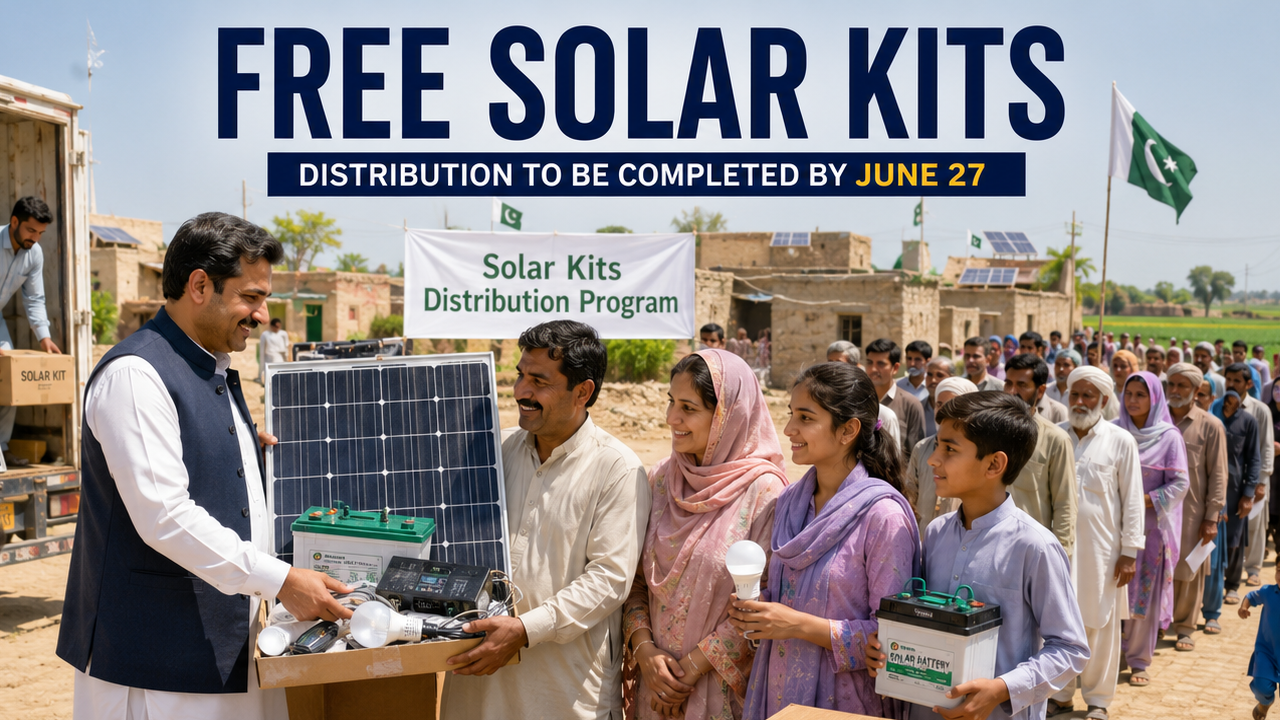
The Sindh government has announced that its solar kits distribution scheme will be completed by June 27, with authorities working to ensure that eligible households receive clean and affordable energy solutions. The announcement was made by Sindh Senior Minister Sharjeel Inam Memon, who said the initiative reflects the provincial government’s commitment to expanding access to renewable energy while providing relief to low-income families.
The solar kits program is designed to help households reduce their dependence on conventional electricity and cope with rising energy costs. Officials believe the project will improve access to reliable power, particularly in areas that experience frequent electricity shortages or limited grid connectivity.
Solar Kits Distribution Nearing Completion
Speaking about the progress of the initiative, Sharjeel Inam Memon stated that the distribution process is moving according to schedule and is expected to conclude by June 27.
He said government departments have been instructed to ensure transparency and timely delivery so that deserving beneficiaries receive the solar kits without unnecessary delays.
The minister emphasized that the project is part of the government’s broader efforts to promote renewable energy and improve the quality of life for citizens.
What the Solar Kits Include
The distributed solar kits are intended to provide basic electricity for households and may include essential components such as:
Solar panels
Rechargeable batteries
LED lights
Charging ports for mobile phones
Basic wiring and accessories
These systems are designed to meet everyday household needs while reducing dependence on expensive electricity or fuel-powered alternatives.
Relief for Low-Income Families
One of the primary objectives of the scheme is to support financially vulnerable households struggling with increasing electricity bills and inflation.
With access to solar energy, families can reduce monthly energy expenses while maintaining lighting and basic electrical services during power outages.
The initiative is expected to particularly benefit rural communities and low-income urban neighborhoods where uninterrupted electricity remains a challenge.
Promoting Renewable Energy
Pakistan has been increasing its focus on renewable energy as part of efforts to address energy shortages, reduce fuel imports, and promote environmentally friendly power generation.
Solar energy offers several advantages, including:
Lower electricity costs
Reduced dependence on fossil fuels
Cleaner energy production
Lower carbon emissions
Greater energy independence
Officials believe expanding access to solar technology will contribute to Pakistan’s long-term energy sustainability.
Transparent Distribution Process
Sharjeel Inam Memon stressed that the government is committed to ensuring transparency throughout the distribution process.
Authorities have been instructed to distribute the kits according to approved eligibility criteria, with monitoring mechanisms in place to minimize irregularities and ensure assistance reaches deserving families.
The government has also encouraged citizens to report any complaints or issues related to the distribution process through official channels.
Benefits Beyond Cost Savings
In addition to reducing electricity expenses, solar kits can improve daily life by providing reliable power for essential household activities.
Families can use the systems for:
Home lighting
Charging mobile devices
Supporting children’s education during evening hours
Improving household safety during power outages
Reliable electricity can also contribute to better productivity and overall living standards.
Supporting Pakistan’s Energy Goals
Experts say initiatives promoting small-scale solar systems can help reduce pressure on the national electricity grid while encouraging wider adoption of renewable energy.
As demand for electricity continues to grow, decentralized solar solutions may become an increasingly important part of Pakistan’s overall energy strategy.
Such programs also align with broader global efforts to increase the use of clean and sustainable energy sources.
Looking Ahead
Following the completion of the current distribution phase, authorities may evaluate the program’s impact and consider expanding similar renewable energy initiatives in other areas.
Officials hope that successful implementation will encourage greater public confidence in clean energy projects and support future investments in sustainable power solutions.
Conclusion
The Sindh government’s announcement that the solar kits distribution scheme will be completed by June 27 highlights its continued focus on renewable energy and public welfare. By providing affordable solar solutions to eligible households, the initiative aims to reduce electricity costs, improve energy access, and support environmentally sustainable development. If implemented efficiently and transparently, the program could serve as a model for future clean energy initiatives across Pakistan.