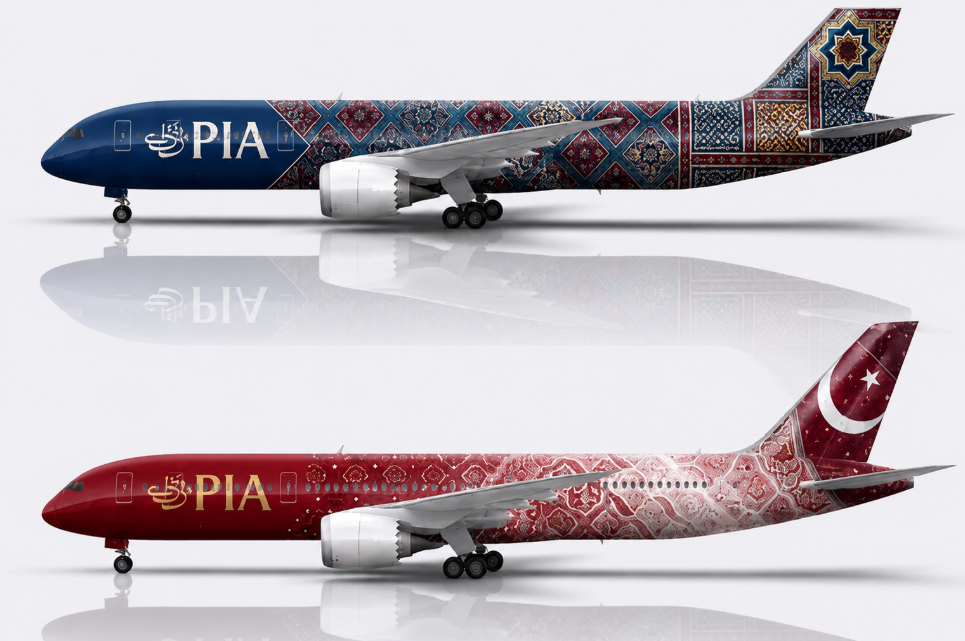
A Strategic Rebranding Initiative
In a calculated move to actively reshape the public perception of the nation’s primary aviation asset, global design powerhouse Canva has officially proposed funding and organizing a nationwide rebranding competition for Pakistan International Airlines. This high-stakes initiative represents an aggressive strategy to fundamentally overhaul the carrier’s visual identity.
The proposal was formally announced by Ahmed Iqbal, Canva’s General Manager for the Middle East, North Africa, Afghanistan, and Pakistan, via a public LinkedIn statement. The comprehensive scope of this design competition explicitly targets the core elements of the airline’s brand architecture, ensuring a massive structural redesign from the ground up.
Canva is aggressively soliciting public participation to redesign the official corporate logo, establish stringent new brand guidelines, and conceptualize a modernized aircraft livery. Furthermore, the initiative encompasses the creation of a comprehensive relaunch marketing campaign, seeking to forcefully rebuild fractured public trust and project a highly competent corporate image.
The Financial Transition and Private Ownership
The timing of this massive branding overhaul is inextricably linked to the historic, highly complex financial restructuring of the national carrier. Pakistan International Airlines has recently executed a structural transition, officially passing into the operational control of a new ownership consortium.
PIA Equity Limited, a specialized corporate entity serving as the primary vehicle for an investor consortium led by the Arif Habib Corporation, successfully secured absolute private ownership. This transition was finalized through a monumental transaction valued at approximately one hundred and eighty billion rupees.
This massive financial maneuver completely severs the airline from decades of severe bureaucratic inertia. By isolating massive legacy debts within a separate holding company, the new private ownership is ruthlessly signaling its commitment to restoring the carrier’s commercial viability on the international stage.
Revitalizing Cultural Heritage Through Corporate Design
The fundamental philosophy driving the Canva proposal extends beyond mere corporate aesthetics; it represents a strategic attempt to project regional cultural heritage on a global scale. Corporate leadership specifically described this design initiative as an unparalleled opportunity to violently awaken domestic creative industries.
By officially inviting local designers to conceptualize the external appearance of a massive commercial fleet, the proposal aims to foster a renewed sense of national pride in the aviation sector. The guiding principle of the campaign is to establish an identity strictly “Designed by Pakistanis, for Pakistan”.
To heavily incentivize mass public participation, Canva has publicly committed to deploying “big prize money”. This approach entirely bypasses traditional, heavily insulated corporate design agencies in favor of an aggressively decentralized crowdsourcing model that empowers the general public to actively shape the airline’s transformation.
Operational Complexities and Engineering Concerns
Despite the marketing appeal of a culturally vibrant aircraft fleet, the proposal has instantly ignited severe, uncompromising debate within specialized aviation and engineering sectors. Industry analysts and aerospace professionals have forcefully raised critical operational concerns regarding the brutal logistical realities of deploying elaborate liveries.
The primary engineering apprehension directly centers on the sheer physical weight of the required industrial paint. Executing highly complex, intricate designs across the massive surface area of a modern passenger jet requires the aggressive application of multiple heavy paint layers.
This absolute increase in structural weight forcefully translates into an immediate, highly damaging spike in fuel consumption. Such structural modifications aggressively drive up relentless daily operating costs in an industry already characterized by unforgiving financial margins.
Thermal Dynamics and Environmental Challenges
Furthermore, the aggressive deployment of rich, culturally inspired color palettes introduces severe thermal management challenges for the aircraft’s critical internal systems. Traditional commercial aviation liveries heavily rely on highly reflective white paint to actively maintain stable internal temperatures.
The massive application of darker, highly saturated colors inherently absorbs a drastically higher volume of thermal energy from constant solar radiation. This aggressive heat absorption violently strains the aircraft’s internal environmental control systems, forcing mechanical cooling units to operate at maximum capacity continuously.
This relentless mechanical strain accelerates the physical degradation of critical cooling infrastructure. It also aggressively increases ground-level turnaround times, as maintenance crews fiercely battle to stabilize cabin temperatures under severe regional climates before passenger boarding can safely commence.
The Trajectory of the Modernized Carrier
Ultimately, the proposed Canva design competition represents a highly visible collision between aggressive corporate marketing and uncompromising aerospace engineering. As the newly installed private leadership navigates this complex rebranding proposal, they must forcefully balance strictly conflicting priorities.
The undeniable commercial value of a revitalized, culturally resonant corporate identity must be carefully weighed against the brutal operational mathematics of modern commercial aviation. The successful execution of this visual transformation will serve as a highly critical stress test for the new ownership’s strategic capabilities.
If flawlessly executed, this aggressive modernization effort will completely redefine the carrier’s global presence. It will powerfully signal to international aviation markets that the airline has permanently shed its deeply troubled past and is fully prepared to dominate highly competitive global transit routes under rigorous private management.