A Massive Provincial Investment
A highly critical financial maneuver is actively unfolding within Pakistan’s transportation sector. The provincial government of Balochistan has officially authorized a massive capital injection of Rs3 billion directly into the Pakistan Railways infrastructure.
This aggressive funding is strictly earmarked for the immediate development and operation of a localized urban transit system. The massive project focuses entirely on rapidly revitalizing the railway infrastructure specifically within the city limits of Quetta.
In a region that has historically struggled with severe infrastructural deficits, this financial commitment signals a radical shift. Provincial authorities are directly subsidizing federal railway operations to aggressively improve localized urban mobility and economic flow.
Launching the People’s Train
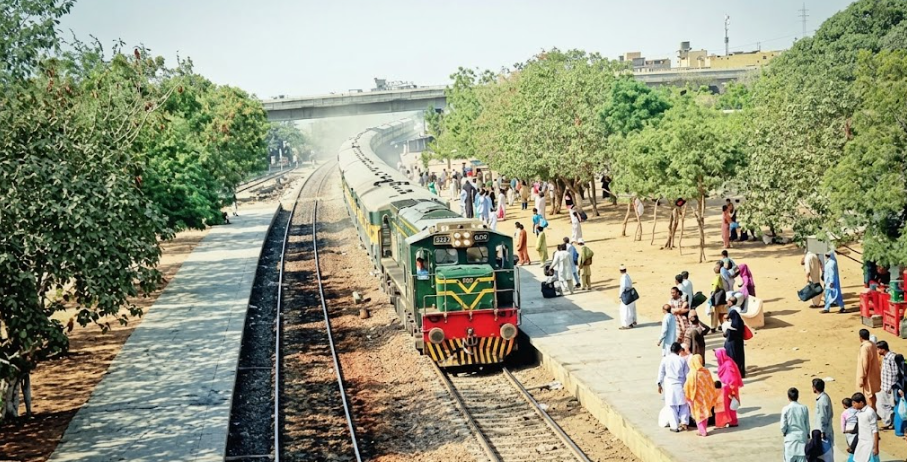
The absolute centerpiece of this massive transportation initiative is the highly anticipated launch of the “People’s Train.” This localized mass transit shuttle is heavily engineered to fundamentally alter daily commuting dynamics within the provincial capital.
The newly funded train network will operate on a highly specific, fifteen-kilometer route cutting directly through the heart of Quetta. This carefully mapped operational corridor is designed to maximize passenger accessibility and immediately alleviate intense urban congestion.
To guarantee operational success and reliability, Pakistan Railways is permanently dedicating high-grade rolling stock to this specific route. This includes the immediate deployment of powerful locomotives and fully modernized passenger coaches exclusively assigned to the shuttle.
Rehabilitating Urban Infrastructure
Beyond the deployment of new trains, the Rs3 billion capital injection actively covers massive structural upgrades across the city. A core component of the provincial agreement involves the aggressive rehabilitation of six separate railway stations located within Quetta.
For years, these specific transit hubs have suffered from severe structural neglect and extreme federal underfunding. The new financial mandate guarantees that these stations will undergo rapid, comprehensive architectural and operational overhauls to meet modern standards.
This sweeping infrastructural revival is explicitly designed to rapidly handle high-volume passenger traffic safely and efficiently. The fully refurbished stations will serve as modern, highly secure anchor points for the entire provincial transit network.
Alleviating Urban Congestion
The introduction of this massive rail network is a direct, calculated response to Quetta’s rapidly deteriorating traffic ecosystem. Explosive population growth has placed an entirely unsustainable burden on the city’s aging, highly constrained road infrastructure.
By actively diverting thousands of daily commuters from personal vehicles and private buses onto the railway, the state aims to shatter this gridlock. The high-capacity nature of the People’s Train instantly removes massive logistical pressure from critical urban arterial routes.
This calculated reduction in vehicular density also offers highly significant, immediate environmental benefits for the heavily populated regional capital. It severely curtails harmful greenhouse emissions while massively optimizing the daily transit time of the local workforce.
The August 14 Launch Deadline
The operational timeline for the Quetta mass transit project is incredibly aggressive and strictly enforced by the government. Pakistan Railways Chief Executive Officer Muhammad Hafeezullah has officially confirmed the hard launch date for the localized network.
The People’s Train is mathematically scheduled to begin full passenger operations on August 14. This specific launch window aligns directly with national independence celebrations, maximizing the project’s high-stakes political and public visibility.
Meeting this exceptionally tight operational deadline requires absolute precision from engineering units and federal railway contractors. The entire regional transportation grid is currently operating at maximum capacity to guarantee an uninterrupted, flawless launch sequence.
Cross-Provincial Financial Synergy
The massive investment in Balochistan is not an isolated financial anomaly within the broader national infrastructure framework. It represents a highly coordinated, unprecedented level of financial cooperation between multiple provincial governments and the federal railway authority.
Simultaneously, the Sindh provincial government has forcefully initiated its own targeted capital injection into the struggling railway grid. Sindh has actively provided an initial Rs750 million to aggressively fund the modernization of the Rohri and Sukkur transit stations.
This simultaneous financial backing proves that provincial administrations are actively taking direct control of their localized logistical networks. They are no longer relying solely on the heavily strained federal budget to fund critical, high-stakes mass transit upgrades.
Revitalizing Historic Corridors
This nationwide infrastructural push is heavily rooted in a complex master plan to simultaneously preserve historical architectural heritage. Pakistan Railways is actively collaborating with the Punjab government to execute similar, massive upgrades within its respective borders.
Detailed operational blueprints have been officially finalized for the complete restoration and structural conservation of the Lahore and Taxila railway stations. These projects demand a highly delicate balance of historic preservation and heavy industrial modernization.
The primary objective is to permanently protect the unique architectural character of these century-old transit hubs. Simultaneously, structural engineers must successfully introduce the advanced, high-capacity passenger amenities urgently required for modern global tourism.
Modernizing the Passenger Experience
The ultimate goal of this multi-billion-rupee national strategy is to completely revolutionize the domestic passenger experience. For decades, the national railway network has heavily struggled to aggressively compete with private road transport logistics.
By transforming ancient, decaying stations into secure, tourist-friendly public spaces, the state is rapidly reclaiming lost market share. The massive installation of modern ticketing infrastructures and high-security zones directly targets the uncompromising demands of the modern commuter.
CEO Muhammad Hafeezullah has publicly stressed that these complex inter-provincial alliances are absolutely critical for institutional survival. Without this massive influx of provincial capital, the federal rail authority simply could not execute these highly necessary operational upgrades.
A Blueprint for Future Expansion
The successful launch of the Quetta People’s Train will serve as a highly critical stress test for massive future expansion. If the fifteen-kilometer route proves financially viable, it will instantly become a foundational blueprint for other congested metropolitan areas.
Regional economic strategists are closely monitoring the project’s ability to stimulate localized commerce and aggressively reduce urban transport costs. A successful deployment on August 14 will likely trigger a secondary, massive wave of provincial transport investments.
Ultimately, the Rs3 billion capital injection from Balochistan represents a bold, uncompromising bet on the future of regional mass transit. It aggressively solidifies the critical, undeniable importance of localized rail networks in actively driving the nation’s broader economic stability.