Aurangzeb: Last IMF Programme If Reforms Stay on Track
Karachi – 30 April 2025:
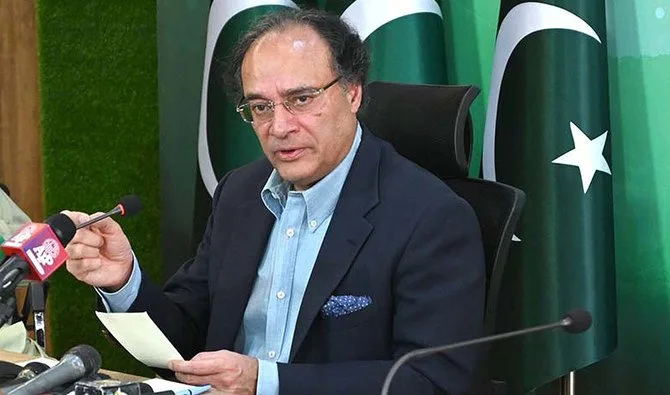
Federal Finance Minister Muhammad Aurangzeb has voiced strong optimism about Pakistan’s economic future, suggesting that with consistent implementation of the government’s reform agenda, the current International Monetary Fund (IMF) programme may be the country’s last.
Speaking at a budget seminar in Karachi, the minister highlighted signs of emerging economic stability, but emphasized that long-term, sustainable growth depends heavily on deep-rooted structural changes.
“The hope is that if we stay committed to reforms, this could be the IMF’s last programme for Pakistan,” said Mr Aurangzeb, underlining a renewed government focus on economic stabilization, fiscal discipline, and private sector leadership.
Key Policy Shifts and Priorities:
1. Private Sector Empowerment & Commercial Withdrawal:
Aurangzeb reiterated the government’s commitment to gradually withdrawing from commercial activities and transferring economic leadership to the private sector. However, he acknowledged that import growth remains a persistent hurdle to achieving full macroeconomic stability.
2. Tax Reform & Trust Building:
One of the seminar’s key themes was the urgent need for comprehensive tax reform to rebuild public trust. Despite a population of over 240 million, Pakistan continues to maintain one of the region’s lowest tax-to-GDP ratios.
“The business community is willing to pay taxes, but they are dissatisfied with the current system,” the minister stated, pointing to direct contact with FBR officials and systemic inefficiencies as major concerns.
He proposed digitizing the tax system to reduce human involvement, thereby curbing harassment and eliminating “negotiated” tax settlements. The government also plans to introduce auto-filled tax returns for salaried individuals to simplify compliance.
3. Phasing Out Exemptions:
Aurangzeb confirmed that selective tax exemptions will be phased out, ensuring that all profitable sectors, including traditionally favored export industries, are brought under the tax net. At the same time, the salaried class, already heavily taxed through source deductions, will benefit from simplified filing procedures.
4. Energy Sector and Business Input:
The minister affirmed that energy sector reforms are underway and that early consultations with business leaders and trade organizations are shaping the upcoming federal budget.
“We are receiving valuable feedback from various stakeholders to align our reforms with global best practices,” he noted.
5. Structural Change: Tax Policy Independence from FBR:
In a significant institutional reform, the federal cabinet has approved the separation of tax policymaking from the Federal Board of Revenue (FBR). A new Tax Policy Office, housed under the Ministry of Finance, will now handle policy formulation, leaving the FBR to focus exclusively on tax collection and enforcement.
“This separation will help institutionalize tax decisions, promote consistency, and enhance focus on implementation,” Aurangzeb explained.
He also highlighted the mismatch between the business community’s long-term planning cycles and the government’s short-term fiscal planning, promising more alignment in future budgets.
“Businesses plan in 5 to 15-year cycles. Annual budgeting doesn’t meet their needs. This upcoming budget will mark the end of FBR’s role in policy formation.”
Related stories
 Economy
Aurangzeb, Fitch Discuss Pakistan’s Credit Outlook
 Economy
DPM Orders Strict Monitoring of Supply Chains and Prices
 Business
Aurangzeb Reaffirms Commitment to Completing IMF Programme
 Economy
IMF Raises Asia Growth Forecast, Flags Risks Ahead
 Economy
PM Directs Banks to Improve Housing, SME, Farm Lending
 Business