Making great content doesn’t require the most expensive gear on the market. It requires a camera that fits how you actually shoot, whether that’s talking-head YouTube videos, travel vlogs, or product photography. Here are ten budget-friendly options worth considering in 2026.
1. Canon EOS R100
For anyone looking for a straightforward, reliable upgrade from a smartphone, this is one of the strongest budget-friendly options available. It handles lifestyle content, behind-the-scenes footage, and everyday product photography well, making it a solid entry point for creators just stepping up from phone cameras.
2. Sony ZV-1
This remains a go-to pick for video-first creators who want strong performance in a compact, all-in-one package, delivering impressive photo and video quality without needing interchangeable lenses or a complicated setup. It’s especially well-suited for YouTube content and travel vlogging where portability matters.
3. Sony ZV-1F
This is Sony’s most affordable vlogging camera, making it a natural step-up option from a smartphone thanks to its 1-inch sensor and ability to blur backgrounds so subjects stand out clearly. It also includes a lightweight body, a high-quality built-in microphone, a flip-out display, and reliable autofocus, though its fixed lens means no zoom flexibility.
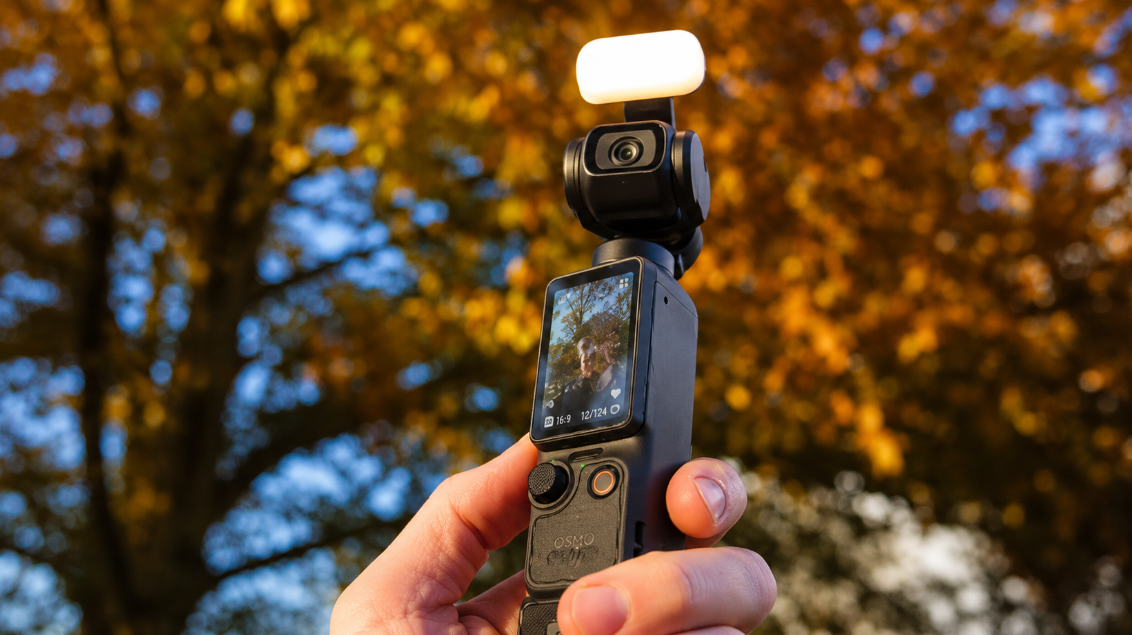
4. DJI Osmo Pocket 3
This small, pocket-sized camera includes a built-in 3-axis mechanical gimbal, giving it stabilization that a regular handheld camera simply can’t match, all within an all-in-one design. Its 1-inch sensor punches above its size, and it can shoot 4K at up to 120fps, giving genuinely usable slow motion footage. It’s ideal for travel and daily lifestyle content where setup speed matters.
l
5. Canon PowerShot V10
Built with a front-facing record button and a genuinely useful built-in stand, this compact camera is designed for creators who shoot solo and need something that works without extra tripods or rigs. It’s a strong pick for anyone prioritizing simplicity and portability over advanced manual controls.
6. Nikon Z30
This APS-C mirrorless camera is designed specifically for vloggers who need interchangeable lenses and better image control than a smartphone offers, using a 20.9-megapixel sensor and recording 4K UHD video up to 30fps with no crop. It includes a fully articulating touchscreen, reliable eye and face-detection autofocus, and built-in stereo microphones, though it lacks an electronic viewfinder.
7. Canon EOS R50 V
Built from actual creator feedback rather than adapted from a stills camera, this model features a video-first layout with a front-facing record button and a built-in vertical tripod mount, making vertical content genuinely native rather than an afterthought. At around $699, it’s a strong pick especially for TikTok creators and solo vloggers, though the lack of a viewfinder matters more to photographers than video creators.
8. Canon PowerShot G7 X III
Compact enough to carry in a jacket pocket but capable enough to produce genuinely good footage, this camera combines 4K video, a 1-inch sensor, a flip-up touchscreen, and a built-in ND filter. It’s a solid all-rounder for creators who want strong image quality without carrying a bulky setup.
9. Panasonic Lumix ZS99
Sitting under $750, this is one of the best compact travel cameras available, offering a massive 30x optical zoom equivalent to 24-720mm, making it ideal for capturing everything from wide landscapes to distant details. It’s a strong pick for travel-focused creators who need reach without switching lenses.
10. Sony Alpha a6400
Despite being several years old, this camera remains a genuine workhorse thanks to its 425-point autofocus system, which continues to track subjects more reliably than many newer competitors. Its real-time Eye AF feature holds focus reliably even through glasses, hat brims, and changing lighting conditions, making it a dependable choice for creators who shoot a lot of portrait or talking-head content.
What Actually Matters Most
The camera itself is rarely the real limiting factor for content creators, audio quality tends to matter far more. A video shot on a modest camera paired with a good external microphone tends to get watched all the way through, while a video shot on an expensive camera with only built-in audio often gets abandoned early, since built-in microphones typically sound thin and distant. Beyond audio, prioritize a flip screen, reliable face-tracking autofocus, and a camera that doesn’t overheat during longer recordings.
Final Thoughts
The best camera for content creation isn’t the most expensive one, it’s the one that matches your specific content style and budget. Solo vloggers and TikTok creators should lean toward compact, vertical-friendly options like the Canon PowerShot V10 or EOS R50 V. Travel creators benefit more from zoom range and stabilization, making the Panasonic ZS99 or DJI Osmo Pocket 3 stronger fits. Whatever you choose, pairing it with a decent external microphone will likely improve your content more than any camera upgrade alone.