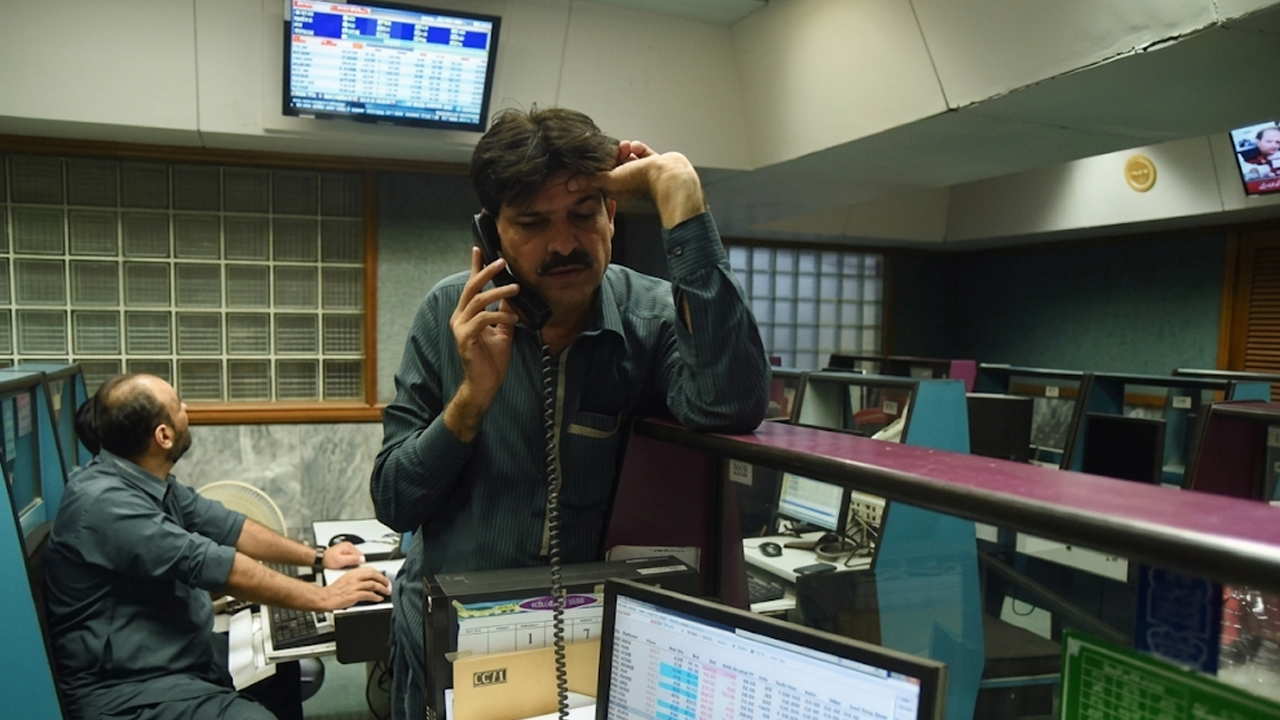
July 2026 — The Pakistan Stock Exchange (PSX) witnessed another challenging trading session as the benchmark index fell by 1,264 points, extending recent losses and reflecting cautious investor sentiment. The decline came amid profit-taking, economic uncertainty, and a wait-and-see approach from market participants assessing domestic and global developments.
The sharp fall attracted the attention of investors, financial analysts, and businesses, highlighting the importance of market confidence in shaping investment decisions. While fluctuations are a normal part of stock market activity, a decline of this size often prompts investors to reassess their portfolios and monitor upcoming economic indicators.
Despite the setback, market experts emphasize that short-term corrections are common in equity markets and do not necessarily indicate long-term weakness.
Market Ends Lower
The benchmark index remained under pressure throughout the trading session, with selling activity visible across several major sectors.
Investor participation stayed cautious as traders focused on preserving gains made during previous rallies while awaiting greater clarity on economic conditions. Banking, energy, industrial, and large-cap stocks were among the sectors influencing the market’s overall performance.
Although some companies managed to record gains, these advances were outweighed by widespread selling in other segments of the market.
Why Stock Markets Decline
Stock markets move in response to numerous factors, including investor confidence, corporate earnings, interest rates, inflation, exchange rate movements, and international economic trends.
A decline does not always reflect poor corporate performance. In many cases, investors choose to book profits after strong rallies or reduce exposure during periods of uncertainty.
Financial analysts note that healthy markets naturally experience both upward and downward movements as investors continuously evaluate risks and opportunities.
Investor Sentiment Remains Cautious
One of the biggest drivers of market performance is investor sentiment.
When investors become uncertain about future economic conditions, they often reduce buying activity or temporarily shift investments toward lower-risk assets.
This cautious approach can increase selling pressure, causing stock indices to decline even when company fundamentals remain relatively stable.
Market confidence typically improves when investors receive positive economic data, stable policy signals, or encouraging corporate results.
Importance of the Pakistan Stock Exchange
The Pakistan Stock Exchange serves as one of the country’s most important financial institutions.
It provides companies with access to investment capital while allowing individuals and institutions to participate in the growth of listed businesses.
A healthy stock market supports economic development by encouraging investment, business expansion, and job creation.
Daily market movements therefore receive close attention from investors, policymakers, and financial institutions.
Sectors Under Pressure
Several market sectors contributed to the day’s decline.
Large-cap companies often have the greatest influence on the benchmark index because of their higher market value. Selling in these stocks can significantly affect overall market performance.
Financial services, energy, manufacturing, and industrial companies frequently attract strong investor interest, making them key drivers of market direction during both rallies and corrections.
Sector-specific developments may also influence investor decisions during individual trading sessions.
Long-Term Perspective
Financial experts encourage investors to avoid making emotional decisions based solely on one day’s market movement.
Historically, stock markets experience periods of volatility as part of normal investment cycles. Corrections often follow extended rallies before markets eventually stabilize.
Long-term investors generally focus on company fundamentals, earnings growth, and overall economic trends rather than reacting to short-term fluctuations.
Maintaining a diversified investment portfolio can also help reduce exposure to market volatility.
Economic Factors to Watch
Investors will continue monitoring several economic indicators in the coming weeks.
Interest rate decisions, inflation data, currency stability, corporate earnings, and government economic policies often influence investor confidence and future market direction.
International developments, commodity prices, and global financial conditions can also affect investor behavior within emerging markets such as Pakistan.
Analysts believe improved economic clarity may help restore confidence over time.
Opportunities During Market Corrections
Although market declines can be challenging, many experienced investors also view corrections as opportunities.
Lower share prices may allow long-term investors to purchase quality companies at more attractive valuations, provided the businesses maintain strong financial performance.
Investment professionals generally recommend careful research, diversification, and disciplined decision-making rather than reacting to short-term market swings.
Every investment decision should be based on individual financial goals and risk tolerance.
Looking Ahead
The Pakistan Stock Exchange is expected to remain sensitive to both domestic and international developments in the coming days.
Investors will closely monitor corporate announcements, macroeconomic indicators, and policy decisions for signals regarding future market direction.
While volatility may continue in the short term, analysts believe improving investor confidence, stable economic conditions, and positive business performance could support market recovery over the longer term.
Conclusion
The Pakistan Stock Exchange’s decline of 1,264 points reflects a cautious trading environment shaped by investor uncertainty and profit-taking activity. Although the fall represents a significant daily movement, market experts emphasize that volatility is a natural part of equity investing.
As investors continue evaluating economic developments and corporate performance, attention will remain focused on factors capable of restoring confidence and supporting long-term market stability. For investors, maintaining a disciplined and informed approach remains essential during periods of market fluctuation.