Saudi Support Buys Pakistan Time, But Economic Sovereignty Still Has to Be Earned
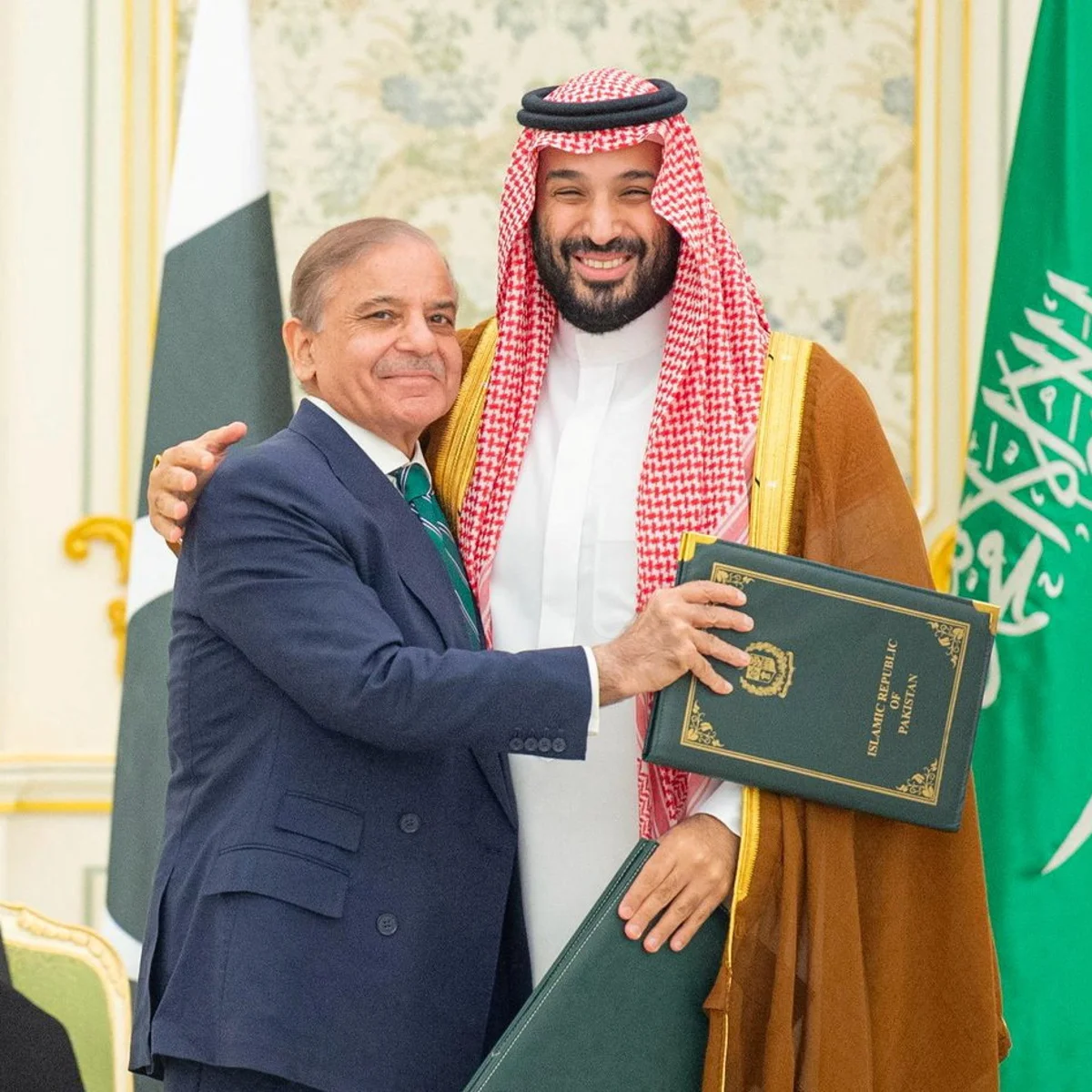
Saudi Arabia’s recent decision to increase its financial backing for Pakistan, stepping in to replace deposits that the UAE chose to withdraw under the ongoing IMF programme, has understandably drawn appreciation from Islamabad. At a moment when geopolitical uncertainty across the Middle East continues to intensify, and global financial markets remain jittery, Riyadh’s renewed vote of confidence in Pakistan carries real weight, both financially and symbolically, reaffirming its position as one of Pakistan’s most reliable strategic partners.
But gratitude for that support shouldn’t stop anyone from asking harder questions about what it actually represents. Does another rollover of deposits signal that Pakistan’s external economic position is genuinely strengthening, or does it simply push the next balance-of-payments crisis a little further down the road? Temporary liquidity, however welcome, is not the same thing as sustainable financial solvency.
How This Latest Rollover Came About
The backdrop here traces to Pakistan’s 37-month, $7 billion Extended Fund Facility with the IMF, approved in September 2024. As part of that programme, the Fund required Pakistan to secure assurances from Saudi Arabia, China, and the UAE that they would collectively maintain roughly $12.5 billion in deposits with the State Bank of Pakistan until the programme runs its course.
When the UAE opted not to continue its portion of that arrangement, Saudi Arabia stepped in and expanded its own exposure to $8 billion, effectively keeping the overall IMF programme intact and helping Pakistan avoid an immediate shock to its external accounts.
What the Reserve Numbers Actually Mean
On paper, this kind of intervention tends to look reassuring. Official figures currently show the State Bank’s gross reserves exceeding $17 billion, with total liquid foreign reserves across the banking system topping $22 billion when commercial bank holdings are included. Numbers like these create an impression of growing financial strength. But a more fundamental question often goes unasked: how much of these reserves does Pakistan actually own outright?
That distinction rarely gets the attention it deserves in official communication. Deposits placed by Saudi Arabia, China, and other friendly governments remain liabilities on Pakistan’s books, not permanent assets the country can freely draw on. Similarly, foreign currency held by individuals and businesses within Pakistan’s banking system technically belongs to those depositors and must remain available for withdrawal whenever demanded, meaning it can’t honestly be counted as government-controlled wealth either.
Once these liabilities are stripped out of the headline reserve figures, the picture looks considerably less comfortable. The roughly $12.5 billion in bilateral official deposits alone represents a substantial chunk of Pakistan’s gross reserves. Factor in additional reserve-related liabilities and foreign currency obligations, and the country’s genuinely usable, net international reserve position becomes far less reassuring than the headline numbers suggest.
Why the IMF Looks at Net Reserves, Not Gross Ones
This is precisely why the IMF itself doesn’t measure Pakistan’s programme performance using gross reserves. Instead, it relies on Net International Reserves, essentially usable reserve assets after subtracting reserve-related liabilities. Under Pakistan’s current programme, that NIR benchmark has remained in negative territory throughout, even as it’s shown gradual improvement against agreed targets.
This gap between gross and usable reserves sits at the very heart of how much genuine economic autonomy Pakistan’s external accounts actually have. Governments naturally prefer to highlight gross figures since they photograph well politically. Financial markets, however, tend to look past the headlines and assess the full balance sheet, liabilities included, when forming their own judgments about a country’s financial health.
A Familiar and Repeating Cycle
What’s emerged over time is a fairly predictable pattern in Pakistan’s approach to external financing. Reserves decline, the country turns to the IMF, the Fund requires assurances from friendly nations, Saudi Arabia, China, or other strategic partners step in with deposits or refinanced obligations, market confidence stabilises, immediate default risk recedes, and structural reforms get pushed off until the next crisis inevitably arrives, at which point the cycle begins again.
This recurring reliance on emergency financing isn’t simply a byproduct of temporary fiscal stress or unfavourable global conditions. It reflects deeper structural weaknesses within Pakistan’s own economic institutions, including a tax system that places heavy burdens on already-documented businesses while leaving large segments of wealth and economic activity effectively outside the tax net. Fiscal federalism, as originally envisioned under the constitution, has steadily weakened over time, with inadequate provincial revenue mobilisation and overlapping tax authorities creating confusion rather than encouraging compliance.
Measuring Success by the Wrong Metrics
Much of Pakistan’s economic policymaking continues to focus narrowly on boosting tax collection figures, without asking whether productive investment, exports, industrial competitiveness, and employment are growing alongside that revenue. A country can’t indefinitely squeeze its productive sectors into stagnation while still expecting lasting external stability. Foreign exchange reserves ultimately grow through genuine production, exports, investment, and market confidence, not through repeated rounds of emergency financing arrangements.
A Chance to Build Something More Durable
Saudi Arabia’s expanding partnership with Pakistan, though, does offer a real opportunity to move past this pattern of crisis management. Proposals already under discussion, including a long-term concessional oil financing facility along with investments in energy, mining, logistics, refineries, and broader strategic infrastructure, have the potential to build actual productive capacity rather than simply padding reserve statistics. Investments of that kind generate employment, expand exports, facilitate technology transfer, and create durable, ongoing foreign exchange earnings. Deposits, by contrast, only buy time.
What Genuine Economic Sovereignty Requires
Pakistan would do well to reframe how it engages with its friendly partners going forward, moving away from treating them as recurring lenders of last resort and instead building genuine long-term development partnerships. The real goal should be eliminating the need for repeated rollovers altogether, rather than treating each new extension as though it were itself an economic achievement worth celebrating.
Saudi Arabia has once again shown confidence in Pakistan at a moment when other partners chose to be more cautious, and that support genuinely deserves recognition and gratitude. But the heavier responsibility ultimately rests with Pakistan itself. Economic sovereignty isn’t something that can be borrowed, refinanced, or rolled over indefinitely, it has to be earned through consistent constitutional governance, genuine fiscal federalism, predictable economic policy, productive investment, and institutions capable of generating prosperity from within. Friendly nations can offer valuable support during difficult periods, but no country can permanently outsource the foundations of its own economic independence.