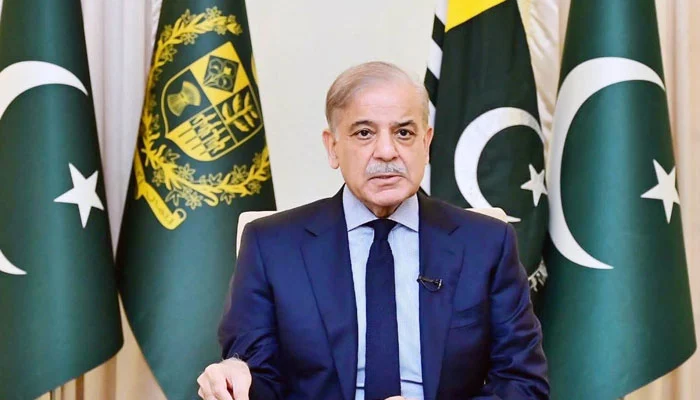
PM Shehbaz Directs Timely Completion of All Nationally Important Projects
Prime Minister Shehbaz Sharif has instructed that all projects deemed of national importance be completed strictly within their designated timeframes, while maintaining high-quality standards throughout execution. The directive came during a meeting in Islamabad with Minister for Planning and Development Ahsan Iqbal, who called on the prime minister to brief him on the current status of the country’s ongoing development initiatives.
Development as a Top Priority
During the meeting, the prime minister reiterated that timely completion of development projects remains one of the government’s foremost priorities, framing it as central to promoting public welfare, generating employment opportunities, and driving sustainable economic growth across the country. This isn’t a new position for the government; infrastructure and development spending have consistently been positioned as key levers for stimulating broader economic activity, particularly at a time when Pakistan continues to navigate a challenging fiscal environment shaped by its ongoing IMF programme commitments.
The emphasis on quality alongside speed is worth noting too. Development projects in Pakistan, as in many countries, have historically faced criticism not just for delays but for compromises in construction and execution standards when projects are rushed to meet political or fiscal deadlines. By pairing his call for timely completion with an explicit reference to maintaining high-quality standards, the prime minister appears to be signalling that speed alone isn’t the metric that matters; the end result needs to hold up over the long term as well.
A Call for Better Coordination
Beyond the general push for timely delivery, the prime minister placed particular emphasis on inter-ministerial coordination, stressing that all relevant ministries and departments need to strengthen their cooperation with one another in order to accelerate the pace of project implementation. This is a fairly common bottleneck in large public infrastructure programmes, where a single project might touch multiple departments, from planning and finance to provincial authorities and specific sector ministries, and delays often stem less from any single point of failure than from friction between these different arms of government.
The underlying message here seems clear: the faster different government bodies can align and cooperate, the sooner the public actually starts to see and benefit from the outcomes of these projects, whether that’s improved infrastructure, new employment opportunities, or broader economic spillover effects in the communities where these projects are based.
A Detailed Briefing on PSDP Projects
As part of the meeting, Minister Ahsan Iqbal walked the prime minister through the current status of ongoing development projects, outlining the progress achieved so far along with the planned course of action moving forward. Much of the discussion centered specifically on projects being implemented under the Public Sector Development Programme, commonly known as the PSDP, which serves as the government’s primary vehicle for funding and executing federally backed development initiatives across the country.
The PSDP typically spans a wide range of sectors, including transportation and infrastructure, energy, water resources, health, and education, among others, making it one of the most consequential tools the federal government has for translating budget allocations into tangible projects on the ground. Given its scope, ensuring that PSDP-funded projects stay on schedule and within quality benchmarks has significant implications not just for individual sectors but for the government’s broader development agenda as a whole.
Part of a Broader Push on Governance
This latest directive fits into a pattern of recent government messaging around governance and development delivery. Just a day earlier, Deputy Prime Minister and Foreign Minister Ishaq Dar reaffirmed the government’s commitment to addressing the development challenges facing Balochistan, while Minister of State Musadik Malik separately called for expanding Pakistan-China cooperation on climate research. Around the same period, Federal Minister Hanif Abbasi highlighted the government’s ongoing focus on modernising Pakistan Railways, another long-running infrastructure priority that has faced its own share of delays over the years.
Taken together, these statements suggest a broader governmental push this week to spotlight development and infrastructure priorities across multiple sectors, from transportation modernisation to regional development in historically underserved areas like Balochistan, alongside the more overarching directive on project completion timelines issued during Monday’s meeting with Ahsan Iqbal.
Why Timely Delivery Matters
For ordinary citizens, the practical significance of directives like this one often comes down to a fairly simple equation: delayed projects mean delayed benefits. Whether it’s a new road, a water supply scheme, an energy project, or any other piece of public infrastructure, project delays translate directly into postponed access to services that communities may have been waiting years to receive. Cost overruns tend to follow closely behind delays too, as extended timelines usually mean higher overall project costs due to inflation, extended contractor engagement, and other compounding factors.
Given Pakistan’s current fiscal constraints and the ongoing pressure to demonstrate measurable progress on public welfare and economic growth commitments, ensuring that PSDP and other nationally significant projects move forward efficiently carries added weight right now. Every project that stays on track represents not just infrastructure delivered on schedule, but also a more efficient use of increasingly scarce public funds.
Looking Ahead
Whether this latest directive translates into a meaningful acceleration in project delivery will likely become clearer in the coming months, as ministries respond to the prime minister’s call for tighter coordination and the planning ministry continues to track progress across the PSDP portfolio. For now, Monday’s meeting signals that project execution and inter-agency coordination remain firmly on the government’s radar, part of a broader effort to ensure that development spending translates into visible, quality outcomes for the public rather than remaining tied up in prolonged implementation delays.