A High-Stakes Global Showcase
In a highly significant intersection of sports and international diplomacy, the official match ball for the FIFA World Cup 2026 was recently presented on the global stage. The showcase took place during a prominent, high-level United Nations and FIFA collaborative event.
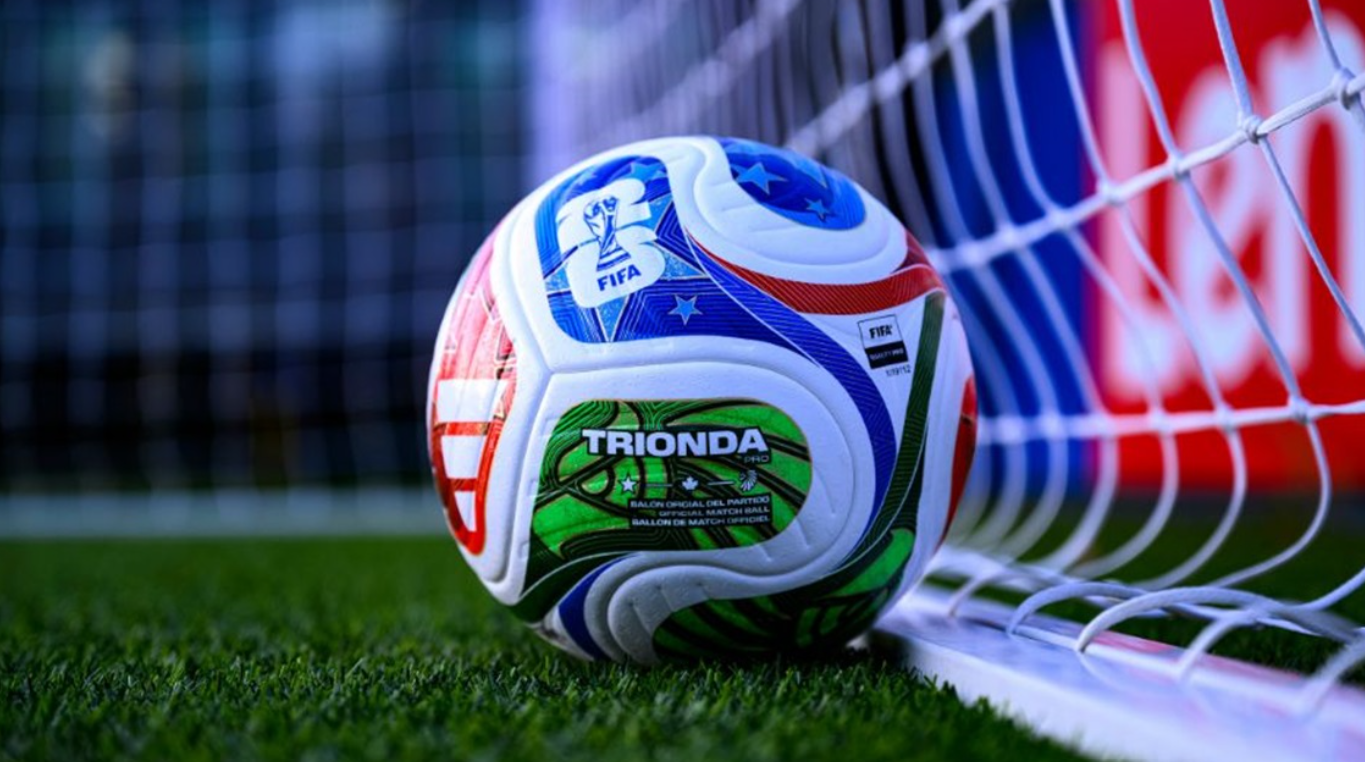
The presentation was led by senior Pakistani official Rana Mashhood Ahmad Khan. He formally unveiled the Adidas TRIONDA to an audience of international diplomats and sporting executives.
The unveiling carried immense geopolitical and economic weight. It highlighted a developing nation’s absolute dominance over a highly lucrative, fiercely competitive niche in global manufacturing.
The Masterpiece of Sialkot
The TRIONDA is not merely a piece of sporting equipment. It is a highly engineered, meticulously crafted industrial marvel manufactured entirely in Sialkot, Pakistan.
For decades, Sialkot has quietly served as the undisputed, global capital of football production. The city’s massive industrial hubs currently supply over seventy percent of the world’s premium soccer balls.
Despite never qualifying for the actual World Cup tournament, Pakistan consistently dictates the physical parameters of the beautiful game. The TRIONDA represents the absolute pinnacle of this historic manufacturing legacy.
Engineering the TRIONDA
The technical specifications of the new Adidas TRIONDA are unprecedented in the history of the sport. The ball is completely devoid of traditional stitching, representing a massive leap in sporting engineering.
Instead, the ball utilizes a revolutionary, seamless four-panel structure. These specialized panels are meticulously fused together using advanced thermal-bonding processes to ensure maximum structural integrity.
This thermal-bonded construction guarantees absolute symmetry and near-perfect aerodynamic stability. It allows the ball to maintain a perfectly spherical shape even under the most extreme, high-impact conditions of elite tournament play.
Integrating High-Tech Sensor Data
Beyond its structural aerodynamics, the TRIONDA acts as a highly sophisticated data transmission hub. The ball is internally equipped with a state-of-the-art, embedded 500Hz connected-ball sensor.
This tiny, incredibly powerful motion sensor rests perfectly suspended at the absolute center of the ball. It continuously streams high-density data directly to the Video Assistant Referee (VAR) system in real-time.
Operating at five hundred frames per second, the sensor records every single touch, strike, and deflection with uncompromising precision. This technology is strictly designed to permanently eliminate human error from highly controversial, game-deciding referee calls.
Eliminating Officiating Controversies
In the high-stakes, multi-billion-dollar environment of the FIFA World Cup, a single refereeing mistake can trigger massive global fallout. The TRIONDA’s internal technology is built directly to mitigate these severe operational risks.
By feeding instantaneous data directly to the VAR control room, the ball ensures lightning-fast, entirely indisputable offside and goal-line decisions. The high-frequency sensor works seamlessly in tandem with stadium-wide optical tracking cameras.
This complex, hybridized data ecosystem provides match officials with absolute, verified certainty. It completely changes the mechanical landscape of how the world’s most popular sport is officiated.
The Power of Forward Sports
The massive industrial operation behind the TRIONDA is spearheaded by Forward Sports. Based directly in Sialkot, this manufacturing giant has officially partnered with FIFA to produce match balls since 2014.
Under the leadership of its executives, such as Khawaja Masood Akhtar, Forward Sports has continually pushed the boundaries of industrial automation. The company has successfully manufactured the iconic Brazuca, Telstar 18, and Al Rihla balls for previous global tournaments.
The production lines at Forward Sports represent a fascinating blend of highly automated, laser-guided precision and generational human craftsmanship. Raw polyurethane sheets are flawlessly transformed into the world’s most recognized sporting asset.
Rigorous Quality Control Frameworks
Before a single TRIONDA is approved for the 2026 World Cup, it must survive a punishing gauntlet of quality control diagnostics. The testing protocols are absolutely ruthless and fully aligned with FIFA Quality Pro Testing standards.
Every individual ball is subjected to extreme pressure variations, intense water-resistance trials, and aggressive UV-exposure tests. These extreme diagnostics ensure the ball performs consistently across the vastly different climates of the host nations.
If a ball shows even a millimeter of deviation or a microscopic flaw in its thermal bonding, it is instantly rejected. Only the absolute flawless units are successfully hand-inspected and shipped out to dictate the fate of international football teams.