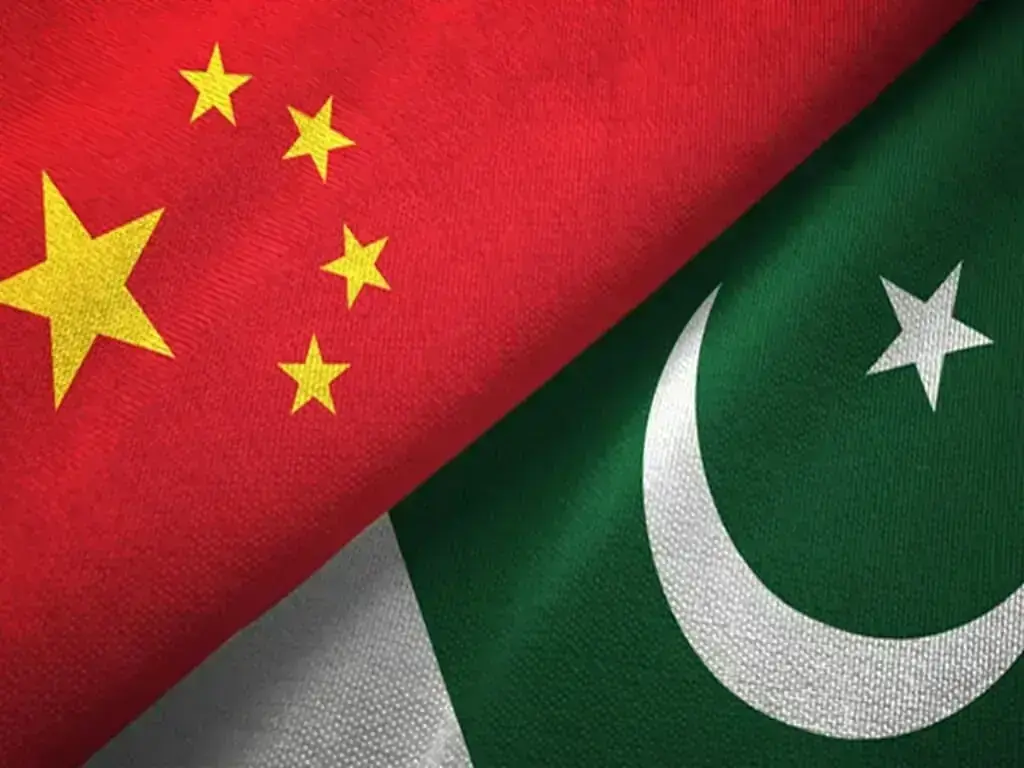
Pakistan and China have agreed to strengthen their cooperation on immigration, border management, and broader institutional collaboration, marking another step forward in the two countries’ long-standing security partnership. The understanding was reached during a meeting in Islamabad on Friday between Interior Minister Mohsin Naqvi, Minister of State for Interior Tallal Chaudhry, and a visiting delegation from China’s National Immigration Administration, led by Director General Qi Jingyang.
Joint Action Against Cross-Border Crime
At the heart of the discussions was a shared commitment to making joint operations more effective in tackling illegal immigration, arms smuggling, and other cross-border criminal activity. Both sides agreed that closer coordination between their respective agencies would help address these challenges more efficiently than either country could manage on its own.
To formalize this cooperation, the two sides also decided to finalize an agreement soon aimed at expediting immigration procedures between the two countries. Alongside that, they agreed to establish a dedicated Pakistan-China joint working group focused specifically on border management and security, giving the partnership a more structured, ongoing framework rather than relying solely on periodic high-level meetings.
Strengthening Security at Land and Sea
Speaking after the meeting, Interior Minister Mohsin Naqvi said cooperation with China would be further enhanced across land borders, seaports, and immigration management more broadly. He reiterated that the government of Pakistan is pursuing a firm, zero-tolerance policy against illegal immigration, unauthorized border crossings, and smuggling, stressing that enforcement action is being taken against all those involved in these activities without exception or discrimination.
As part of ongoing efforts to reinforce security along Pakistan’s northern frontier, Naqvi also announced that a new check post of the Gilgit-Baltistan Scouts is being established at Khunjerab Pass, a key crossing point along the Pakistan-China border, to further tighten security in the area.
Minister of State for Interior Tallal Chaudhry echoed this commitment, noting that illegal immigration and border-related crimes would be curbed through continued mutual cooperation between the two nations. His remarks reflected a broader consensus in the meeting that these challenges are best addressed through coordinated bilateral action rather than unilateral enforcement alone.
China Praises Pakistan’s Efforts
The visiting Chinese delegation offered positive feedback on Pakistan’s existing measures to prevent illegal border crossings and smuggling, describing the country’s current approach as effective. Director General Qi Jingyang used the meeting to underscore the strategic nature of the China-Pakistan relationship, expressing China’s interest in further strengthening cooperation across the board.
Qi also reaffirmed China’s ongoing commitment to supporting the capacity building of Pakistani institutions, signaling that this partnership extends beyond immediate security concerns and into longer-term institutional development. As part of that broader engagement, the Chinese delegation extended an invitation to the interior minister to attend the upcoming Public Security Forum in China, issued on behalf of China’s minister of public security. Pakistan’s Federal Investigation Agency delegation was also invited to participate in the forum, extending the scope of collaboration beyond just the interior ministry.
Training and Capacity Building
Beyond high-level diplomatic exchanges, the partnership is also taking shape through practical, hands-on cooperation. The Chinese ambassador confirmed that Pakistani police officers will be traveling to China for specialized training later this month, offering local law enforcement personnel direct exposure to Chinese policing and security practices.
Additionally, Chinese language instructors are currently providing specialized training to personnel of Pakistan’s Special Protection Unit, a detail that speaks to just how embedded this cooperation has become at an operational level. Language training of this kind often lays the groundwork for smoother, more effective coordination between security personnel from both countries, particularly in contexts where quick, clear communication matters.
A Reflection of the Broader Relationship
This latest round of cooperation fits into a longer pattern of close engagement between Islamabad and Beijing on security matters, an area that has taken on added significance given the scale of Chinese investment and personnel presence in Pakistan, particularly through projects tied to the China-Pakistan Economic Corridor. Ensuring smooth, secure movement across shared borders and protecting against illegal activity has increasingly become a shared priority for both governments, given how closely their economic and strategic interests are now intertwined.
The agreement to set up a dedicated joint working group suggests that both sides see value in institutionalizing this cooperation, rather than treating it as a one-off diplomatic gesture. If implemented effectively, this kind of structured, ongoing dialogue could help streamline immigration processes between the two countries while also making joint enforcement efforts against smuggling and cross-border crime more consistent and coordinated over time.
Looking Ahead
With a formal immigration agreement still in the works and a joint working group set to be established, the coming months are likely to bring more concrete details on how this expanded cooperation will actually function in practice. For now, though, Friday’s meeting signals a clear intent from both Islamabad and Beijing to treat border security and immigration management as an increasingly important pillar of their broader strategic partnership, one that combines high-level policy coordination with practical, on-the-ground training and capacity building for security personnel on both sides.