Green Relief: CM Punjab Launches Vegetable Farming on Government Land for Deserving Families
In a significant move to tackle food insecurity and inflation, Punjab Chief Minister Maryam Nawaz Sharif has officially launched a highly innovative public welfare initiative titled the “Sanjhi Sabzi” (Shared Vegetables) project.
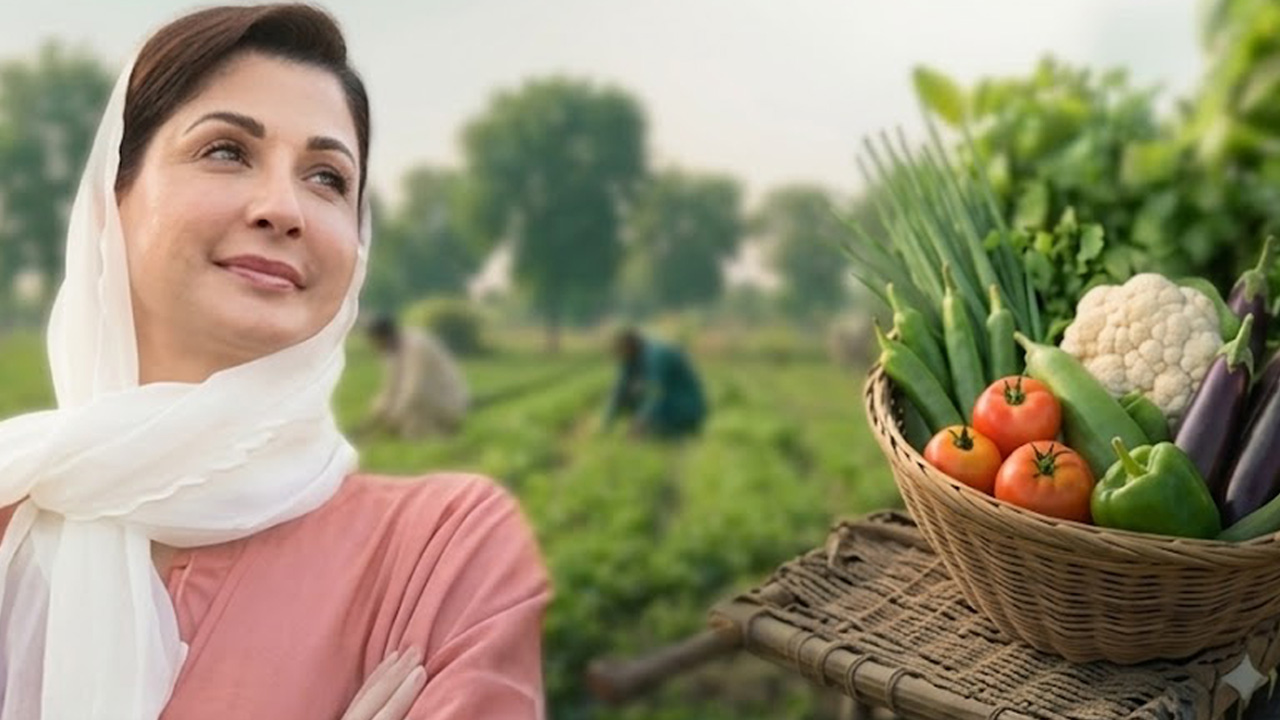
The program focuses on transforming vacant state-owned land into productive green spaces. Instead of offering typical marketplace subsidies, the government is growing seasonal vegetables directly on public land and distributing them completely free of cost to deserving families according to their household needs.
Here is an overview of how this welfare project is rolling out and the impact it is making:
1. The Pilot Success in Muzaffargarh
The initiative officially kicked off as a pilot project in the Muzaffargarh district. Under the supervision of the local administration, the government successfully identified and utilized 140 plots covering 139 kanals of vacant state land.
These patches include empty spaces in rural areas as well as unutilized land surrounding urban government installations—such as health facilities, local government centers, forest departments, education offices, and assistant commissioners’ complexes. Local residents in these pilot areas have already started harvesting and receiving fresh vegetables.
2. A Spark for Community Spirit
The “Sanjhi Sabzi” project officially commenced from a Christian-majority village in Muzaffargarh. Beyond state efforts, the model has quickly ignited a powerful wave of community service. Seeing the immediate benefits, local villagers and volunteers have actively stepped forward to farm these plots and grow extra food to support their low-income neighbors entirely on their own accord.
3. Expansion Plan Across the Province
Following the massive success and transparency of the pilot run, Chief Minister Maryam Nawaz Sharif declared it an exemplary, people-friendly model. She has officially directed Deputy Commissioners across all districts of Punjab to instantly replicate the model.
The administration across the province is now identifying similar empty state plots, ranging from small patches (one marla) to larger blocks (one kanal), to scale up community farming statewide.
4. Direct Relief for Household Budgets
With global commodity prices fluctuating and kitchen inflation directly pressuring the common man, this project provides tangible economic relief. By ensuring that essential kitchen staples like fresh vegetables reach deserving dining tables without a price tag, the initiative functions as a powerful buffer for lower-income household budgets.