A technology entrepreneur has warned that politicians are unprepared for the impact artificial intelligence (AI) will have on workplaces, suggesting that charging companies to use AI could help limit job losses.
Charles Radclyffe, whose Wales-based company has developed software capable of completing office tasks in seconds, said policymakers have failed to understand the speed and scale of the challenge.
He proposed introducing a tax on AI adoption, described as a “minimum wage” for robots, or creating a mechanism that governments could use to regulate businesses wanting to deploy AI and automation technologies.

The UK government responded by saying it would continue to monitor AI’s impact and act quickly as economic conditions evolve.
Several parties contesting the Senedd election on 7 May support the responsible use of AI.
Radclyffe’s company has created technology that automates administrative and office tasks, such as form filling, completing them much faster and at a lower cost than human workers. He stated that each time his company bills for a month of AI work, it effectively represents a job being removed from the economy and transferred to a data centre.
According to him, tasks like data entry in spreadsheets can be completed by AI in about 20 seconds, compared to up to two weeks for a human. He explained that large organisations previously relied on teams dedicated to handling such repetitive tasks, but these functions are now ideally suited for AI, making processes quicker and more efficient.
When commenting on political responses to this rapid transformation, Radclyffe said it was surprising that there is no contingency plan in place for worst-case scenarios. While companies are not necessarily laying off workers immediately, he noted that many are reducing new hiring, warning that some individuals could face long-term unemployment. He believes that introducing a tax on AI usage would slow its adoption and give governments a tool to step in if the impact on jobs becomes too severe.
Radclyffe argued that a “minimum wage for robots” or tax on digital and robotic workers could help control the pace of AI adoption and create a more balanced competitive environment. He cautioned that without timely intervention, regions like south Wales could experience economic disruption similar to past industrial transitions. He added that white-collar workers, particularly in cities like Cardiff, are especially vulnerable to the effects of AI, making this a significant concern.
A Treasury spokesperson stated that the government is committed to ensuring workers benefit from AI and is establishing an AI Economics Institute to monitor its effects and respond as needed.
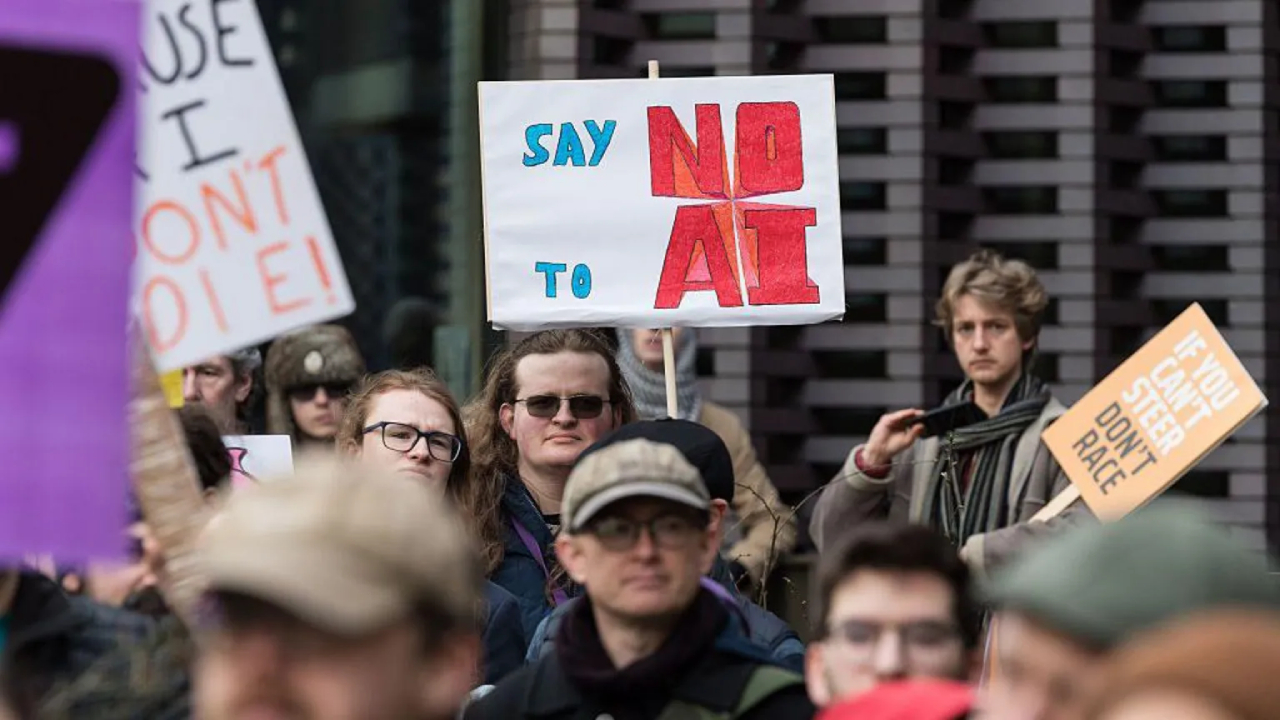
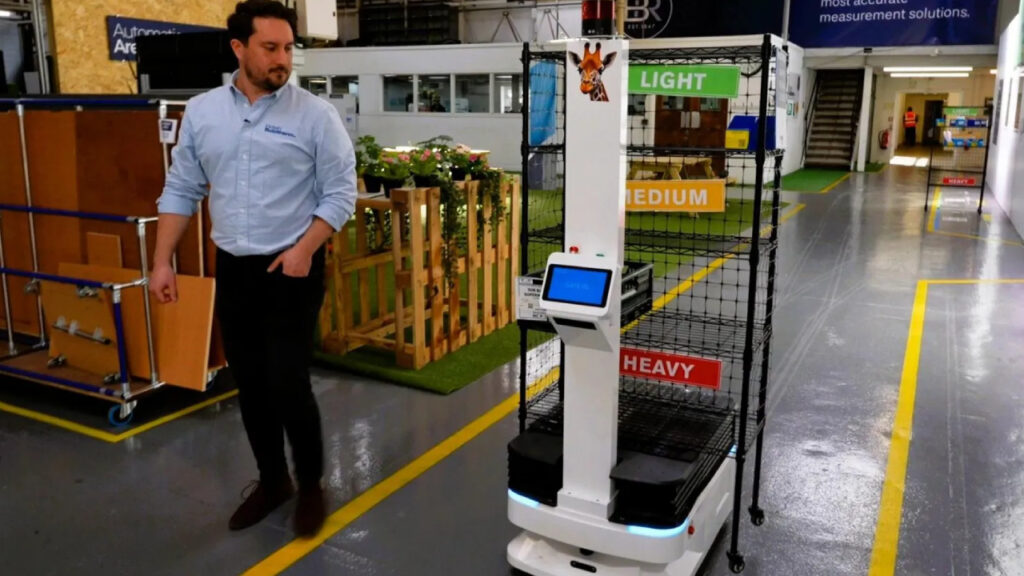
Concerns over AI’s impact have already led to protests outside tech companies in London earlier this year. At British Rototherm, an industrial sensor manufacturer based near Port Talbot, AI and automation are already transforming operations.
Managing director Oliver Conger said the company adopted AI gradually, starting small, building confidence, and scaling up over time. The firm, which produces precision instruments for measuring temperature, pressure, and flow, supplies customers in around 90 countries.
Conger described the facility as an “Alien Dreadnought Factory,” where AI and automation work alongside human employees. He reported that productivity has increased by over 20% in the past two years, with further gains expected.
Rather than replacing workers, he said the focus is on changing roles and supporting employees through the transition. He added that the company refers to AI systems as “AI employees,” and some staff whose roles have been automated have been retrained for other positions.
On the issue of regulating AI, Conger expressed a more cautious view than others in the industry. While acknowledging the debate around taxing automation, he said it is too early to implement such policies and that the focus should remain on encouraging adoption and improving productivity.
He also noted that AI has the potential to significantly transform Welsh manufacturing within the next few years, but political support will be essential to manage the transition.
Political parties have taken varied positions on AI. Welsh Labour aims to use AI to reduce bureaucracy and invest in digital infrastructure, including establishing AI Growth Zones and promoting ethical AI through a Responsible AI Charter.
Plaid Cymru emphasizes skills development, worker participation, and industrial strategy, proposing a national development agency to support digital growth while protecting workers’ rights.
The Welsh Conservatives highlight AI’s role in driving growth and improving services, particularly in healthcare, while stressing that it should enhance rather than replace human work.
Reform UK adopts a more cautious approach, supporting AI use only where it is proven safe and effective in public services. The Welsh Liberal Democrats and Green Party of England and Wales have also been approached for their views.