USA visa interview preparation tips are essential if you want to succeed at your embassy interview. After weeks of paperwork and document preparation, everything depends on a short conversation with a consular officer. Understanding what to expect, how to behave, and how to answer confidently can make the difference between approval and rejection.
Imagine this: you’ve spent weeks filling out forms, gathering bank statements, collecting invitation letters, and everything comes down to a single moment: a 90-second conversation with a stranger behind a glass window. That’s your visa interview.
On paper, your case may look perfect. But here’s the reality: the consular officer isn’t just listening to your answers. They are observing your tone, your confidence, and how clearly you present your story. They are judging whether your intentions feel genuine and whether your ties to your home country are believable. This entire process can fall apart in seconds if you are not prepared for this live interaction.
What this means: Half of your preparation should focus on documents. The other half should focus on practicing this critical moment. Following USA visa interview preparation tips can improve your confidence.
Before the Interview: Solid Preparation
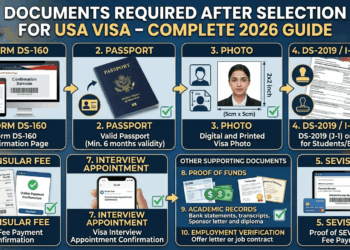
A. Document Checklist
Organize everything neatly in a folder, sorted by category:
- Appointment confirmation, DS-160 or DS-260 confirmation
- Valid passport (at least six months beyond your planned entry date)
- Passport photos (follow size and background requirements carefully)
- Payment receipts (visa fee, SEVIS if applicable)
Visa-Specific Documents:
Visitor Visa (B-1/B-2):
- Travel itinerary
- Bank statements
- Proof of family or job ties in your home country
Student Visa (F-1):
- I-20 form
- Admission letter
- Financial proof
- Academic transcripts
Work Visa (H, L, etc.) or Immigrant Visa (I-130):
- Approval notice
- Employment proof
- Affidavit of support
- Marriage certificate
- Medical examination reports
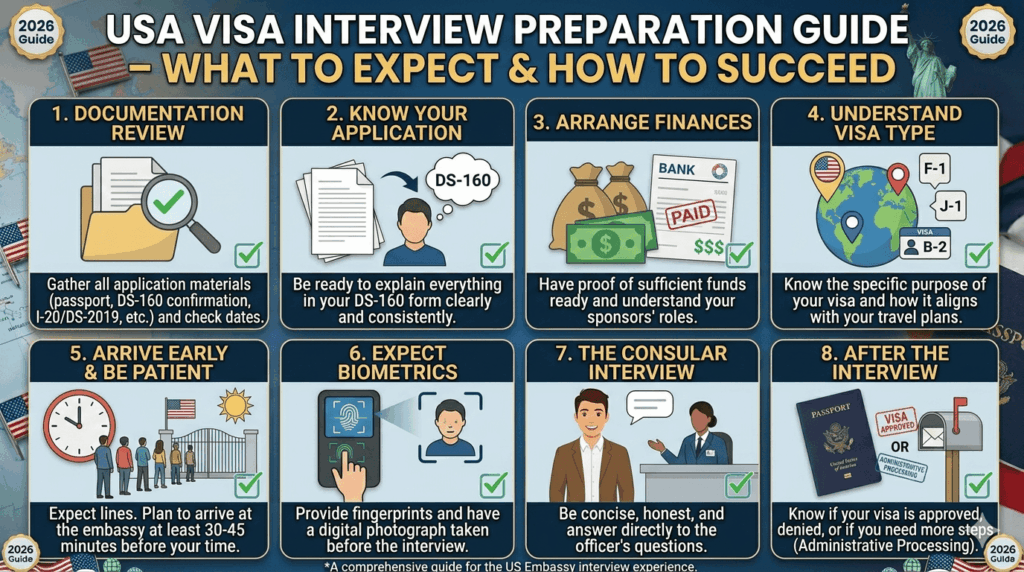
👉 Extra tip: Keep both originals and copies. Being over-prepared is always better than missing a document. Many applicants fail because they ignore USA visa interview preparation tips.
B. Medical Examination (if required)
For immigrant visas or certain non-immigrant visas, complete your medical exam with an approved physician in advance.
Results often take a few days, don’t leave this for the last minute.
On the Day of the Interview
A. Arrival & Security
Arrive 30–45 minutes early. Security is strict.
- No electronics allowed
- Avoid carrying bags, water bottles, or unnecessary items
- Even small items like pens may be restricted
Expect multiple checkpoints:
- ID verification
- Body scan
- Appointment confirmation
- Fingerprints (biometrics)
👉 Tip: Travel light. It saves time and reduces stress.
B. The Waiting Area
After security and biometrics, you’ll wait in a hall.
- Waiting times vary—stay patient
- Some embassies separate immigrant and non-immigrant applicants
When your name or number is called:
- Walk confidently to the counter
- Only hand over documents when asked
During the Interview: What Happens
A. Oath & Introduction
Many interviews begin with an oath:
“Do you swear to tell the truth…?”
You’ll confirm your full name. This sets a serious tone—take it seriously.
B. The Questions
The interview usually lasts 2–5 minutes, so stay alert.
Common questions include:
- Why are you traveling to the USA?
- How long will you stay?
- Who is funding your trip?
- Do you have relatives in the USA?
- What ties do you have in your home country?
- (For spouse visas) How did you meet your partner?
👉 Real insight: Officers are not looking for long stories—they want clear, honest answers.
Real Experiences (from applicants):
- “Where will you stay? What do you do? Why the USA?”
- “Don’t overshare—show past travel and return history. Strong ties matter.”
C. Document Submission
Most officers rely on your application and only ask for specific documents.
Still, you must have everything ready:
- Bank statements
- Job letters
- Property documents
- Medical records
👉 Rule: Always be ready, even if not everything is asked.
Appearance: Dress & Behavior
A. Dress Code
First impressions matter more than you think.
Men:
- Business casual (collared shirt, formal pants, clean shoes)
- Blazer or suit is a plus
- Avoid jeans and sneakers
Women:
- Blouse with formal pants or a simple dress
- Neutral style, closed shoes
- Avoid flashy or overly casual outfits
B. Behavior & Body Language
- Maintain good posture
- Make eye contact
- Smile naturally when appropriate
- Listen carefully before answering
- Speak clearly and confidently
- Keep answers short and relevant
👉 Control your nerves: Pause, breathe, and stay calm.
How to Answer Smartly
A. Be Honest
If you don’t know something, say: “I don’t know.”
Never guess or contradict your DS-160, this can cause serious issues.
B. Be Precise
Answer only what is asked.
Avoid unnecessary details unless they strengthen your case.
C. Show Strong Home Ties
Under Section 214(b), you must prove you will return.
Examples:
- Job
- Family
- Property
- Studies
Bring documents to support these claims.
D. Stay Natural
Simple, conversational English works best.
Avoid memorized or robotic answers—officers can easily tell.
Handling Difficult Questions
Be ready for sensitive topics:
- Finances
- Relationships
- Future plans
- Previous rejections
Stay calm, honest, and clear.
If you don’t understand a question:
👉 “Sorry, could you please repeat that?”
After the Interview
You will receive one of three outcomes:
✅ Approved
- Your passport is kept for visa stamping
- You’ll receive return instructions
❌ Rejected
- Usually under Section 214(b)
- You can reapply after improving your case
⏳ Administrative Processing
- Additional review required
- May take weeks
- Could involve background checks or missing documents
Real Experiences (Examples)
B-1/B-2 Applicants:
- Questions about travel plans, finances, and return reasons
- Strong home ties increase approval chances
CR-1 Immigrant Visa Example:
- “I carried 40 pages of proof—photos, chats, transfers. Better too much than too little.”
Do’s & Don’ts Summary
✅ Do:
- Dress professionally
- Arrive early
- Organize documents clearly
- Speak honestly and confidently
- Show strong ties to your home country
- Stay calm and respectful
❌ Don’t:
- Bring prohibited items
- Overshare unnecessary information
- Lie or exaggerate
- Interrupt or argue
- Sound rehearsed or robotic
What This Really Means
Here’s the truth: the visa interview is about trust.
The officer is trying to decide:
- Are you credible?
- Are you honest?
- Will you follow the rules?
Everything – your tone, your documents, your story supports or weakens your case.
Preparation is not just paperwork. It’s about clarity. Practicing USA visa interview preparation tips helps you stay calm.
Know your story. Know your intentions. Be ready to present them confidently.
Embassy interviews matter not because they are complicated, but because they are the human filter for everything you’ve submitted. If you show respect, preparation, logic, and honesty, you give yourself the best possible chance.