Pakistan has urged India to fully adhere to the Indus Waters Treaty (IWT), cautioning that New Delhi’s unilateral suspension earlier this year marks a “deliberate weaponisation of shared natural resources” and poses a grave threat to regional ecosystems and livelihoods.
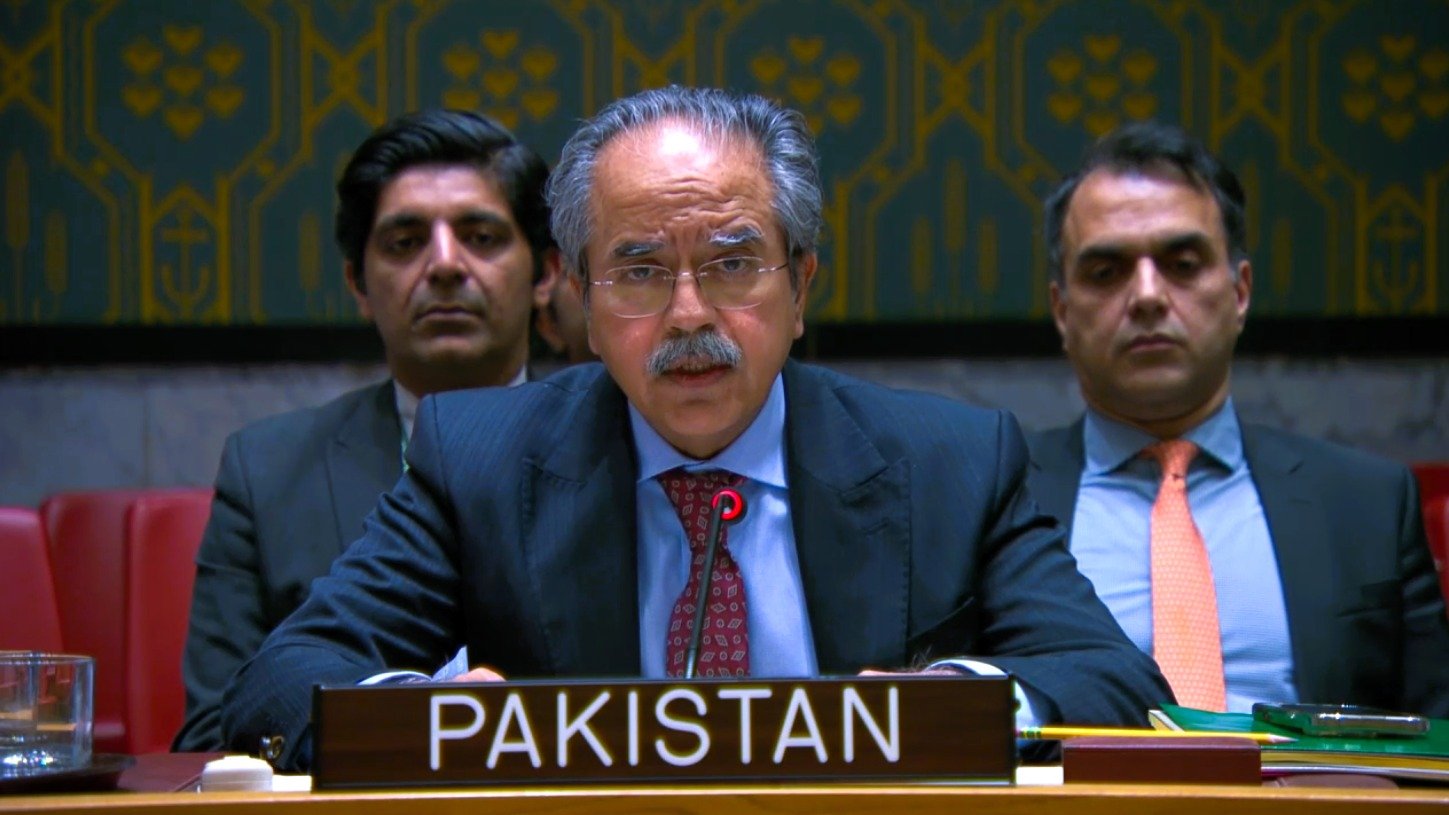
Pakistan’s Permanent Representative to the United Nations, Ambassador Asim Iftikhar Ahmad, delivered the remarks during a UN Security Council briefing on the environmental consequences of armed conflict and climate-driven security threats.
He stressed that India’s actions violate both the letter and spirit of the 1960 IWT — an agreement mediated by the World Bank that has long governed equitable water sharing between the two nations. The treaty allocates the three western rivers (Indus, Jhelum, Chenab) to Pakistan and the three eastern rivers (Ravi, Beas, Sutlej) to India.
“India’s unlawful unilateral decision undermines the treaty, disrupts data sharing, and endangers the lives of millions who depend on these waters for food and energy security,” Ahmad stated. “Such acts weaken global confidence in international water law and encourage resource-based coercion.”
Legal and Regional Context
Ahmad reminded the Council that the Permanent Court of Arbitration (PCA) in The Hague reaffirmed the treaty’s validity and dispute-resolution mechanisms earlier in 2025, explicitly ruling that no party can suspend or modify the treaty unilaterally.
“No provision allows for unilateral suspension. We expect India to return to full compliance and restore normal functioning of the treaty through established diplomatic channels,” he added.
The ambassador linked India’s move to broader environmental and security concerns, warning that climate stress and resource disputes could exacerbate instability in South Asia. He urged the Security Council to adopt early prevention mechanisms, integrate ecological risk assessments into peace operations, and promote post-conflict environmental restoration.
Ahmad also called for new, predictable, and grant-based climate and biodiversity financing, cautioning against debt-driven climate aid or double-counted development funds. “Environmental damage in conflict is not collateral—it multiplies insecurity,” he said, reaffirming Pakistan’s commitment to transforming shared natural resources into tools of cooperation.
Pakistan Supports UN Resolution on Syria
In a separate UN Security Council development, Pakistan voted in favour of a resolution delisting Syrian President Ahmed al-Sharaa and Interior Minister Anas Khattab from the 1267 sanctions committee.
Ambassador Ahmad described the move as a positive step toward Syria’s political stability, institutional rebuilding, and economic recovery after more than a decade of war.
“The Syrian people have endured immense suffering. Today’s decision is a constructive step to support their transition toward peace and stability,” he said.
Ahmad urged the Syrian government to consolidate national control and maintain a Syrian-led political process, while the international community should continue supporting reconstruction and humanitarian efforts.
He reaffirmed Pakistan’s solidarity with Syria, emphasising that sanctions relief must be paired with genuine dialogue and reconciliation. The decision aligns with Pakistan’s broader diplomatic stance on conflict resolution through negotiation and support for inclusive nation-building.