Sindh CM launches digital attendance system for schools
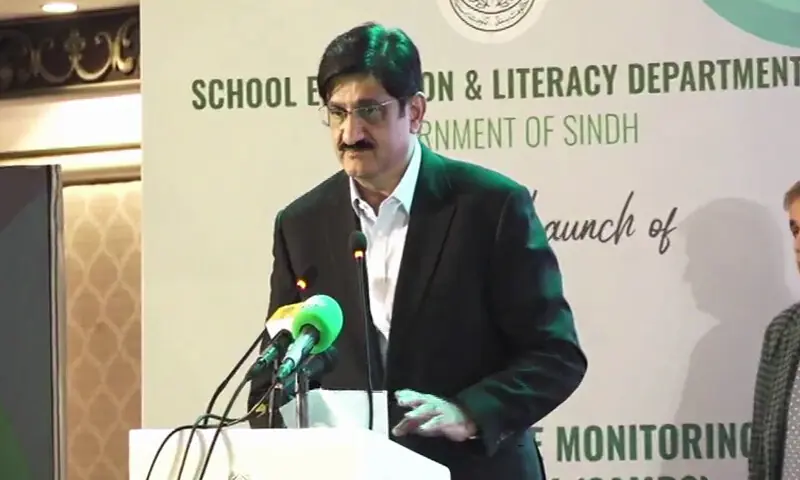
KARACHI: Sindh Chief Minister Murad Ali Shah on Thursday inaugurated the Student Attendance Monitoring and Redress System (SAMRS), a digital platform designed to track student attendance across schools in the province. The initiative, developed under the Sindh Early Learning Enhancement through Classroom Transformation (SELECT) project, marks a key step toward transparent and data-driven education governance.
According to the Sindh Information Department, the system will initially be rolled out in 600 schools across 12 districts, representing a “significant step toward greater transparency and digital transformation in the education sector.”
Murad stresses need for digital databases
Speaking at the inauguration ceremony, CM Murad emphasized the need to digitize education processes in response to Pakistan’s growing population. “The numbers have become so large that you can’t just keep track,” he said, adding that the SAMRS was the “perfect way” to modernize record-keeping and monitoring.
He announced plans to assign digital IDs to children through union councils to track enrollment and attendance. “Each and every child should be incorporated into the SAMRS,” Murad said, suggesting that the data should later be cross-referenced with census records to identify out-of-school children.
The chief minister acknowledged that Sindh currently has over 40,000 schools, highlighting that SAMRS will eventually cover all of them. He said the system would help determine the dropout rate and reasons behind absenteeism.
Education reforms under SELECT
Education Minister Syed Sardar Ali Shah explained that SAMRS will use geo-fencing, online and offline modes, and allow real-time monitoring of student and teacher attendance. “Timely corrective action will be taken based on data trends,” he said.
He added that teachers will receive training in the initial phase to enhance teaching quality and ensure proper system implementation. The system is supervised by a Reform Support Unit, ensuring transparency and accountability.
Shah revealed that among the 137,000 pupils registered under SAMRS so far, 79,730 are girls and 57,501 are boys. Illness remains the top cause of absenteeism (44%), followed by domestic issues (21%) and family emergencies (16%).
Collaboration and education funding
The chief minister noted that the SELECT project is supported by the World Bank, with the Asian Development Bank and other international agencies assisting in school reconstruction. “We’re spending more than Rs125 billion this year to rebuild schools damaged during floods,” Murad said.
He added that although development work in education has improved compared to last year, “there’s still a long way to go.”
World Bank Country Director Bolormaa Amgaabazar attended the ceremony and reaffirmed the Bank’s commitment to supporting Sindh’s education reforms.