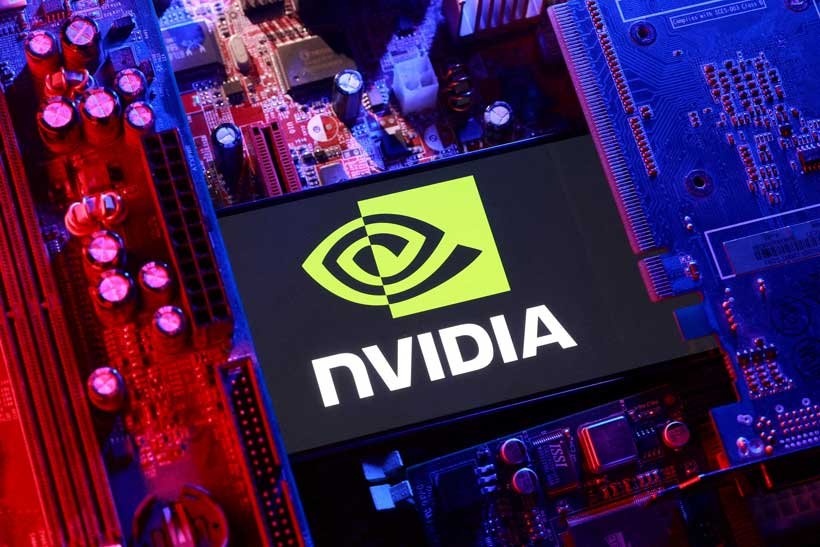
WASHINGTON: In a significant policy move that could redefine the global artificial intelligence (AI) landscape, US President Donald Trump announced that Nvidia’s most advanced AI chips will be reserved exclusively for American companies. The decision effectively bars China and other nations from accessing the cutting-edge Blackwell chips, which are currently regarded as the most powerful semiconductors in the world.
Speaking during an interview, President Trump stated, “The most advanced, we will not let anybody have them other than the United States. We don’t give the Blackwell chip to other people.” His remarks mark a clear departure from the earlier indications of a more flexible export approach, suggesting a tightening of US control over critical AI technology.
Tighter Export Controls on AI Chips
The announcement signals a potential shift in Washington’s export policy, indicating tougher restrictions on AI chip sales to China and possibly other regions. The decision aligns with the broader US strategy to maintain a technological edge in artificial intelligence, semiconductors, and national security.
Nvidia, which recently became the world’s most valuable company by market capitalization, has been at the heart of the global AI revolution. Its Blackwell chips are used across sectors including cloud computing, robotics, autonomous vehicles, and defence. Just days before Trump’s statement, Nvidia revealed plans to supply over 260,000 Blackwell AI chips to South Korea, including major firms such as Samsung Electronics.
China’s Access Remains Uncertain
Whether China will have access to even modified versions of the Blackwell chips remains an open question. Trump hinted that Nvidia may conduct limited business with Chinese firms, but without selling its most advanced hardware.
“We will let them deal with Nvidia but not in terms of the most advanced,” Trump told CBS.
This approach has sparked sharp criticism from China-focused US lawmakers, who argue that even limited AI chip exports could enhance Beijing’s military and surveillance capabilities. Congressman John Moolenaar likened such sales to “giving Iran weapons-grade uranium.”
Industry Reactions and Global Impact
Nvidia CEO Jensen Huang has acknowledged the uncertainty surrounding the company’s future in China. He noted that while Beijing has discouraged Nvidia’s presence for now, access to China’s vast market remains crucial for sustaining American innovation. “We need global revenues to continue investing in research,” Huang said in a recent statement.
Trump reportedly considered raising the issue of chip exports with Chinese President Xi Jinping during their recent summit in South Korea, but the topic was ultimately left unaddressed.
As geopolitical tensions intensify between Washington and Beijing, Trump’s decision to confine Nvidia’s top-tier chips to US customers underscores a deepening technological divide between the world’s two largest economies. Analysts say the move could not only reshape the global semiconductor industry but also determine the future pace and direction of AI advancement worldwide.