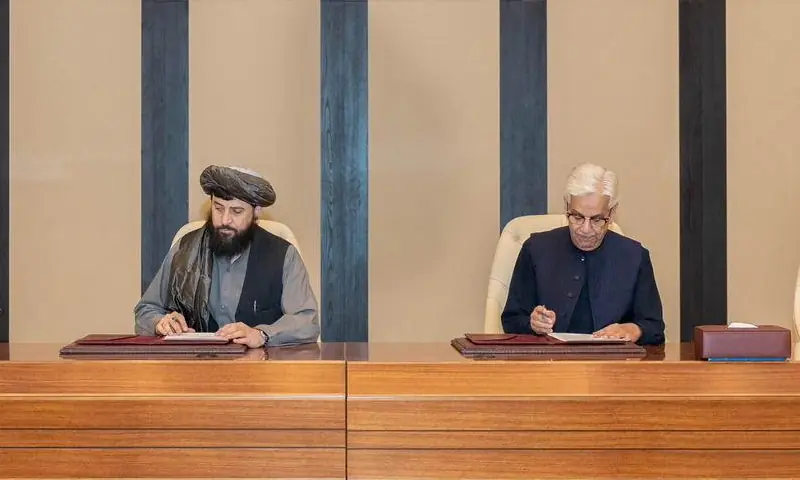
ISTANBUL: The third round of high-level talks between Pakistan and the Afghan Taliban is currently taking place in Istanbul, Turkey, but progress remains limited due to the Taliban’s continued refusal to sign a written agreement.
According to diplomatic sources, the discussions have become increasingly complicated, with the Afghan Taliban showing reluctance to make any binding commitments. Turkish official Ibrahim Kalin is attending the meetings as a mediator, attempting to bridge the gap between the two sides.
The ongoing negotiations follow two intensive days of dialogue — nine hours on Saturday and more than thirteen hours on Sunday — which ended without any significant breakthrough. During the second round, Pakistan presented its final stance, demanding that the Afghan Taliban take concrete and verifiable measures to dismantle the banned Tehreek-e-Taliban Pakistan (TTP) network.
Pakistani officials reportedly made it clear that Islamabad would not tolerate any form of patronage, shelter, or logistical support for terrorist groups operating across the border. The Pakistani delegation’s proposals were described as “clear, evidence-based, and aimed at achieving a durable solution” to cross-border militancy.
Diplomatic insiders said the Taliban’s response so far has been “illogical and detached from ground realities,” suggesting that the group may be pursuing a separate agenda not aligned with the region’s stability. This, they noted, poses serious challenges to security efforts in both Afghanistan and Pakistan.
The Turkish mediation aims to help both parties find common ground, but officials believe meaningful progress will depend on whether the Taliban show genuine commitment to addressing Pakistan’s concerns.
The Istanbul talks follow an earlier round held in Doha, Qatar, where initial discussions also failed to yield a formal agreement. Turkish officials hosting the current session continue to encourage the Taliban to engage with the evidence and proposals presented by Islamabad, as both sides seek to address the growing threat of militancy that has strained relations between the two neighboring nations