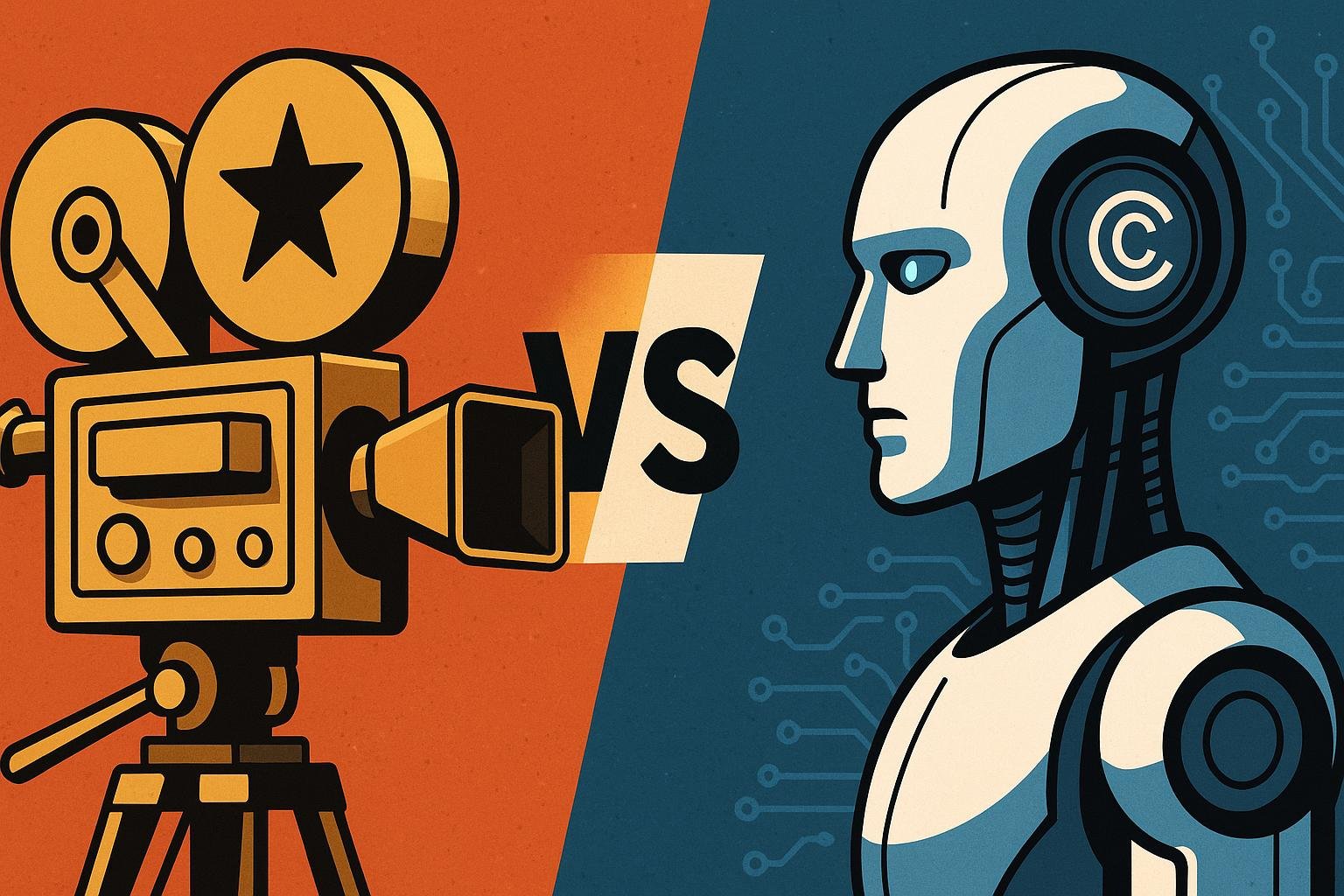
A powerful coalition of Hollywood and Bollywood production houses is urging the Indian government to strengthen copyright protection laws to prevent artificial intelligence (AI) companies from using their intellectual property for model training without authorization.
According to letters reviewed by Reuters, major entertainment organizations — including the Motion Picture Association (MPA), which represents global giants like Warner Bros., Paramount, and Netflix, and the Producers Guild of India (PGI) — have lobbied an Indian government panel reviewing whether current copyright laws adequately address the challenges posed by AI.
Global Context: Copyright Battles with AI
Around the world, AI companies are clashing with content owners over the use of copyrighted data to train generative AI systems.
- Japan has granted broad exemptions, allowing AI developers to use copyrighted materials for training purposes.
- The European Union (EU), on the other hand, has implemented stringent opt-out rules, empowering copyright holders to protect their creative works from being used by AI systems without consent.
Film studios fear that AI tools could scrape copyrighted videos, trailers, images, and pirated content from the internet to train models, posing serious risks to their creative and financial interests.
India’s Copyright Review and AI Dilemma
India’s current copyright law, framed before the rise of AI, does not specifically address how copyrighted works can or cannot be used by artificial intelligence.
To tackle this, the Indian government has formed a panel of lawyers, officials, and industry leaders to assess if existing laws need reform. The panel, chaired by commerce ministry official Himani Pande, is currently finalizing recommendations to be presented to senior policymakers.
In confidential correspondence, MPA India’s Managing Director Uday Singh argued that permitting AI firms to freely use copyrighted content “could undermine the incentive to create new works and erode copyright protection in India.”
Similarly, Nitin Tej Ahuja, CEO of the Producers Guild of India, emphasized that licensing copyrighted works is critical for creators’ revenue and long-term business sustainability.
Both organizations believe India should promote a licensing regime rather than allow blanket exemptions for AI innovation.
A Billion-Dollar Industry at Stake
India’s entertainment sector — one of the world’s most vibrant — has much to lose in this battle. A Deloitte–MPA report published in May revealed that India’s film, TV, and online content industry generated $13.1 billion in 2024, growing at an impressive 18% annually since 2019.
With Bollywood and regional cinema continuing to expand globally, studios argue that any dilution of copyright enforcement could severely impact future investment, local content creation, and export potential.
The urgency of the debate was heightened recently when a Bollywood couple filed a lawsuit against YouTube’s AI policies, after manipulated videos featuring their likenesses went viral online.
Industry Divide: Creators vs. Tech Firms
While film producers call for stronger protection, tech industry representatives — including the Business Software Alliance (BSA), which represents AI developers such as OpenAI — have publicly urged India to allow exceptions that support lawful AI training.
The MPA, however, maintains that opt-out systems — where studios must manually prevent AI models from using their content — would shift an unfair burden on creators. The association warned that such a move would discourage investment and hinder local creative development.
In the U.S., tensions have already escalated. In September, Warner Bros. filed a lawsuit in Los Angeles against Midjourney, alleging the AI platform “brazenly stole” copyrighted material to generate images of Batman, Superman, and Bugs Bunny. Midjourney has defended itself by claiming its practices fall under “fair use” provisions.
What Comes Next
India’s copyright reform discussions have become a global focal point. The outcome will likely determine whether the country aligns with the EU’s stricter copyright stance or Japan’s AI-friendly approach.
For now, both Hollywood and Bollywood are united in their demand for tighter protections, aiming to ensure that creative industries are not undermined by AI systems trained on their intellectual property without permission.