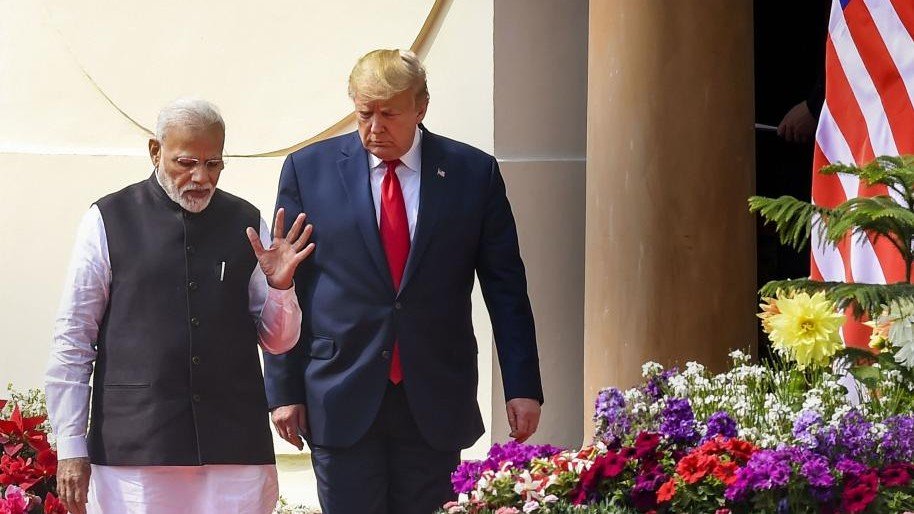
NEW DELHI: India has put on hold plans to acquire new US-made weapons and aircraft, in what is being viewed as its first concrete show of displeasure after President Donald Trump imposed steep tariffs on Indian exports, dragging bilateral ties to one of their lowest points in decades.
According to three Indian officials familiar with the matter, Defence Minister Rajnath Singh’s planned visit to Washington — during which new defence purchases were to be announced — has been cancelled. India had been preparing to proceed with procurement deals that included Stryker combat vehicles from General Dynamics Land Systems, Javelin anti-tank missiles developed by Raytheon and Lockheed Martin, and six Boeing P-8I reconnaissance aircraft for the Indian Navy in a $3.6 billion package.
The pause follows Trump’s decision on August 6 to impose an additional 25% tariff on Indian goods, raising the total duty on exports to 50%. The US president justified the move as retaliation for India’s continued purchases of Russian oil, arguing it indirectly funds Moscow’s war in Ukraine. New Delhi, however, insists it is being unfairly targeted, noting that the US and its European allies still trade with Russia when convenient.
While there are no formal written orders to halt the arms deals, insiders say talks are “paused” until clarity emerges on tariff policies and the direction of US-India ties. Officials maintain the defence relationship remains intact, with intelligence sharing and joint military exercises continuing without interruption.
India, the world’s second-largest arms importer, has been diversifying its suppliers in recent years — moving away from its traditional reliance on Russia toward Western powers. Still, decades-long defence ties with Moscow mean Indian systems will continue to require Russian support, even as discounts on Russian oil shrink to their lowest levels since 2022.
Trump’s escalating rhetoric, combined with a surge in anti-US sentiment in India, has made it politically challenging for Prime Minister Narendra Modi to accelerate a pivot toward Washington. The recent friction comes despite earlier praise from US analysts who saw deepening India-US defence cooperation as a key foreign-policy achievement of Trump’s first term.