Trump, Xi Agree on Tariff Cuts, Fentanyl Action
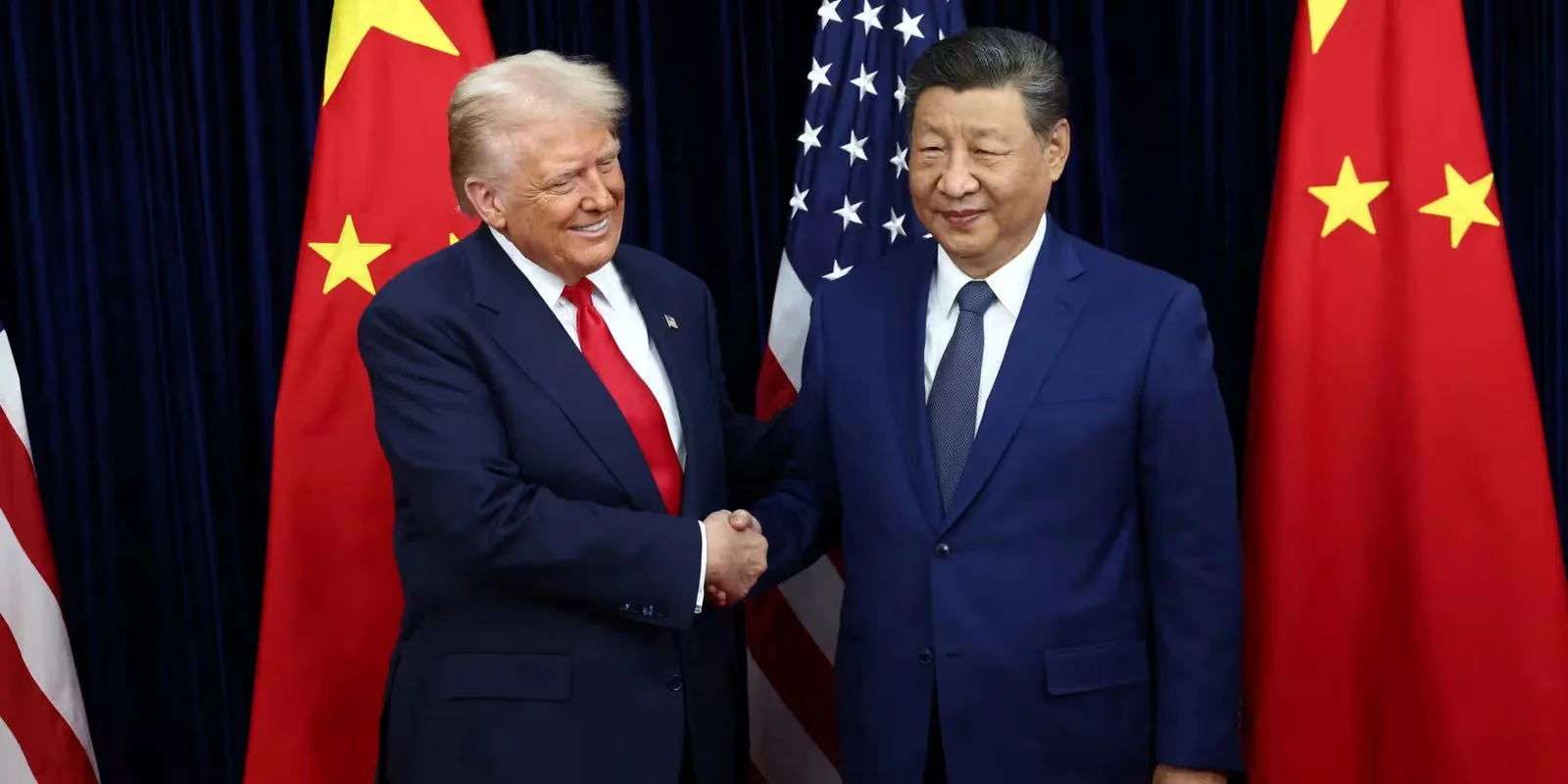
BUSAN: US President Donald Trump and Chinese President Xi Jinping reached a landmark understanding on Thursday to ease trade tensions, with both leaders agreeing to reduce tariffs and cooperate on stopping the illicit fentanyl trade. The meeting, held in the South Korean city of Busan on the sidelines of the APEC summit, marked their first face-to-face encounter since 2019 and concluded Trump’s high-profile Asia tour.
During the talks, Trump announced that tariffs on Chinese imports would be cut from 57% to 47%, including a major reduction in tariffs linked to fentanyl precursor drugs — halved from 20% to 10%. In exchange, Xi pledged that Beijing would take “strong action” to stop the flow of fentanyl, a deadly synthetic opioid that has become the leading cause of overdose deaths in the United States.
“I thought it was an amazing meeting,” Trump told reporters aboard Air Force One after leaving Busan, describing the talks as a “12 out of 10.” He said the move to reduce tariffs came in response to China’s commitment to address the fentanyl crisis and resume large-scale purchases of US soybeans while keeping rare earth exports open to global markets.
The meeting’s announcement caused fluctuations in global markets — with Asian stocks, European futures, and commodity prices swinging between gains and losses. China’s Shanghai Composite Index slipped from a 10-year high, while US soybean futures softened slightly as investors processed the partial tariff rollback.
Analysts noted that markets were expecting a more comprehensive tariff removal, but still viewed the outcome as a positive step in easing tensions between the world’s two largest economies. “The price action shows that a lot of this was already priced in,” said Kyle Rodda, senior market analyst at Capital.com. “Markets were hoping for the complete removal of fentanyl-related tariffs.”
At the summit, Xi told Trump it was “normal for major powers to have frictions now and then” but expressed willingness to build a “solid foundation” for long-term China–US relations.
Beijing reportedly sought additional concessions, including easing export controls on sensitive US technologies and rolling back port fees on Chinese ships — measures Washington had introduced to counter China’s growing dominance in shipbuilding and logistics. Trump, while not confirming those adjustments, said China would purchase “tremendous amounts” of American agricultural goods immediately.
The talks come after both sides’ negotiators reached a “fundamental consensus” earlier in the week to address each other’s key concerns and avoid 100% tariffs on Chinese goods. The leaders also agreed to defer China’s export curbs on rare earth minerals, which are vital to industries from electric vehicles to defense manufacturing.
Trump added that China’s decision not to impose new controls on rare earth exports was “very positive,” noting that his administration had also signed agreements with Japan and Southeast Asian nations to diversify the global supply chain.
While the meeting was cordial, experts remain cautious about how long the détente will last, as both countries continue to navigate geopolitical rivalries in technology, trade, and security.
Trump concluded the session by saying, “This is a win-win moment. President Xi and I want to see fair trade, strong economies, and a safer world.”
Related stories
 International Politics
Trump Waives New Russia Sanctions; Moscow Hails Move
 Americas
Trump Rules Out Nuclear Strike on Iran; Tehran Urges Unity
 International Politics
European Parliament Investigates French MEP Rima Hassan Over Alleged Israeli Flag Incident
 International
PM Shehbaz Backs China's Global Development Initiative, Calls for Peace
 International Politics
Russia, Iran Call for Diplomatic Solution to Crisis
 International Politics