Polio eradication still possible despite funding cuts

Global health authorities have reaffirmed their commitment to eradicating polio despite facing a 30% budget cut in 2026 and a $1.7 billion funding gap through 2029. The Global Polio Eradication Initiative (GPEI), which includes the WHO and Gates Foundation, plans to prioritize high-risk areas, enhance disease surveillance, and collaborate with other health programs like measles vaccination drives.
Despite major financial challenges, the Global Polio Eradication Initiative (GPEI) has insisted that eliminating polio worldwide remains achievable. The organization, a coalition that includes the World Health Organization (WHO), the Bill & Melinda Gates Foundation, and other global partners, faces a 30% reduction in its budget starting in 2026, with an estimated $1.7 billion funding gap extending through 2029.
The funding shortfall stems primarily from a global retreat in foreign aid, particularly by the United States — which is also in the process of withdrawing from the WHO — and reductions in contributions from other major donors such as Germany and the United Kingdom.
To adapt, the GPEI plans to concentrate its resources on high-risk regions where polio transmission remains a threat, while scaling back in lower-risk areas unless new outbreaks emerge. The initiative also aims to strengthen its disease surveillance systems and increase collaboration with other health programs, such as measles vaccination efforts, to maximize impact and reduce costs.
One cost-saving strategy under consideration is fractional dosing, in which smaller quantities of vaccine — about one-fifth of the standard dose — are used. Research shows that fractional doses can still effectively protect children while extending vaccine supplies.
However, WHO officials cautioned that the funding shortfall will inevitably force certain activities to cease. “The significant reductions in funding mean that certain activities will simply not happen,” said Jamal Ahmed, WHO’s Director of Polio Eradication.
Since the global eradication campaign began in 1988, mass immunization efforts have dramatically reduced polio cases by over 99%, but complete eradication has remained elusive. The first missed deadline to eliminate the disease was set for 2000, and several more have followed.
As of 2025, 36 cases of wild polio have been recorded in Afghanistan and Pakistan, the only two countries where the virus remains endemic. Additionally, 149 cases of vaccine-derived polio have been detected in countries including Nigeria, though both figures represent a decline compared to 2024.
Experts emphasize that stopping now would undo decades of progress. “Eradication remains feasible and is doable,” Ahmed said. “We need everybody to remain committed and ensure that no child is left behind.”
Related stories
 Health
Olive Oil Before Meals: Can This Simple Habit Help Control Blood Sugar?
· 2 min read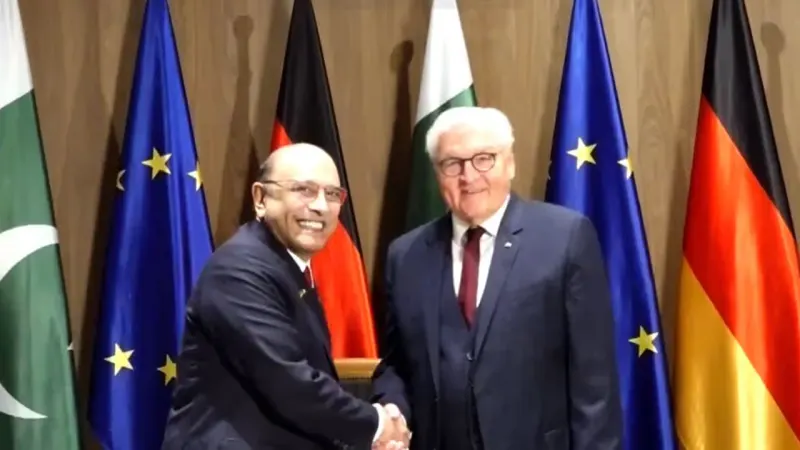 Trade
TradeZardari, Steinmeier Discuss Trade, Defence in Berlin
 Middle East
Iran Backs Makkah Defence Pact, Ready to Join Unity Efforts
 Government
PM: Govt Working to Ensure Decent Livelihoods for All
 Health
Childhood Cancer: Four Warning Signs Parents Should Know
 Health