Pakistan, EU Urge Afghanistan to Act Against Terror Groups
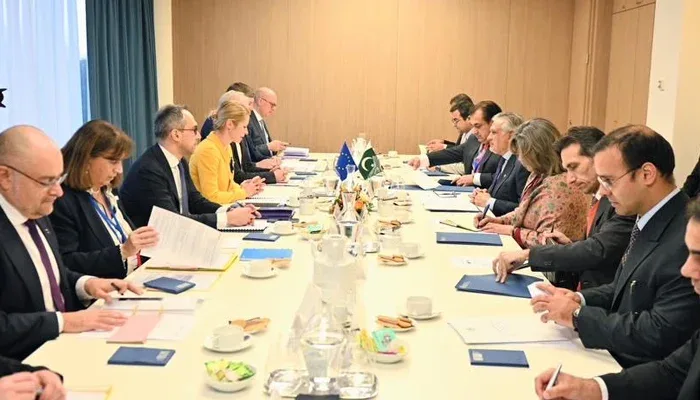
In a joint statement issued on Sunday, Pakistan and the European Union (EU) called on Afghanistan’s de facto authorities to take decisive action against terrorist organisations operating from its territory and to uphold human rights commitments, particularly for women, girls, and vulnerable groups.
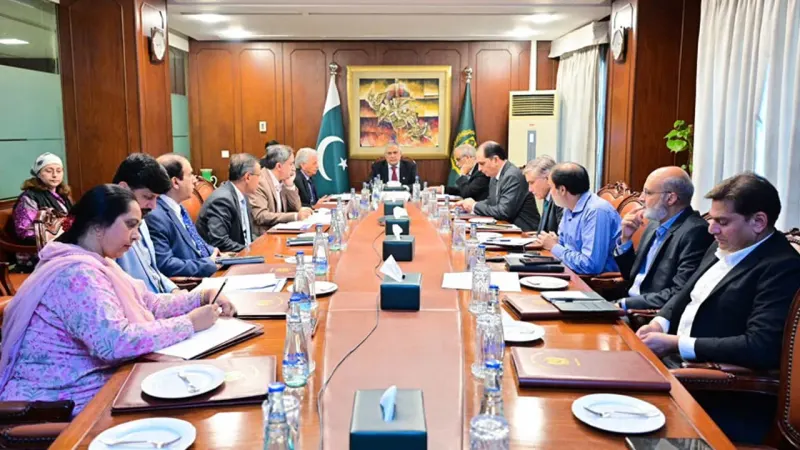
The statement came after the 7th Strategic Dialogue between Pakistan and the EU, held in Brussels and co-chaired by Deputy Prime Minister and Foreign Minister Ishaq Dar and EU High Representative Kaja Kallas
Focus on Terrorism and Regional Stability
Both sides discussed Pakistan’s tense relations with Afghanistan following cross-border violence last month. The joint statement emphasized the shared objective of ensuring regional peace, stability, and prosperity.
Pakistan and the EU urged Kabul’s leadership to play a constructive role in eliminating terrorism, stressing that Afghan soil must not be used for attacks against neighboring countries.
Concerns Over Afghanistan’s Socioeconomic Decline
Dar and Kallas expressed serious concern about Afghanistan’s deteriorating humanitarian and economic landscape. They stressed the need for a peaceful, stable, and self-reliant Afghanistan, capable of governing through a credible and inclusive political process.
The EU reiterated that such a process must align with the UN-led Doha framework, noting that the Taliban should honor commitments made to the international community.
Acknowledgment of Pakistan’s Role
The EU appreciated Pakistan’s decades-long hosting of millions of Afghan nationals but emphasized that any repatriation must be safe, dignified, and compliant with international human rights standards.
Human Rights at the Center
Both Pakistan and the EU called on Afghan authorities to ensure the protection of human rights — especially for women and girls, whose freedoms have been severely curtailed since the Taliban takeover.
Background: Strained Pak-Afghan Relations
Relations between Islamabad and Kabul have sharply declined amid Pakistan’s repeated demands that the Afghan Taliban act against the Tehreek-i-Taliban Pakistan (TTP) — a group responsible for numerous attacks inside Pakistan.
Despite Pakistan’s insistence, the Afghan Taliban deny harboring or allowing TTP militants to operate from Afghan soil.
Failed Negotiations
Attempts to reinvigorate diplomatic dialogue have faltered:
- October border clashes led to a new round of talks facilitated by Turkiye and Qatar.
- A second round in Ankara on October 25 failed to yield results.
- A third round in Istanbul on November 6–7 ended with Defence Minister Khawaja Asif declaring that talks on cross-border terrorism were “over” and had entered an indefinite pause.
Following these failures, Afghanistan suspended trade with Pakistan, while Pakistan had already closed its border for trade right after the October incidents.
Related stories
 International Politics
Trump Waives New Russia Sanctions; Moscow Hails Move
 International
Dar Reviews Preparations for Maldives President’s Visit
 Europe
Pakistan Stands With Türkiye After Flash Floods: Dar
 Economy
DPM Orders Strict Monitoring of Supply Chains and Prices
InternationalIshaq Dar Stresses Sustained Diplomatic Engagement
 Middle East