Lahore and Karachi Rank Among World’s Top Five Most Polluted Cities
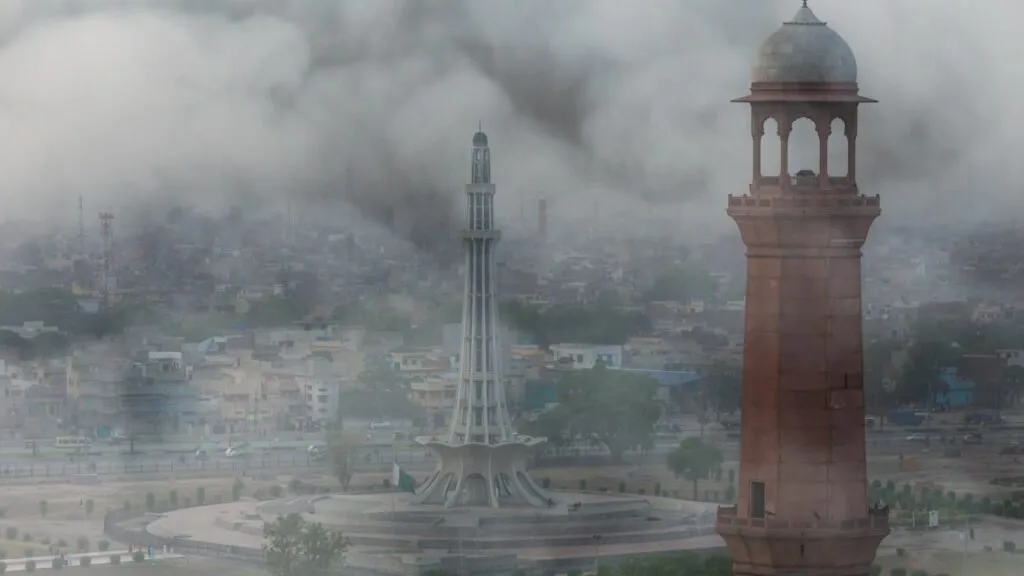
Pakistan’s major cities, Lahore and Karachi, continue to battle a worsening air pollution crisis, ranking among the top five most polluted cities in the world, according to global air quality monitoring platform IQAir.
As of 11 a.m., Lahore recorded an Air Quality Index (AQI) of 234, placing it in the “very unhealthy” category, while Karachi registered 182, classified as “unhealthy.” The concentration of PM2.5 particles—tiny pollutants harmful to human lungs—reached 158.8 µg/m³ in Lahore and 100 µg/m³ in Karachi. These levels exceed the World Health Organization (WHO) safety limits by more than 30 and 20 times, respectively.
Environmental experts link the alarming rise in air pollution to vehicle emissions, industrial waste, crop-stubble burning, and dry weather conditions that trap smog over urban areas. Lahore, in particular, faces increasing smog intensity due to low wind speeds and cross-border pollution drifting from neighboring regions of India.
To combat the deteriorating air quality, the Punjab government has initiated anti-smog operations across Lahore. Measures include water sprinkling on major roads, the use of anti-smog guns, and strict action against farmers burning crop residue. Authorities have registered multiple cases and made arrests related to environmental violations.
Health specialists warn that persistent exposure to poor air quality can lead to severe respiratory problems, eye irritation, and long-term cardiovascular issues. Citizens in Lahore and Karachi are advised to stay indoors, wear protective masks, and limit outdoor activities during high-smog periods.
With winter approaching, experts caution that the air quality situation may worsen further unless stronger and sustained policy actions are implemented.
Related stories
 Pakistan
Pakistan's Top Judge Just Debunked a Rumor About Judges' Long Vacations
· 2 min read Pakistan
Sudden Shake-Up at the Top: Why Was Islamabad's Police Chief Just Removed?
· 2 min read Pakistan
SUPARCO Predicts Rabi-ul-Sani Moon Sighting, Islamic Month Likely to Begin September 13
· 4 min read Pakistan
NADRA Issues Important Advisory for B-Form and First-Time CNIC Applicants
· 5 min read Pakistan
Closing Ceremonies of ISPR Summer Internship Program held at PCTVI
 Pakistan